The Mosaic of Prague: Architecture in Layers
Prague is not a city that was ever rewritten.
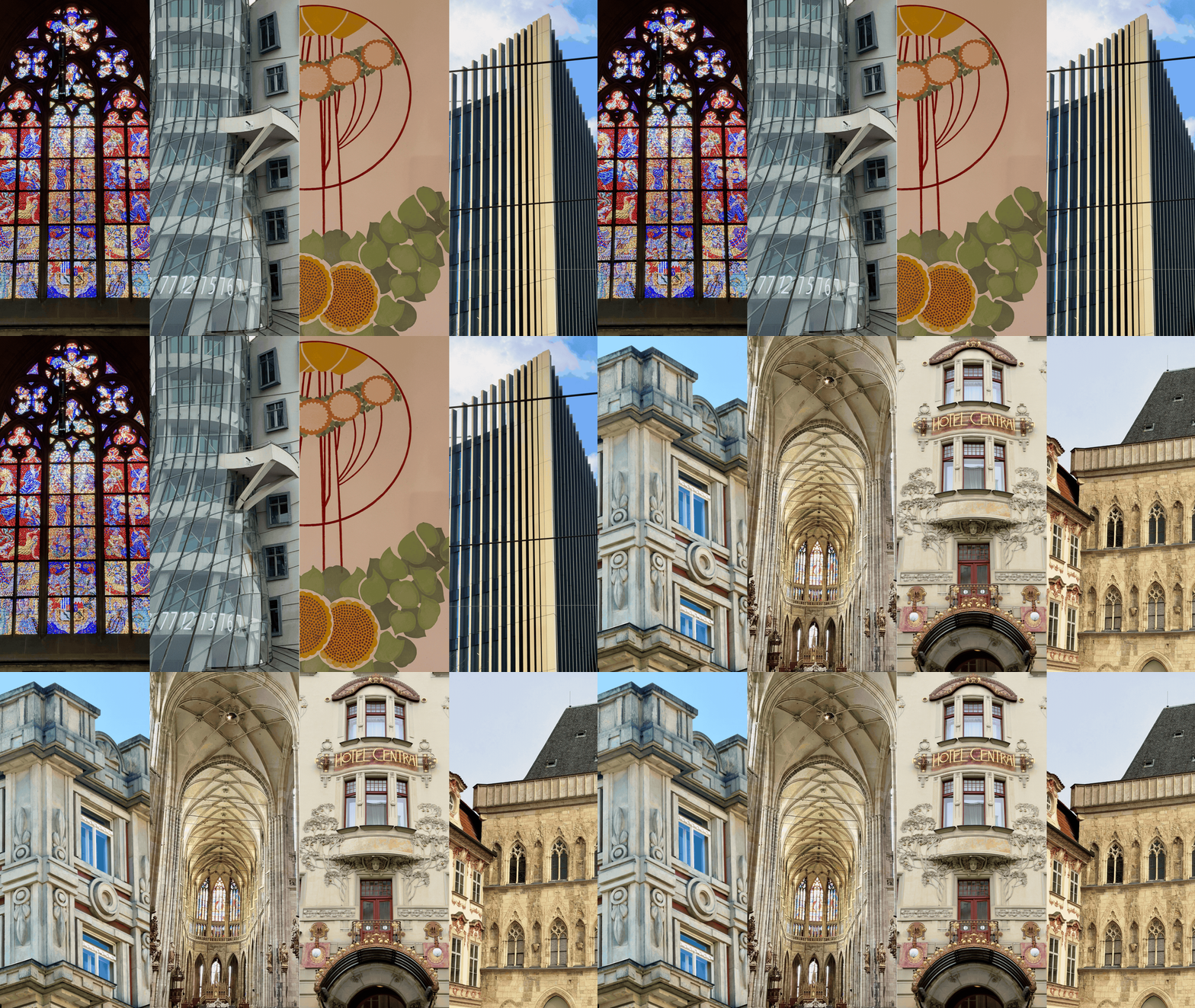
Unlike capitals that underwent grand urban reinventions or sweeping modernist resets, Prague evolved in layers. No single era erased the previous one. No architectural revolution flattened what came before. Instead, centuries accumulated. Stone remained. Ornament survived. Concrete arrived and stayed. Glass followed. Nothing truly disappeared.
The result is not stylistic unity. It is something far more compelling: a mosaic.
Walking through Prague slowly and you begin to notice it. A Gothic spire cuts into the sky beyond a Baroque dome. An Art Nouveau façade glows with delicate ornament beside a cubic experiment in sharp geometry. A brutalist mass stands unapologetically near a newly sculpted contemporary structure that seems to flow rather than stand.
Each piece belongs to its time. Each piece carries its own language. Together, they form a city that refuses simplification.
For guests staying in the historic heart of the city — whether stepping out from the Art Nouveau elegance of K+K Hotel Central or beginning the day near the broader urban avenues surrounding K+K Hotel Fenix — this mosaic reveals itself naturally on foot. There is no single architectural narrative to follow. Instead, there is a rhythm of contrasts. A sequence of eras. A city composed, quite literally, of centuries.
To understand Prague is not to memorise dates. It is to observe textures, materials, silhouettes, and light. It is to look up.
Spring Fling in Prague
Celebrate the arrival of Spring in Prague with an exclusive 20% off stays, as well as complimentary breakfast when you book direct. Fully pre-paid and non-refundable. Book by 14 May for stays until 4 September.

Gothic: Vertical Ambition and the Silence of Stone
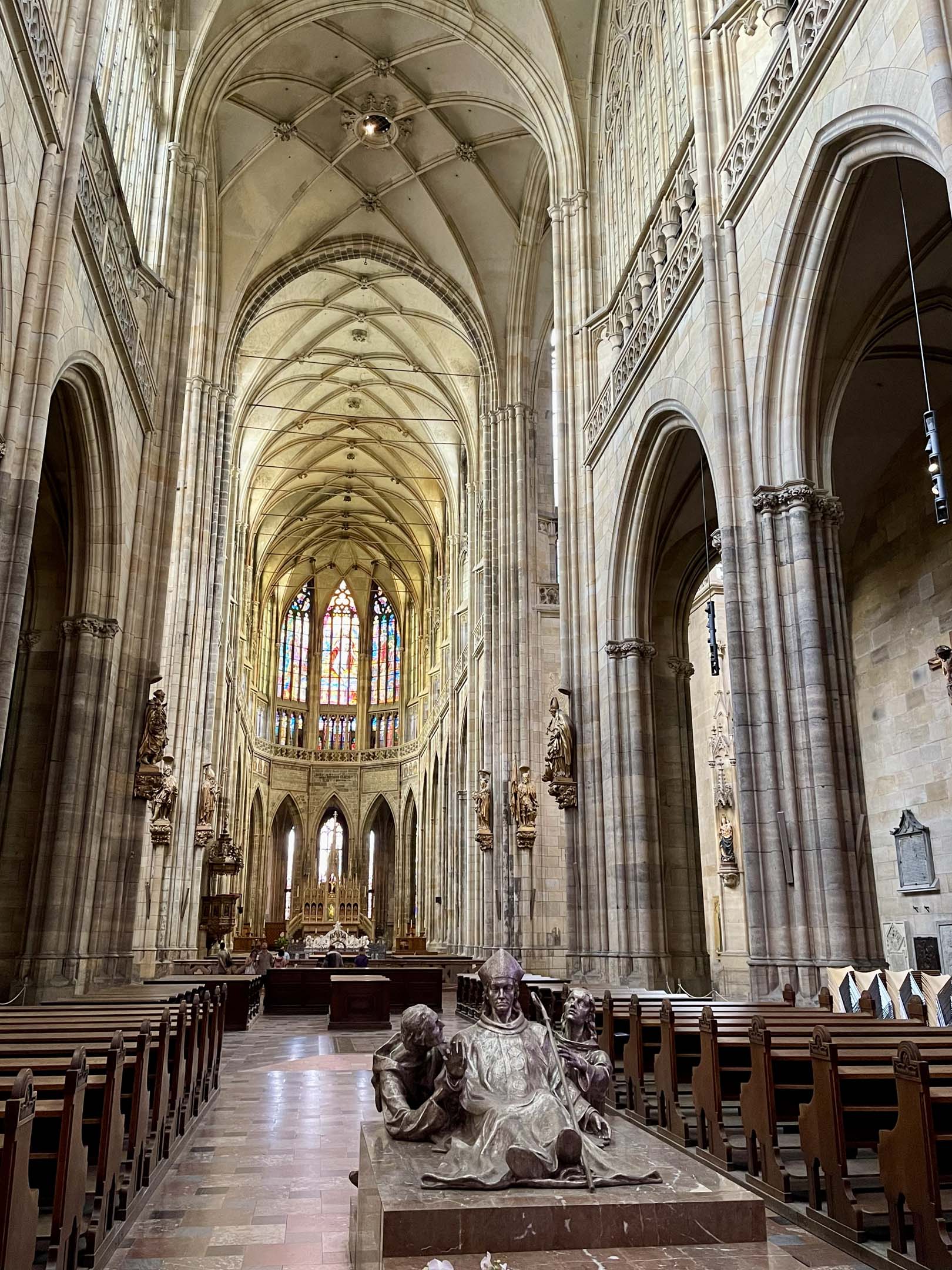
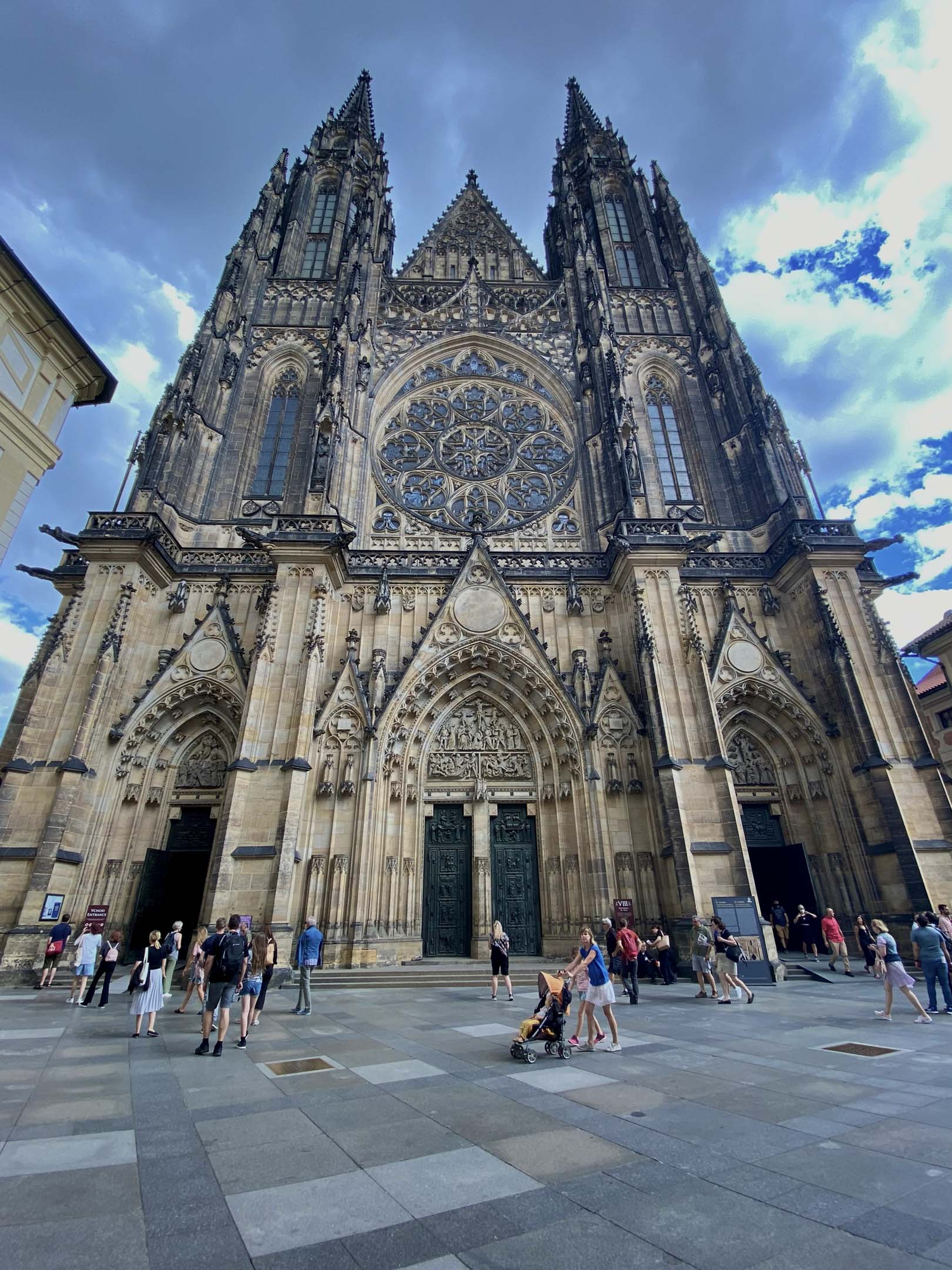
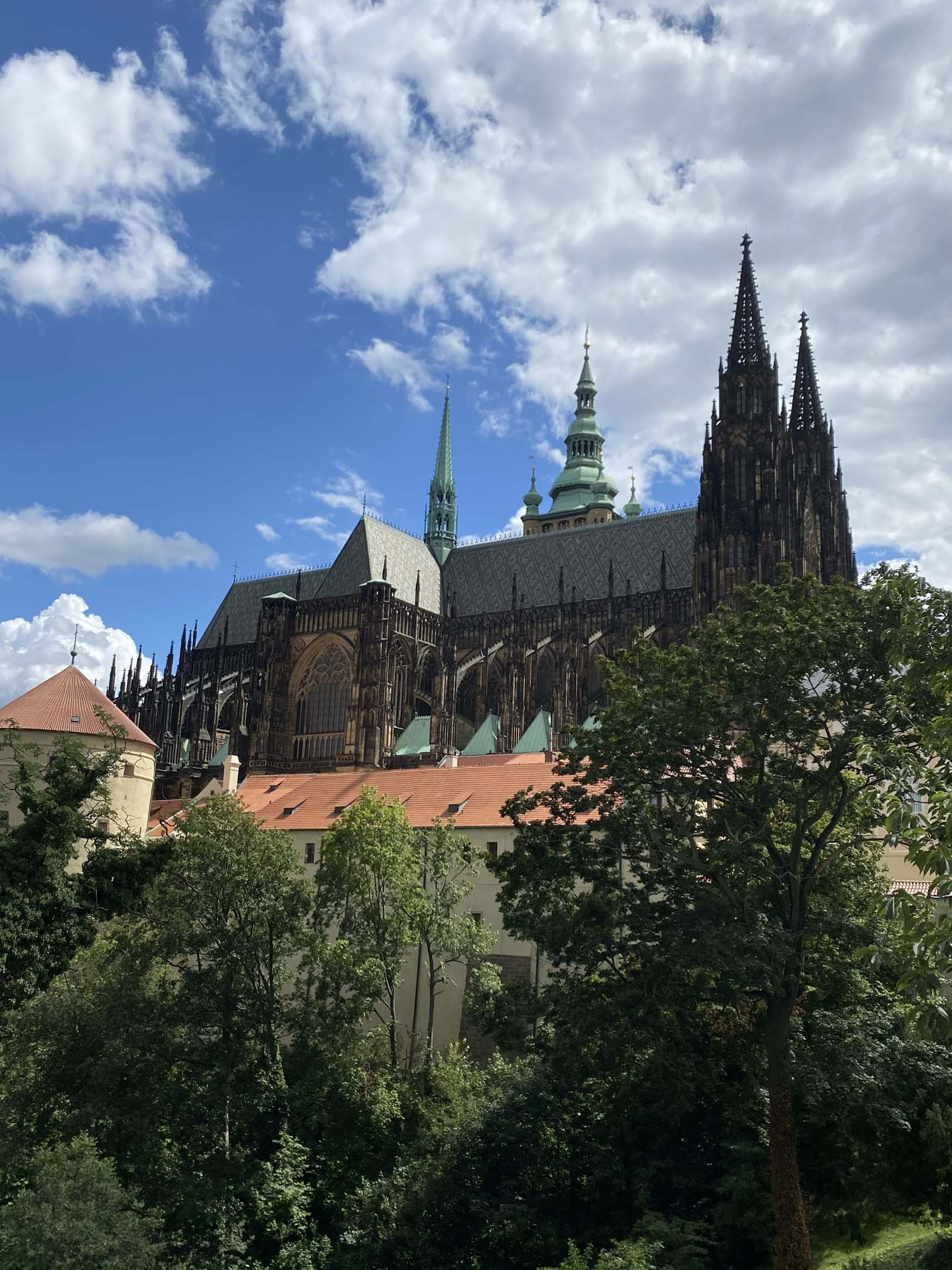
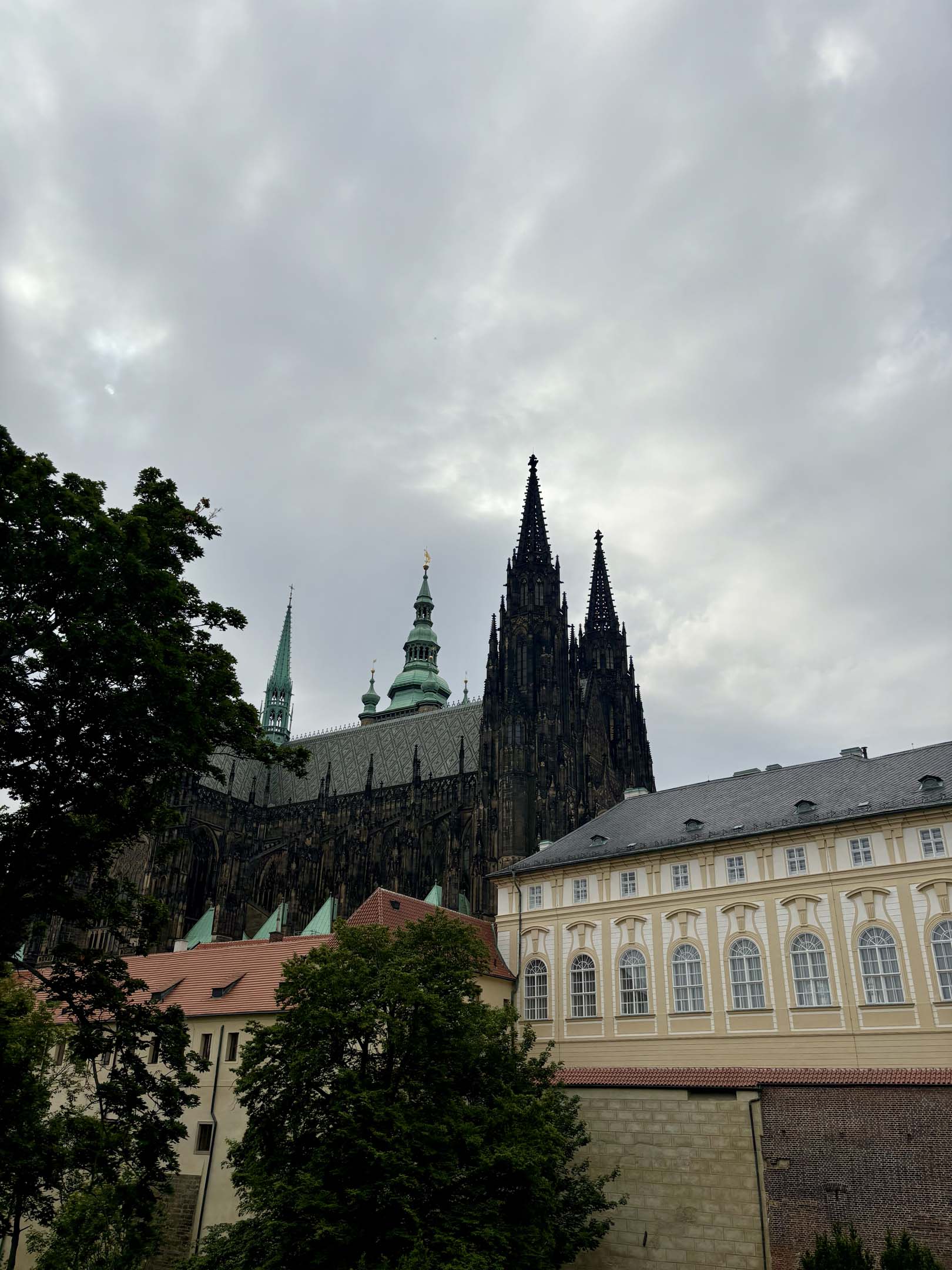
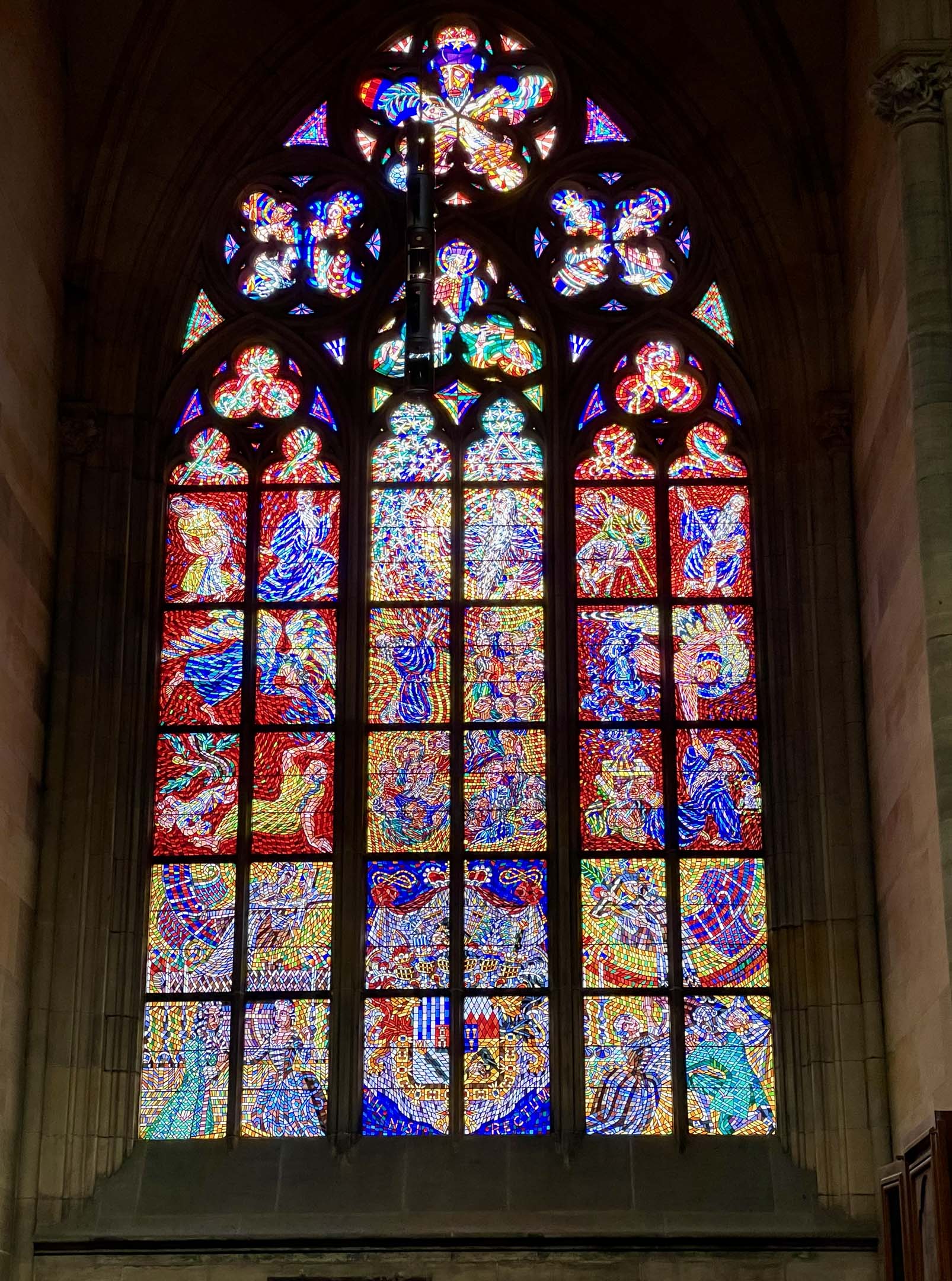
Gothic Prague does not whisper. It rises.
Nowhere is this more evident than at St. Vitus Cathedral, where stone seems to defy gravity. The building does not simply just occupy space; it directs it upward. Narrow windows stretch vertically, ribs arc across ceilings like skeletal structures of light, and spires pierce the skyline with unwavering intent.
There is an austerity to Gothic architecture that feels almost modern in its discipline. Ornament exists, but it never distracts from structure. The emphasis is height, transcendence, tension between earth and sky. Stand in the cathedral’s shadow and you feel small — not in a decorative way, but in a spatial one.
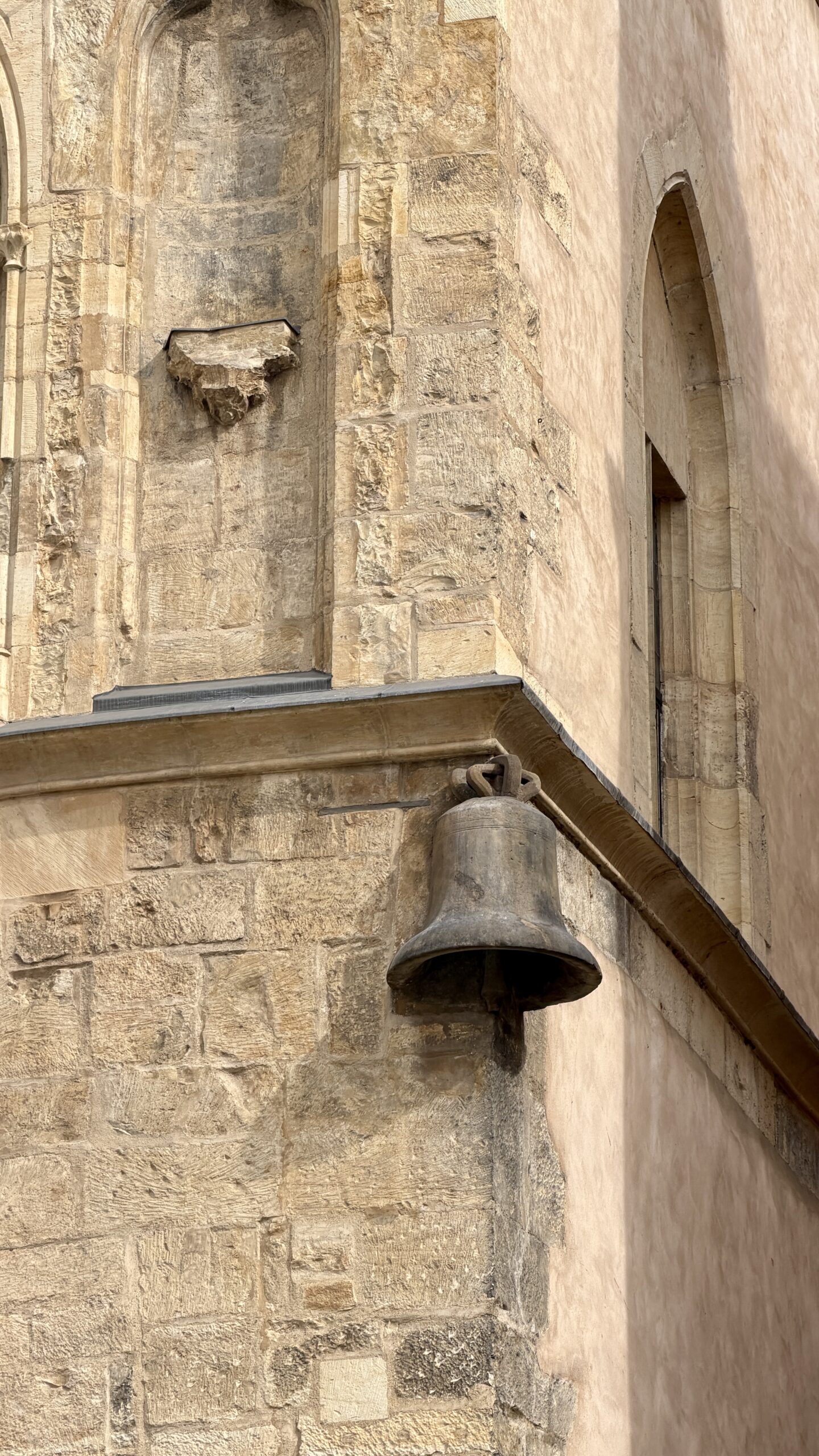
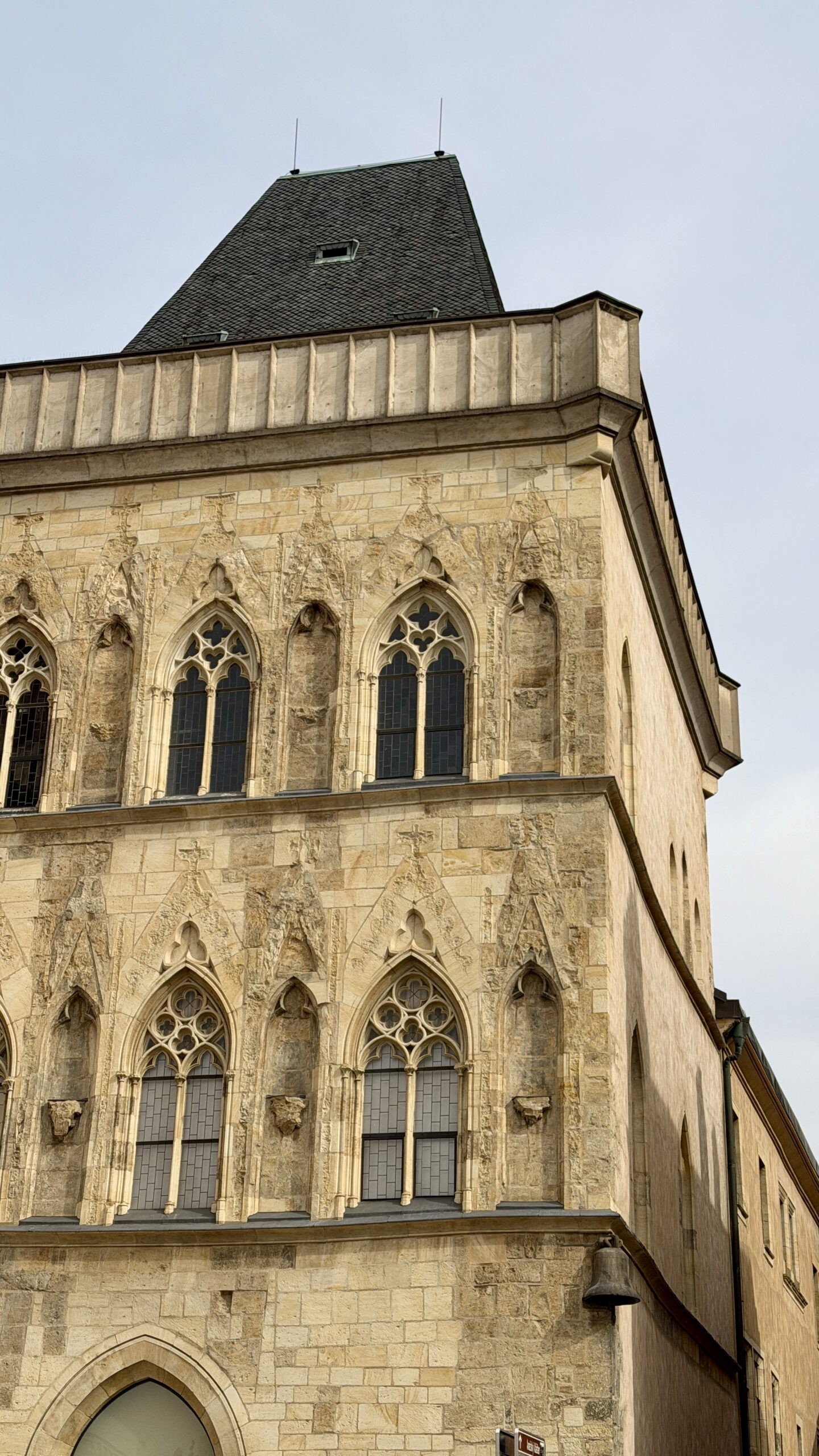
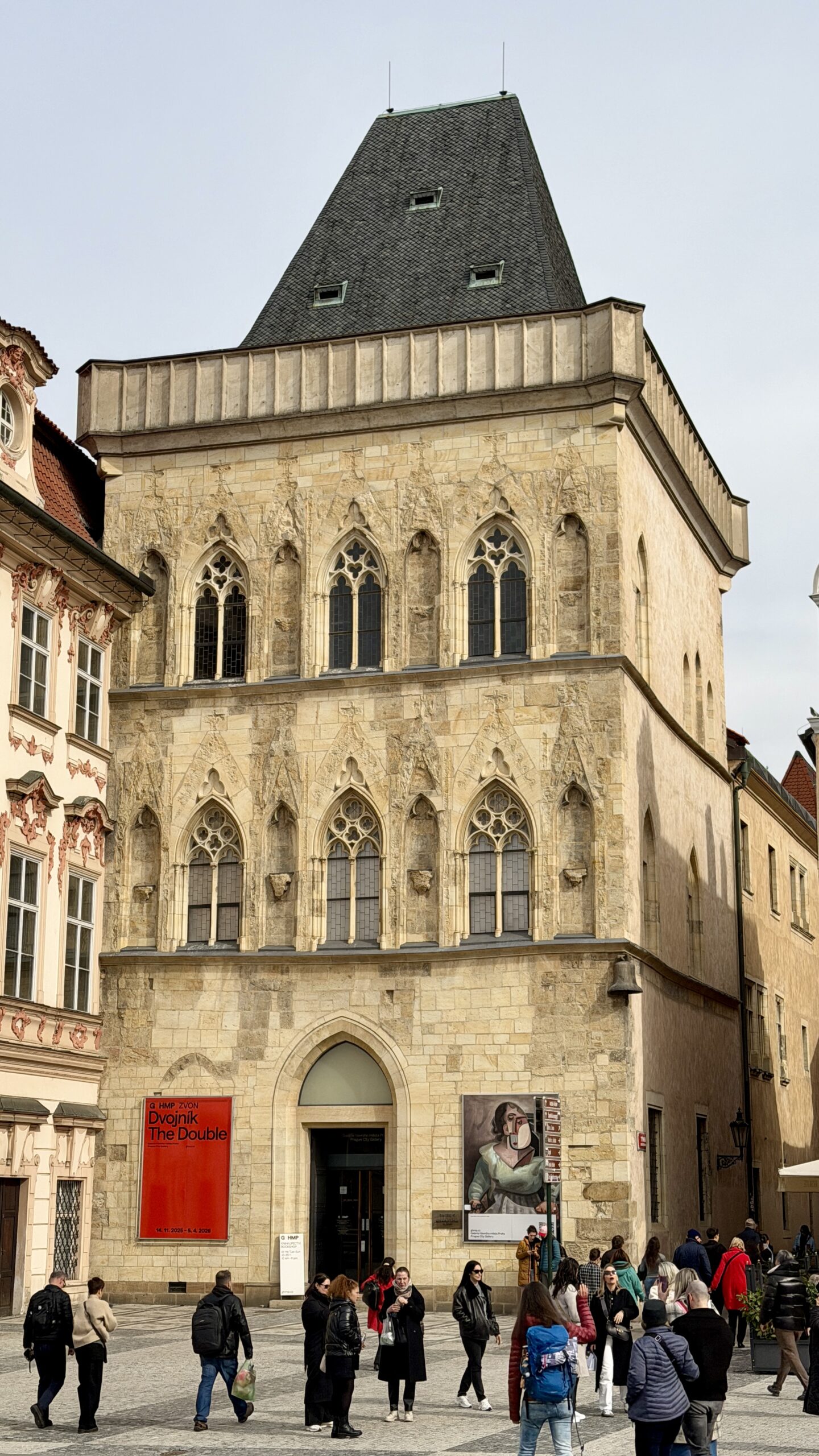
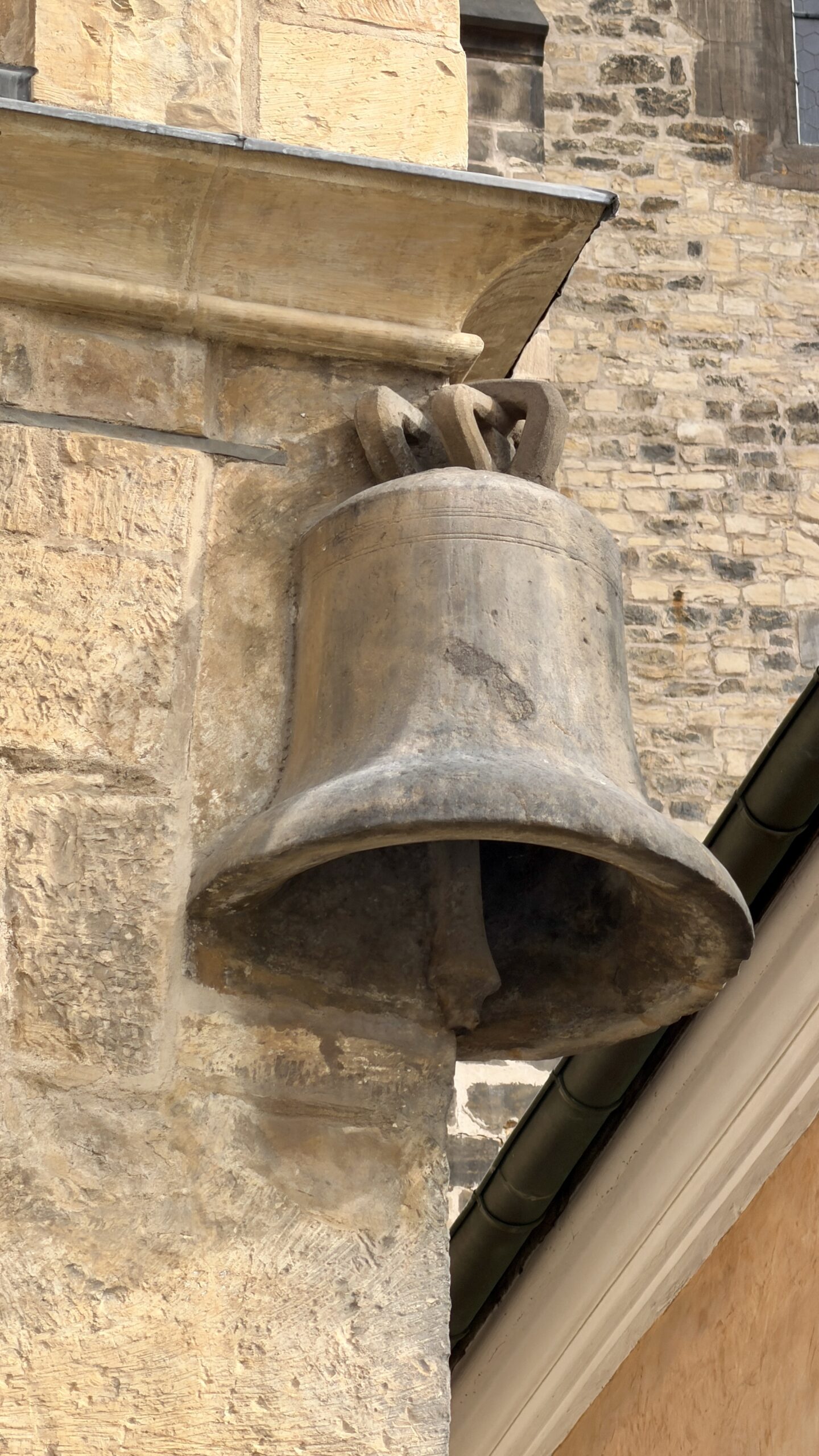
A quieter but equally compelling Gothic presence can be found at the House at the Stone Bell (Dům U Kamenného zvonu) in the Old Town Square. Unlike the soaring scale of St. Vitus, this structure reveals Gothic architecture in a more intimate, urban form. Its dark stone façade, sharply defined windows, and restrained ornament carry the same vertical discipline, but within the tighter fabric of the medieval city.
Together, these two structures reveal the first layer of Prague’s mosaic: a city once defined by faith, by stone, by ambition carved into permanence. The Gothic layer remains intact, not as museum relic, but as active participant in the city’s daily skyline.
Baroque: Movement, Illusion, and Theatrical Light
Where Gothic architecture aspires vertically, Baroque architecture moves.
In St. Nicholas Church in Malá Strana, nothing is static. Curves replace rigid lines. Light floods through high windows and spills across gilded surfaces. Frescoes dissolve ceilings into painted heavens. Columns twist. Balconies hover. Space expands and contracts in choreographed motion.
Baroque architecture is not content with structure alone. It performs.
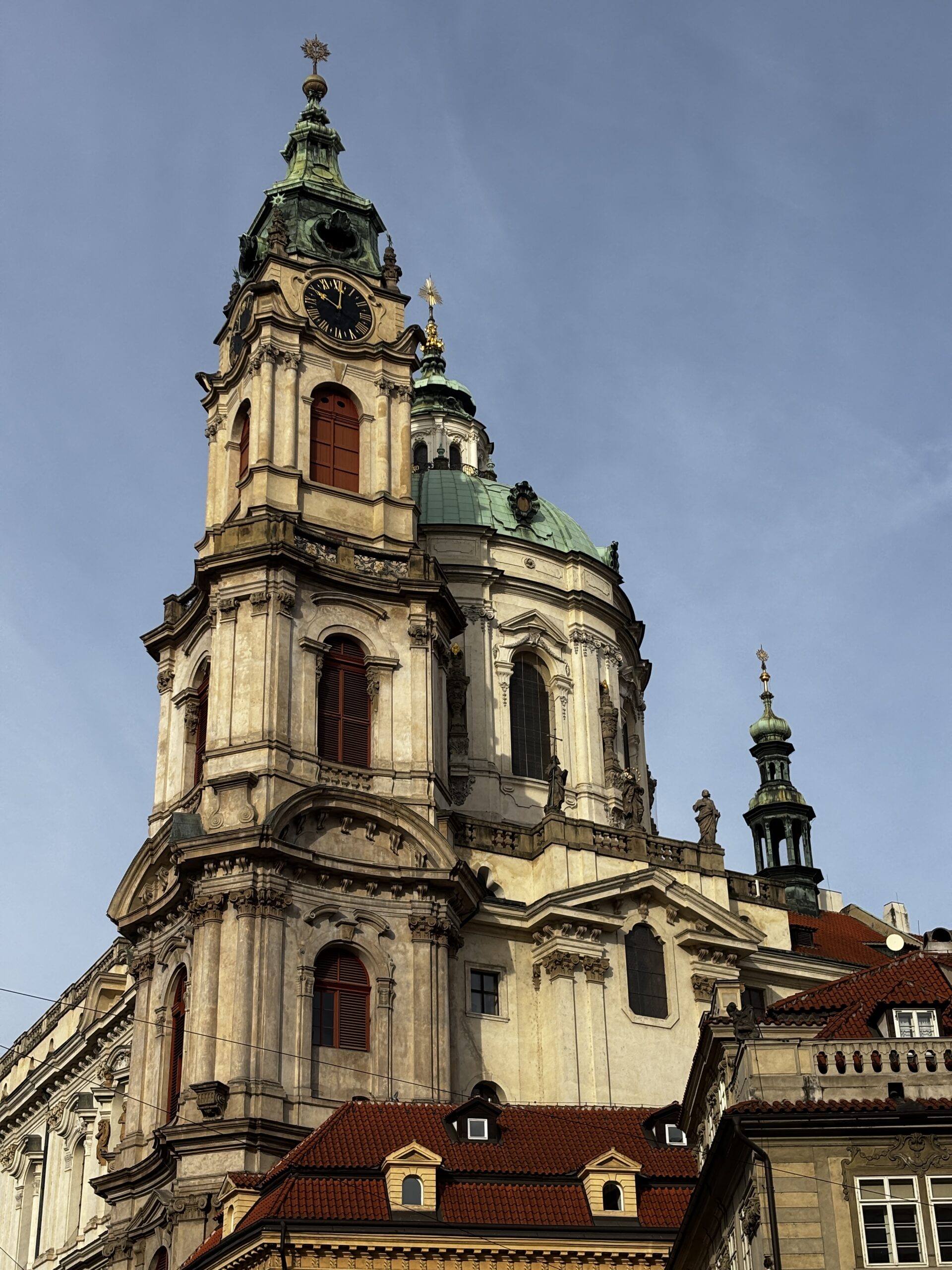
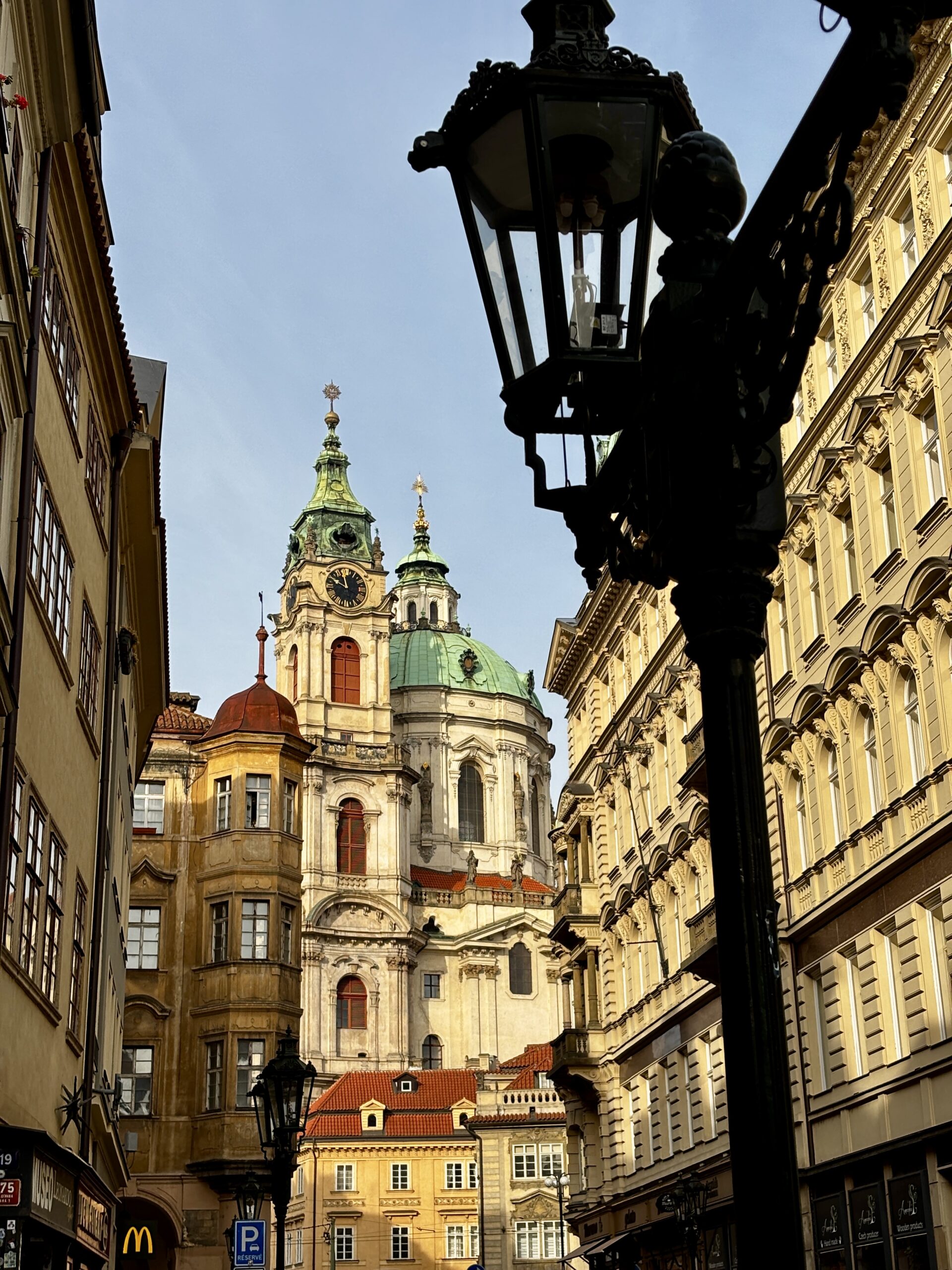
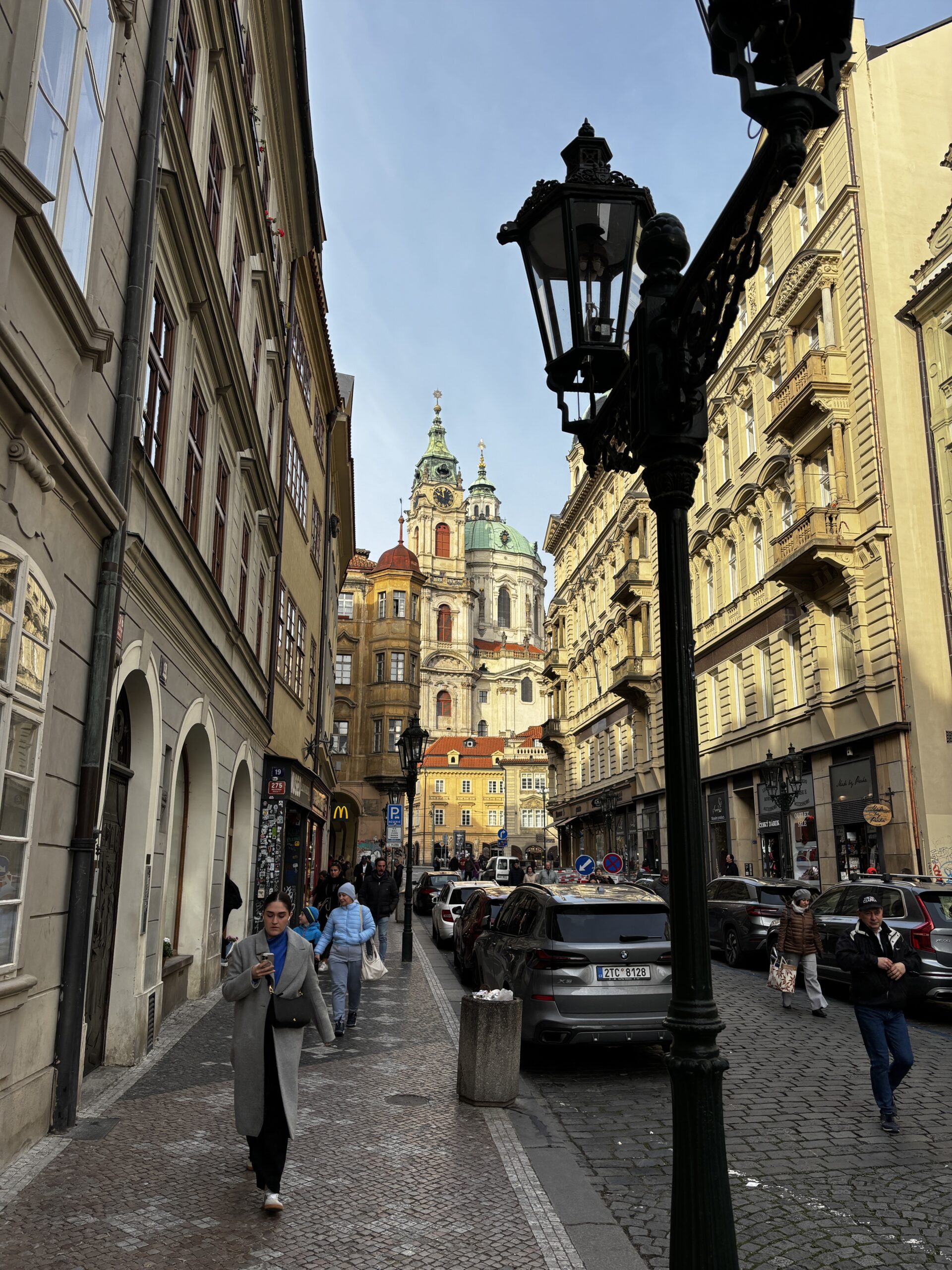
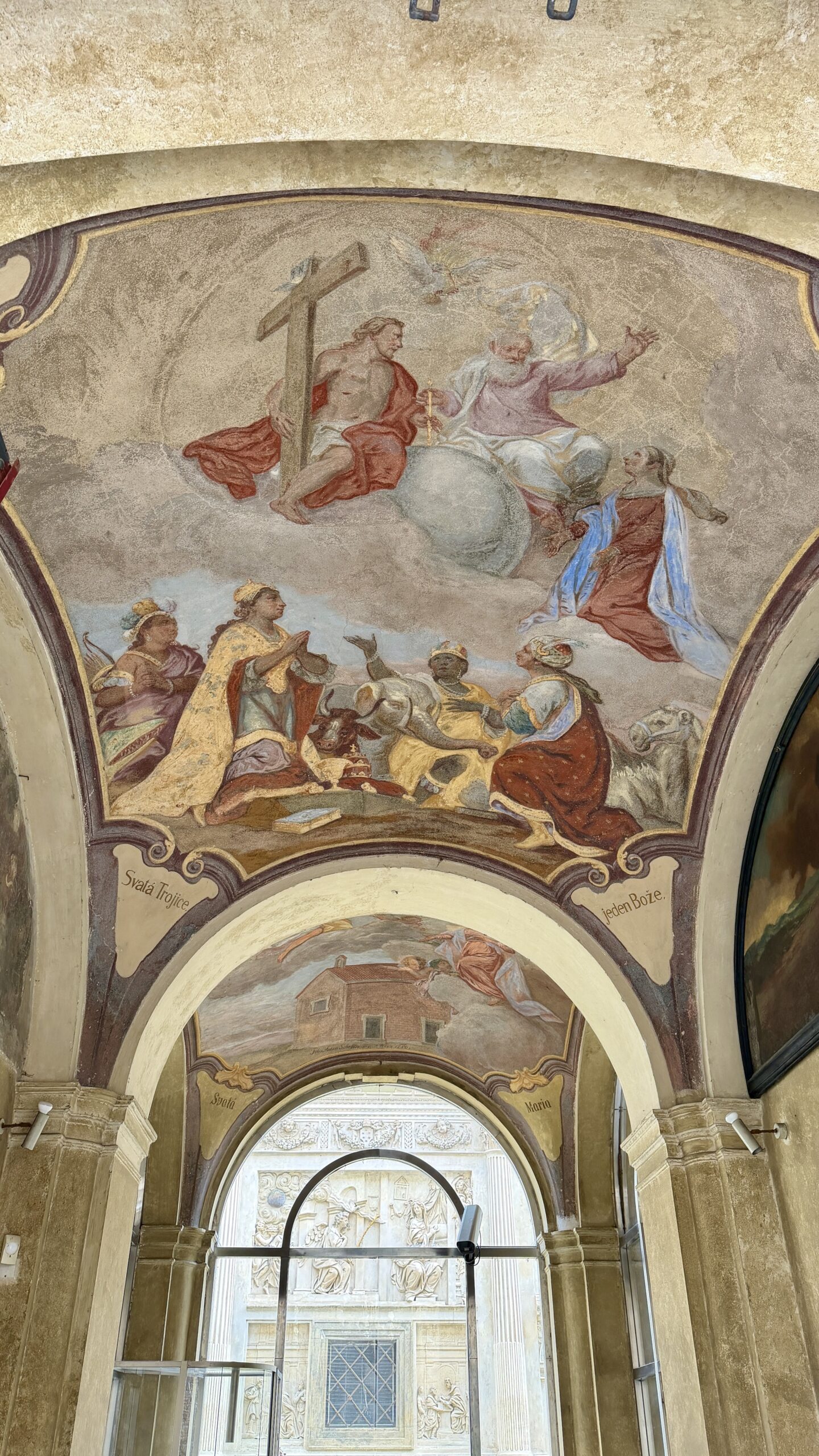
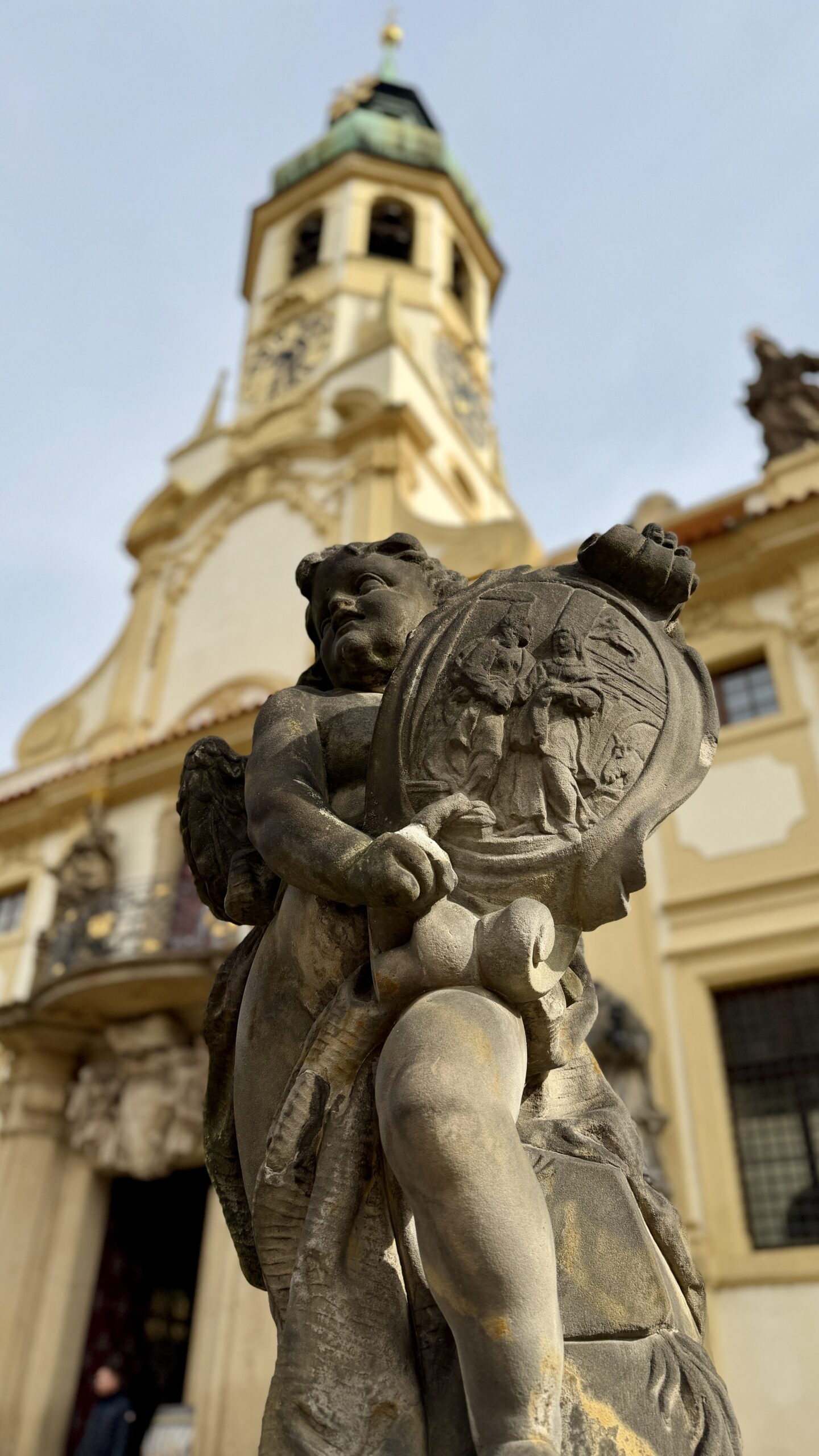
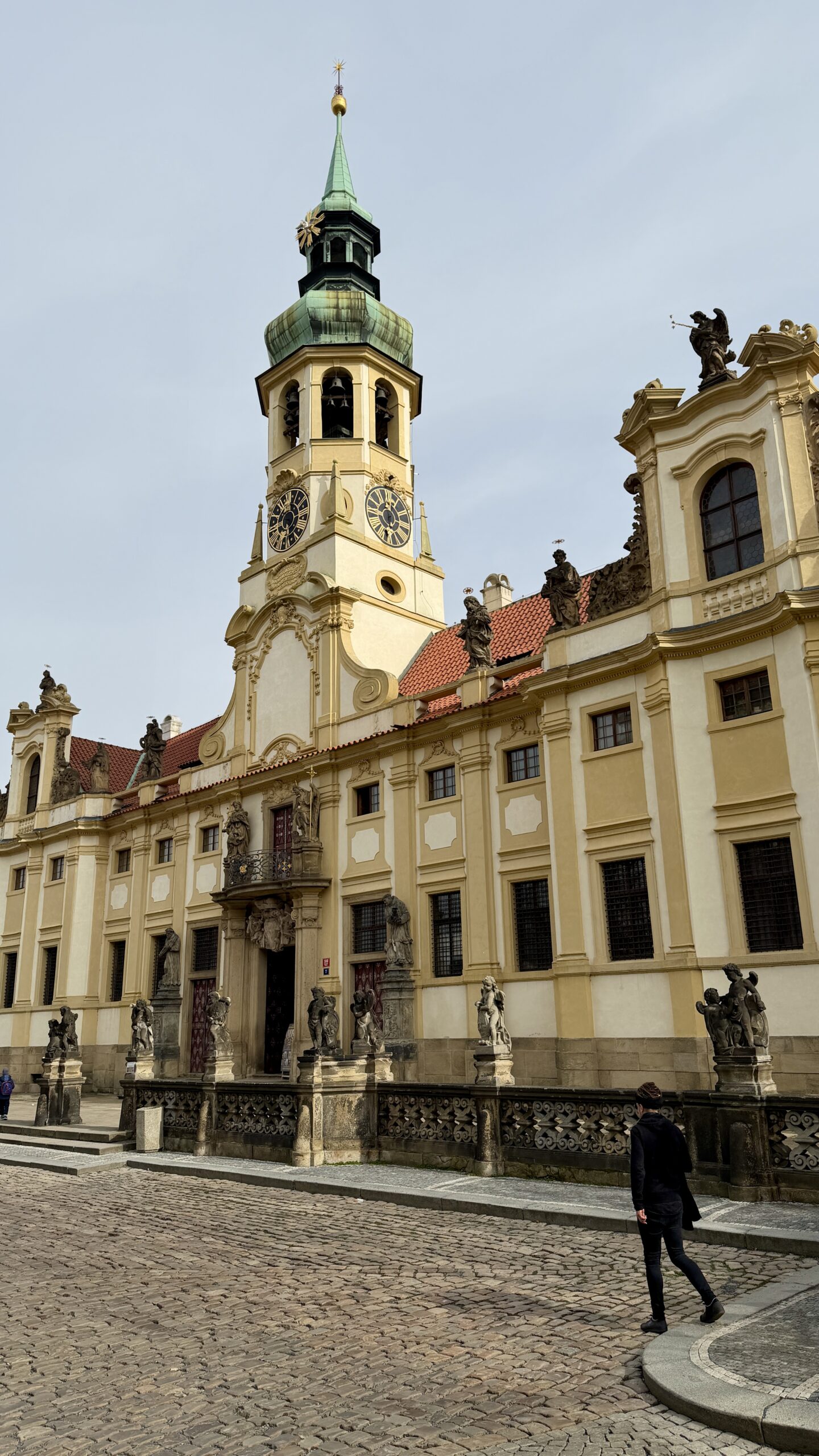
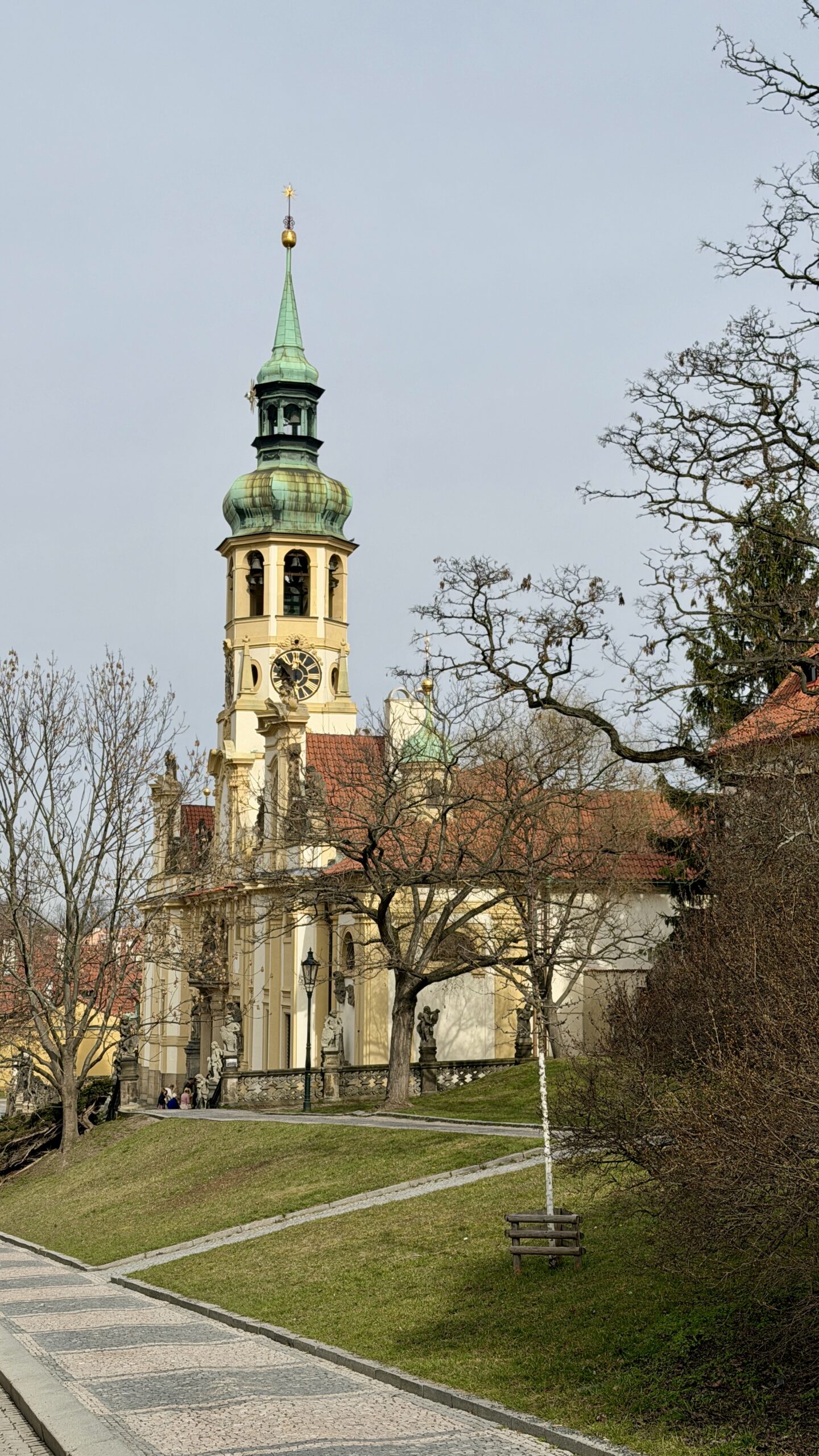
A different expression of Baroque atmosphere unfolds at Loreta, one of Prague’s most distinctive sacred complexes. Unlike the theatrical openness of St. Nicholas Church, Loreta reveals itself more gradually. Courtyards, arcades, and pale façades create a layered composition that feels almost contemplative despite the richness of its decoration.
Walking from Gothic austerity into Baroque exuberance is like shifting emotional registers. The city changes tempo. Lines soften. Surfaces become animated. Light becomes a design element rather than a necessity.
This layer of Prague’s mosaic introduces movement. It reveals a city that once embraced illusion, spectacle, and controlled theatricality — and still carries traces of that energy in its courtyards and domes.
Art Nouveau: Ornament as Identity
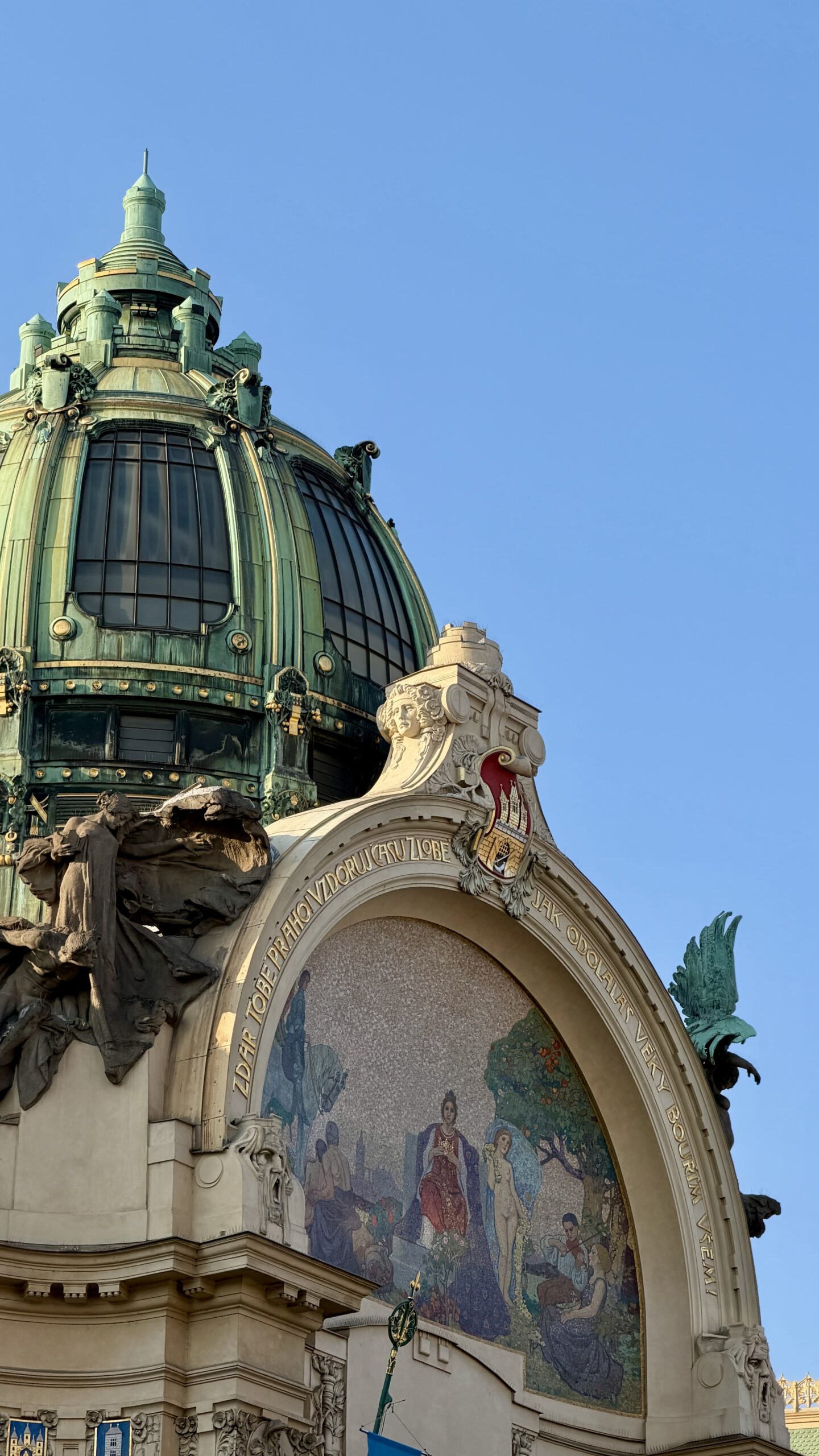
By the turn of the twentieth century, Prague found a new voice — not in stone alone, but in detail.
The Art Nouveau movement arrived not as a break from history, but as a reinterpretation of it. Organic lines replaced rigid geometry. Floral motifs climbed façades. Ironwork became delicate rather than defensive. Ornament was no longer excess; it was identity.
The Municipal House (Obecní dům) stands as one of the most complete expressions of this era. Its façade is a tapestry of sculptural detail. Inside, chandeliers shimmer above mosaics and gilded panels. Nothing feels accidental. Every curve is deliberate, every surface considered.
Art Nouveau in Prague is not flamboyant in the Parisian sense. It is precise, crafted, integrated.
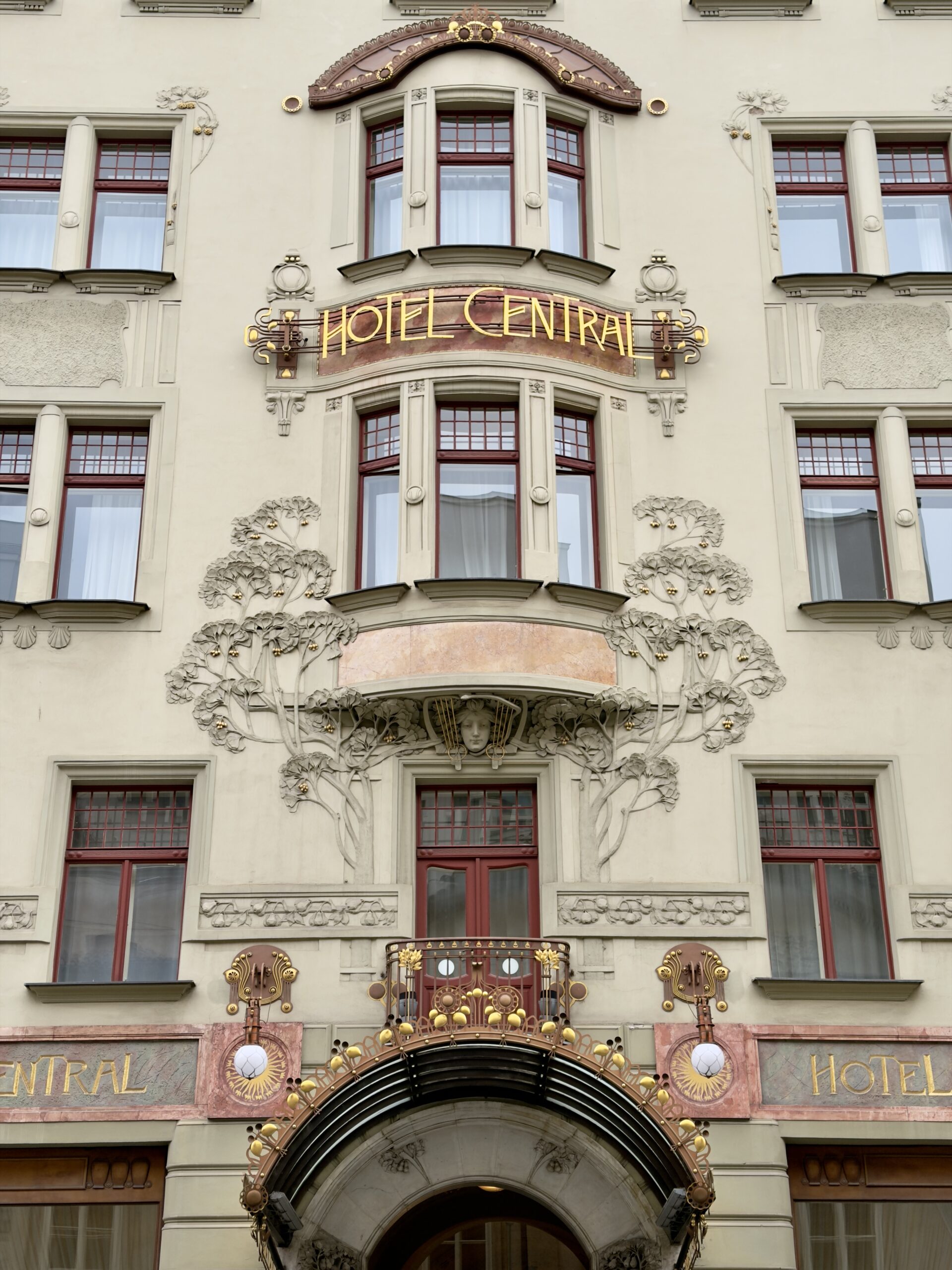
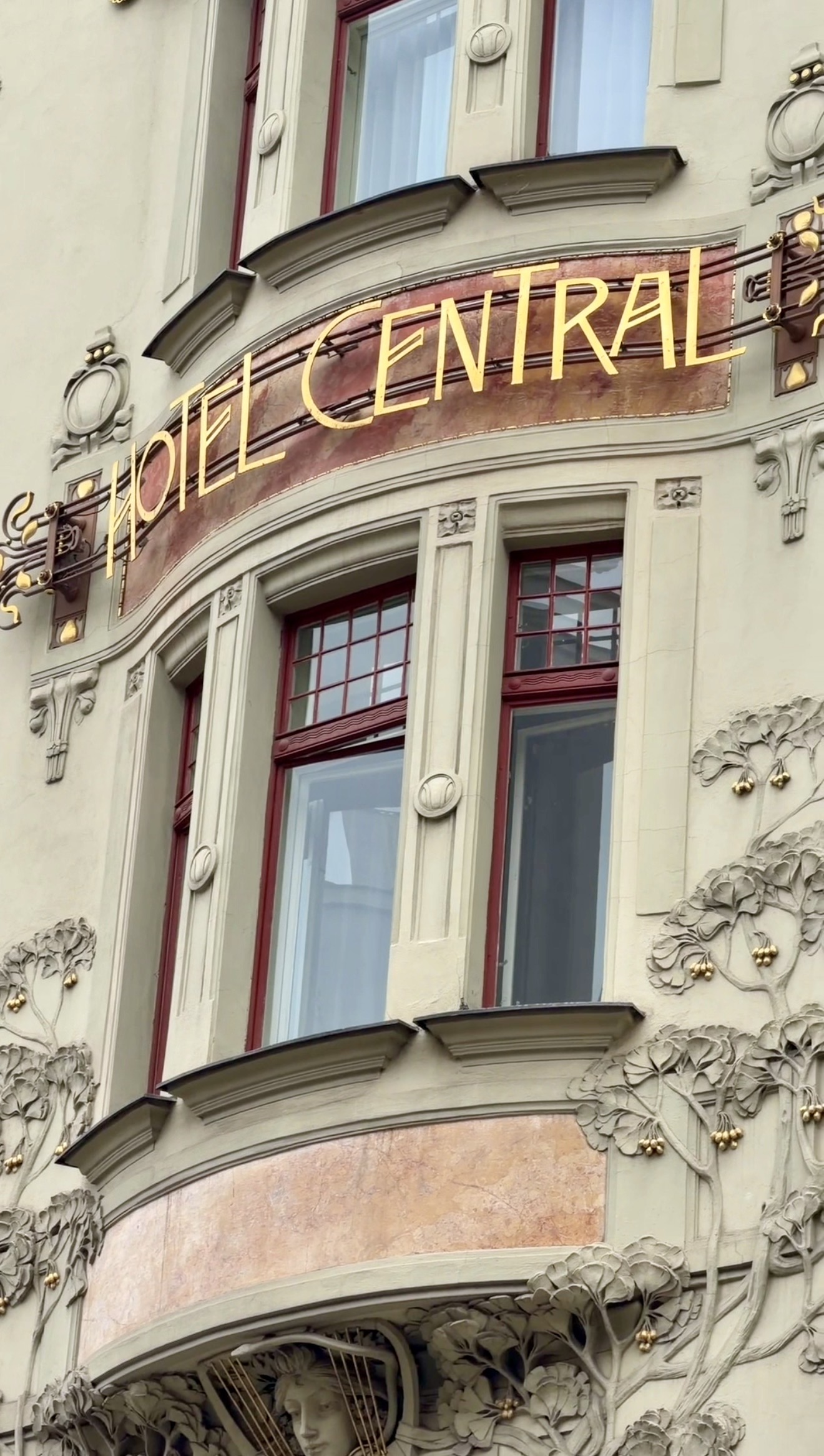
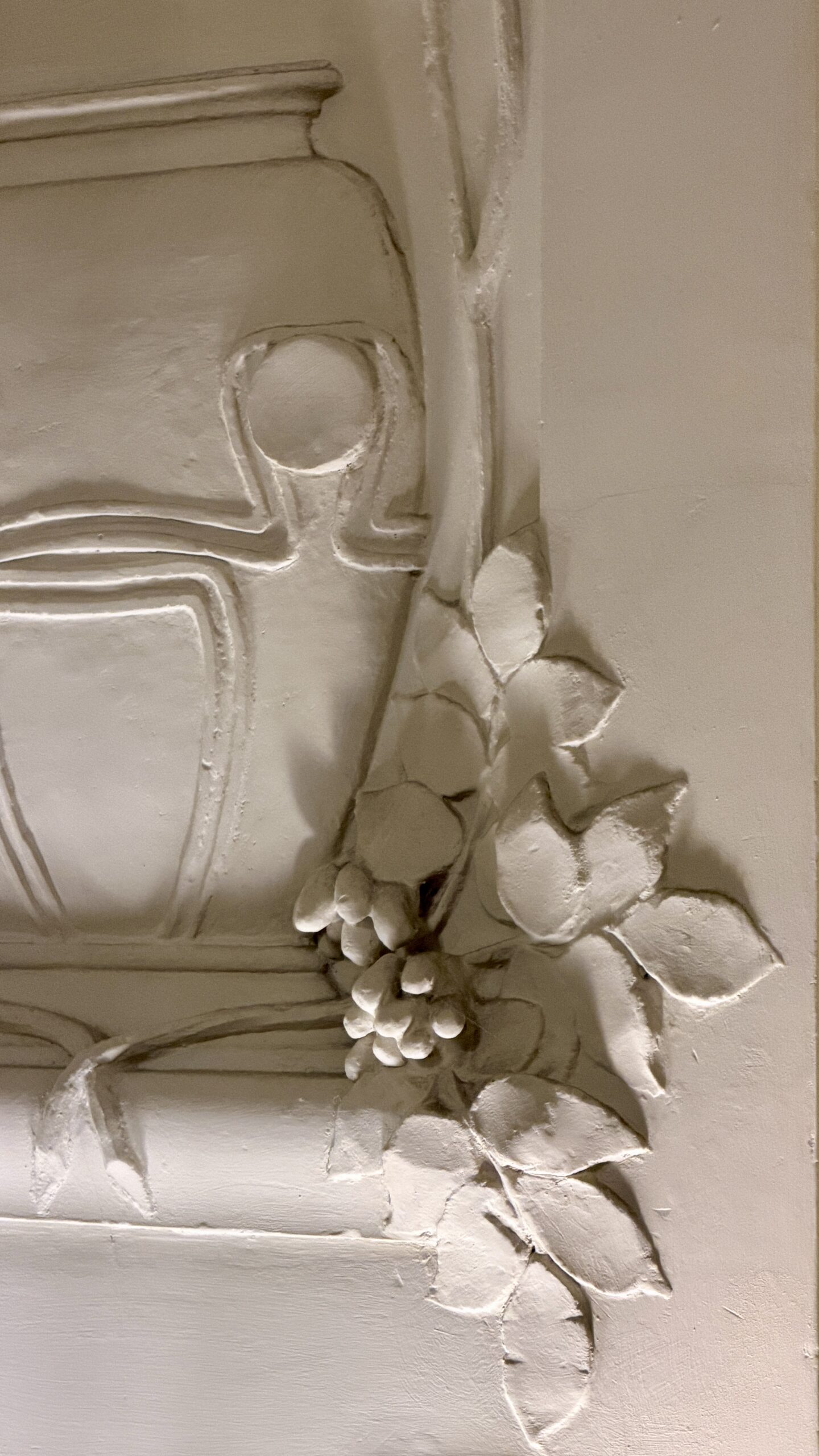
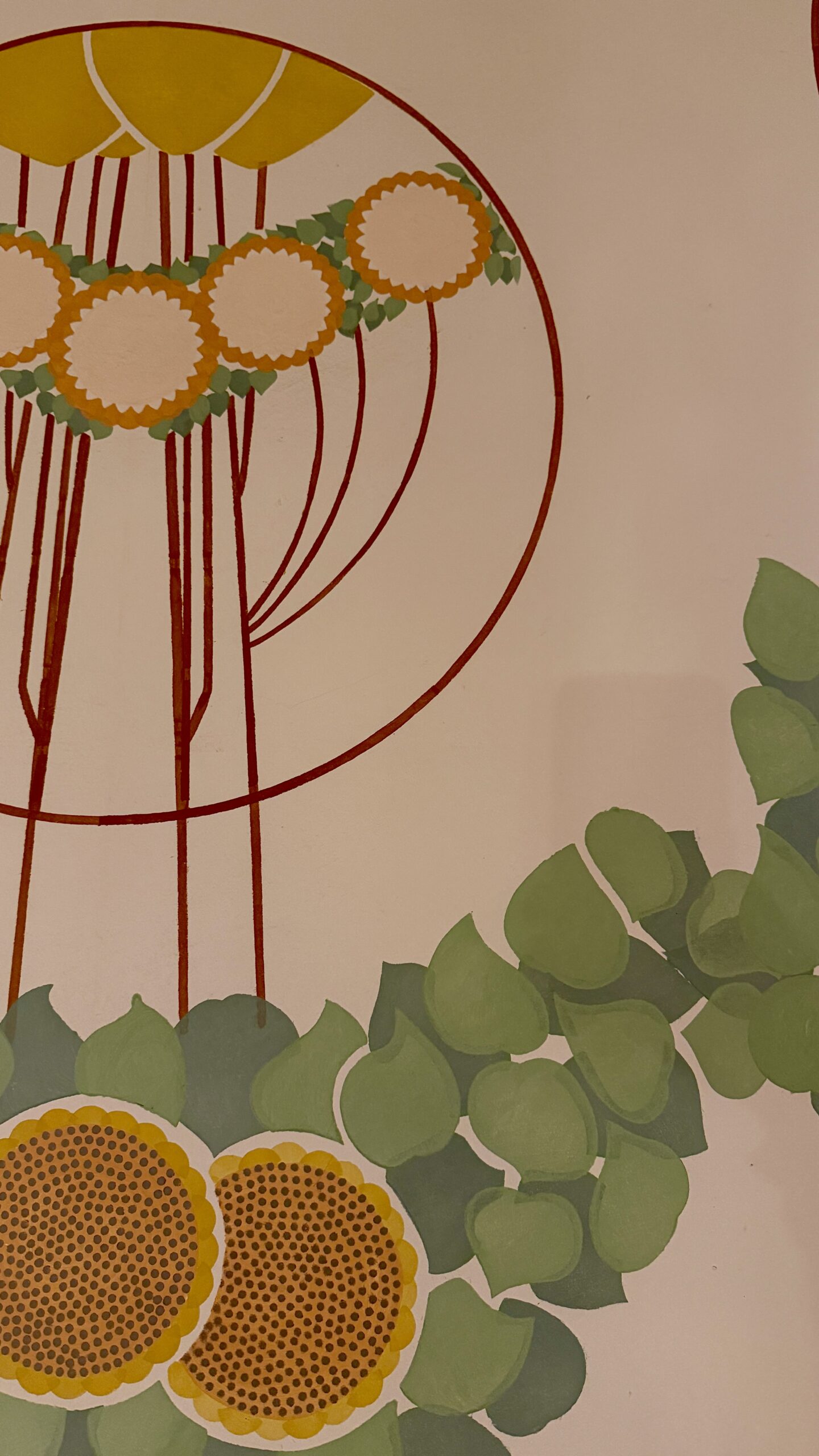
This elegance extends beyond public monuments. The façade of K+K Hotel Central, with its unmistakable Art Nouveau lines and decorative flourishes, is not simply a stylistic reference — it is part of this historical layer. Staying within such architecture is not an act of nostalgia. It is inhabiting the city’s ornamental phase, where detail became narrative.
Art Nouveau softens Prague’s mosaic. It introduces warmth. It proves that architecture can be expressive without abandoning discipline. It bridges the city’s historic core with its modern aspirations.
Czech Cubism: Geometry as Experiment
Few cities in the world can claim a distinct architectural Cubist movement. Prague can.
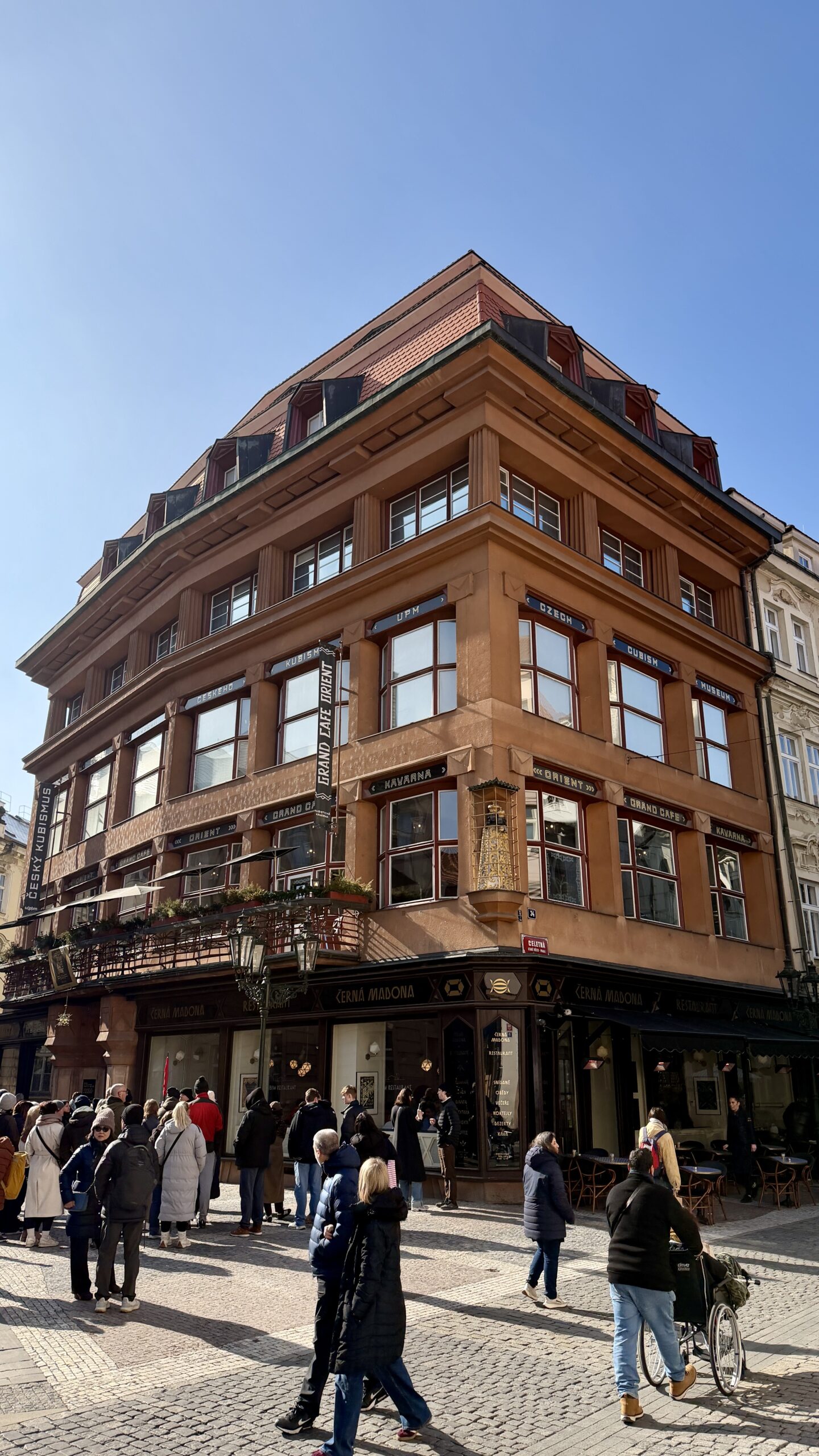
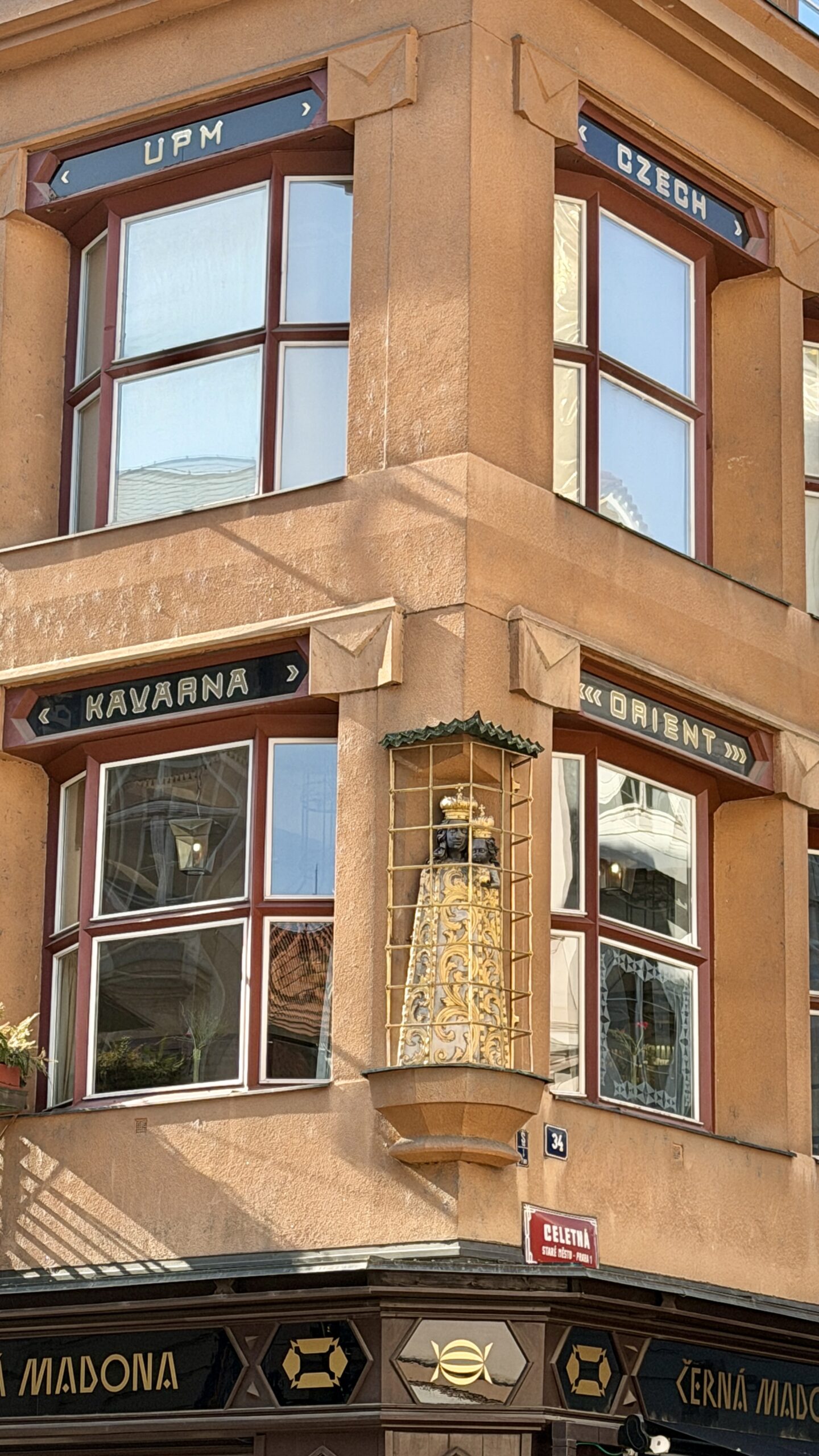
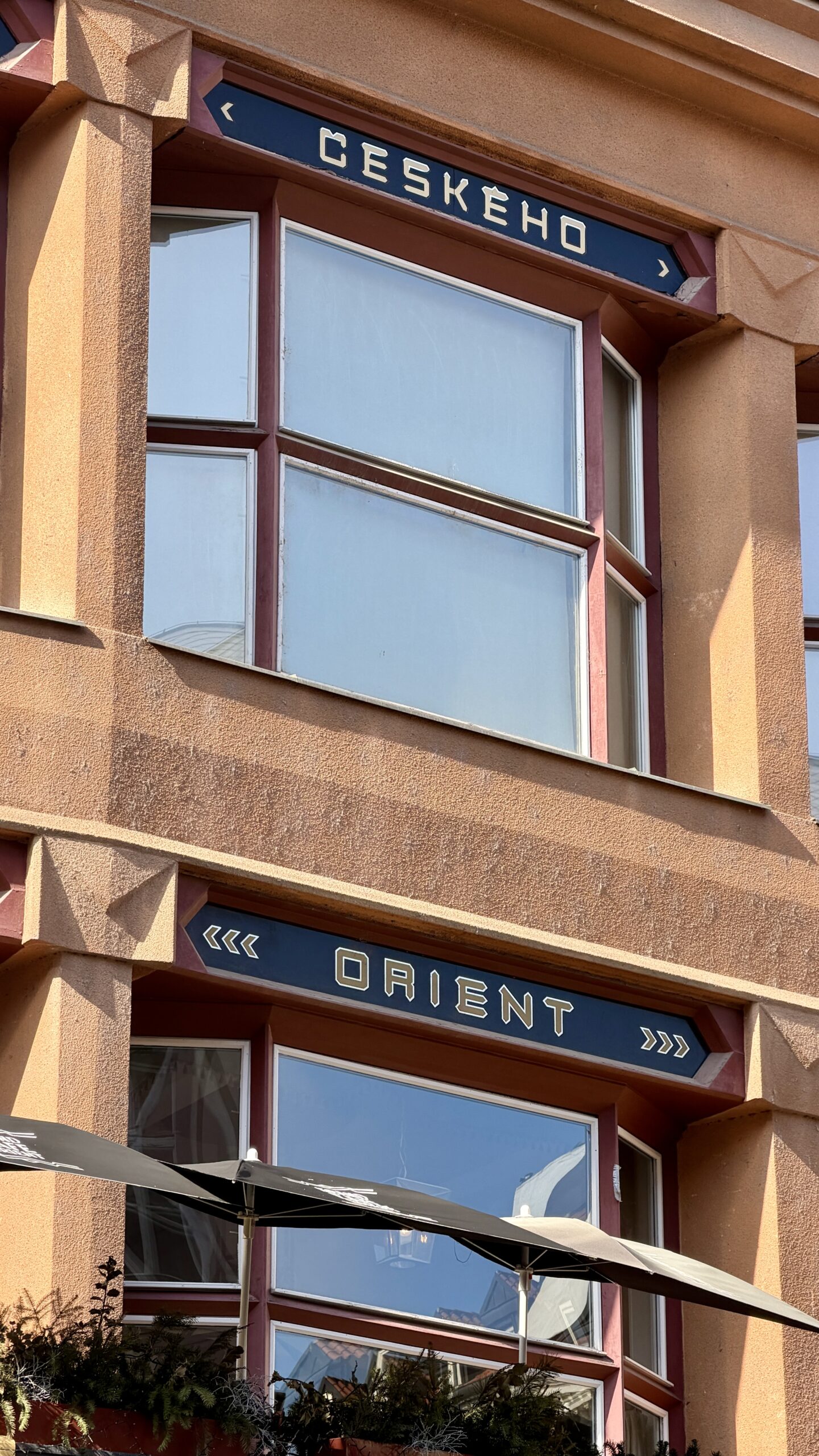
The House of the Black Madonna (Dům U Černé Matky Boží) embodies this radical departure from curved ornament and flowing lines. Sharp edges replace organic motifs. Windows become angular. Surfaces fragment. The building feels sculpted rather than constructed.
Cubism in Prague was not merely aesthetic experimentation; it was philosophical. It questioned perception. It fractured conventional form. It proposed that architecture could express dynamism through geometry.
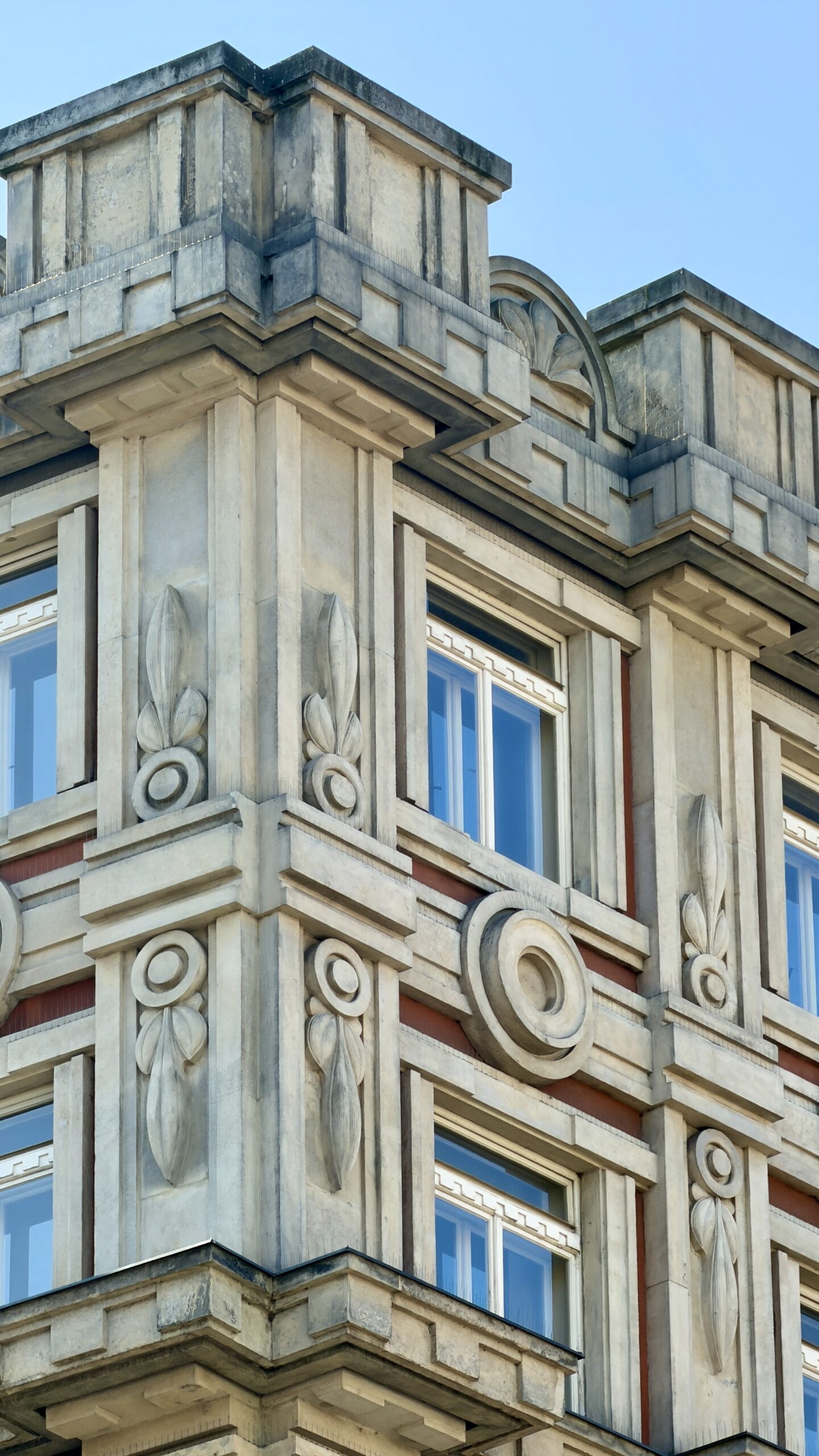
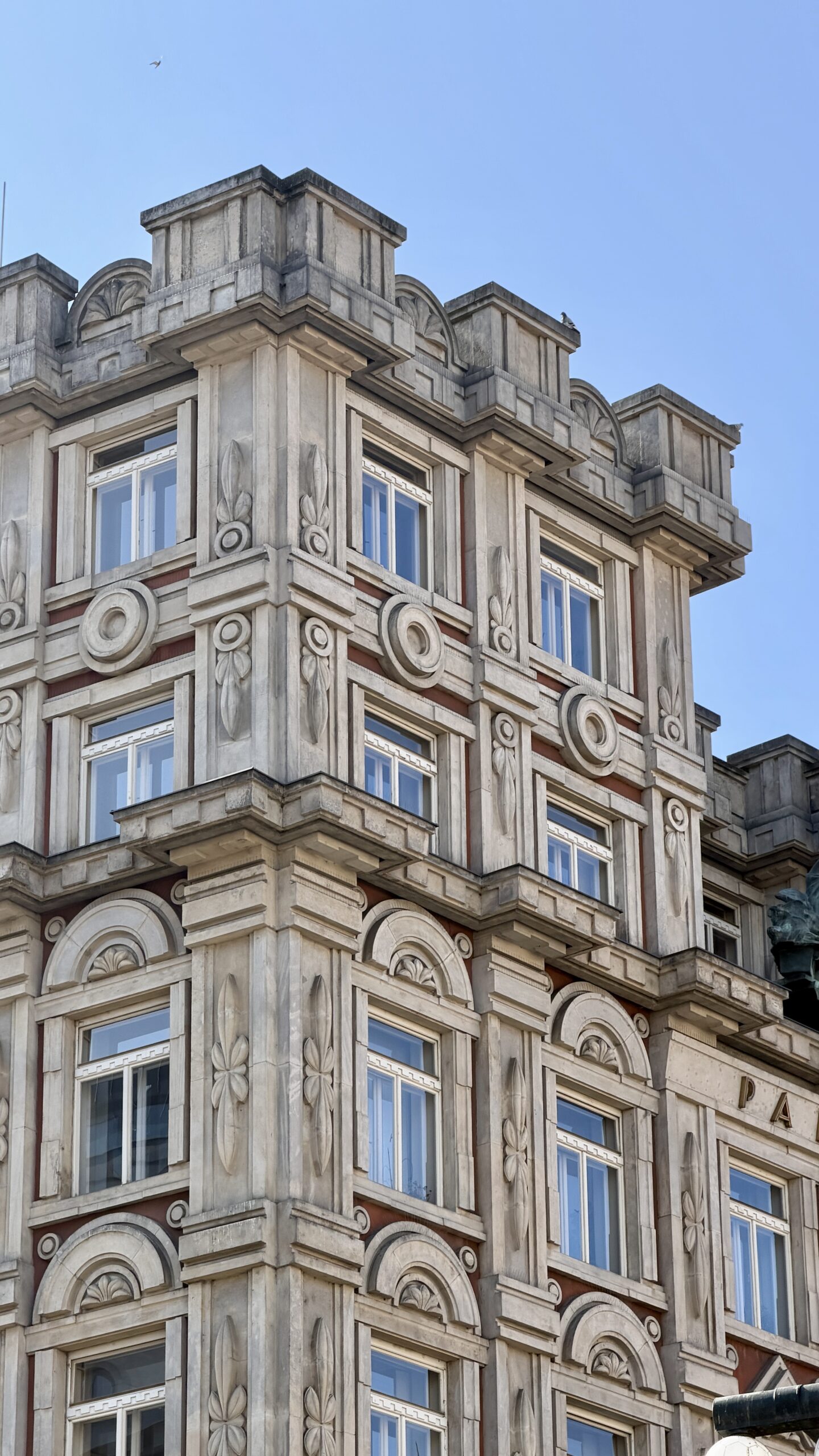
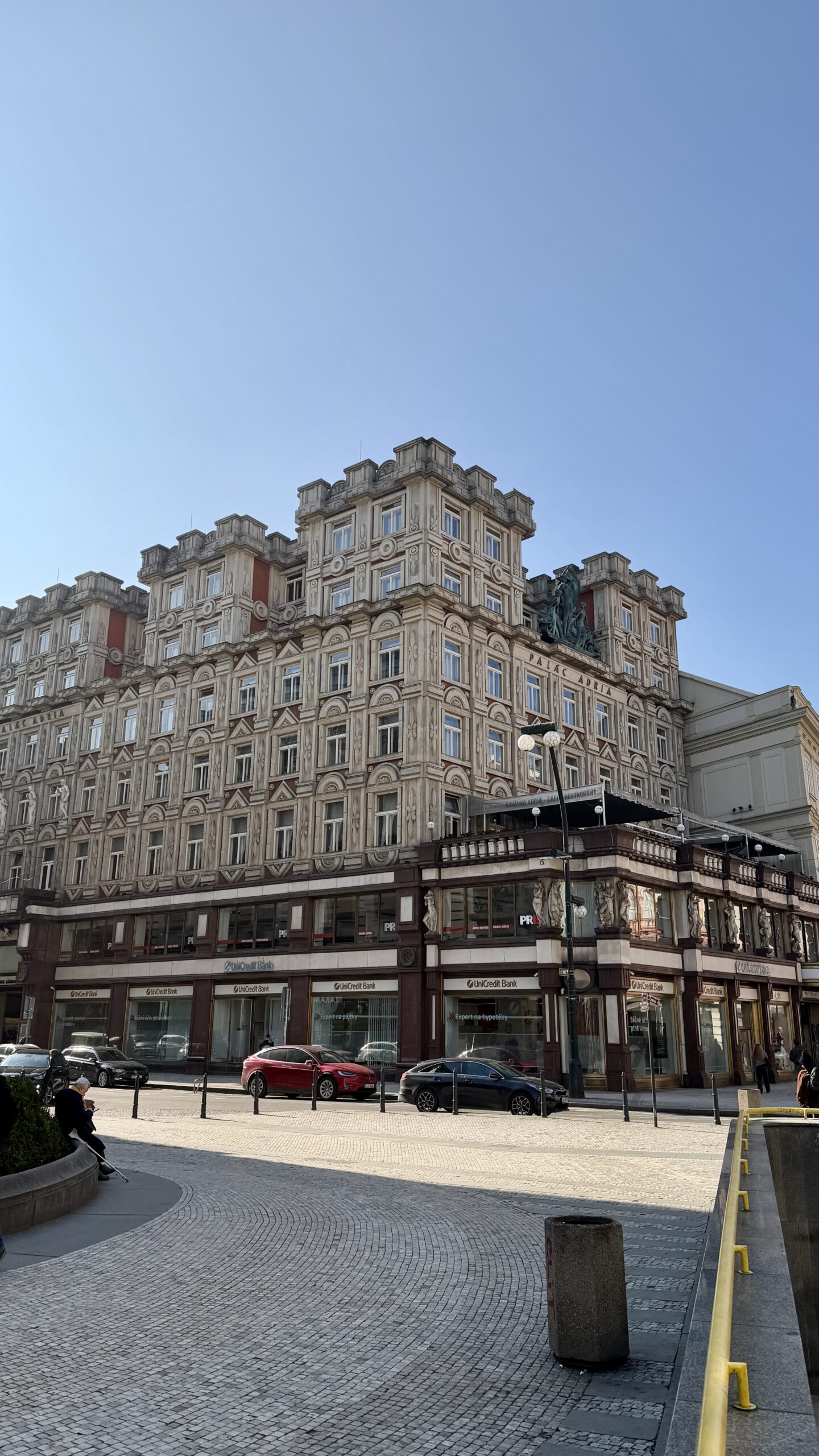
The Adria Palace (Palác Adria) continues this spirit of experimentation, blending Cubist tendencies with monumental presence. Its angular massing and sculptural façade resist easy categorisation. It is not decorative in the traditional sense, nor purely rational. It stands as a hybrid — bold, slightly confrontational, distinctly Czech.
In the mosaic of Prague, Cubism represents intellectual risk. It is the moment when the city stepped beyond imitation and contributed something entirely original to architectural history.
Brutalism: Weight, Honesty, and Concrete Memory
If Secession celebrates ornament and Cubism celebrates geometry, Brutalism embraces mass.
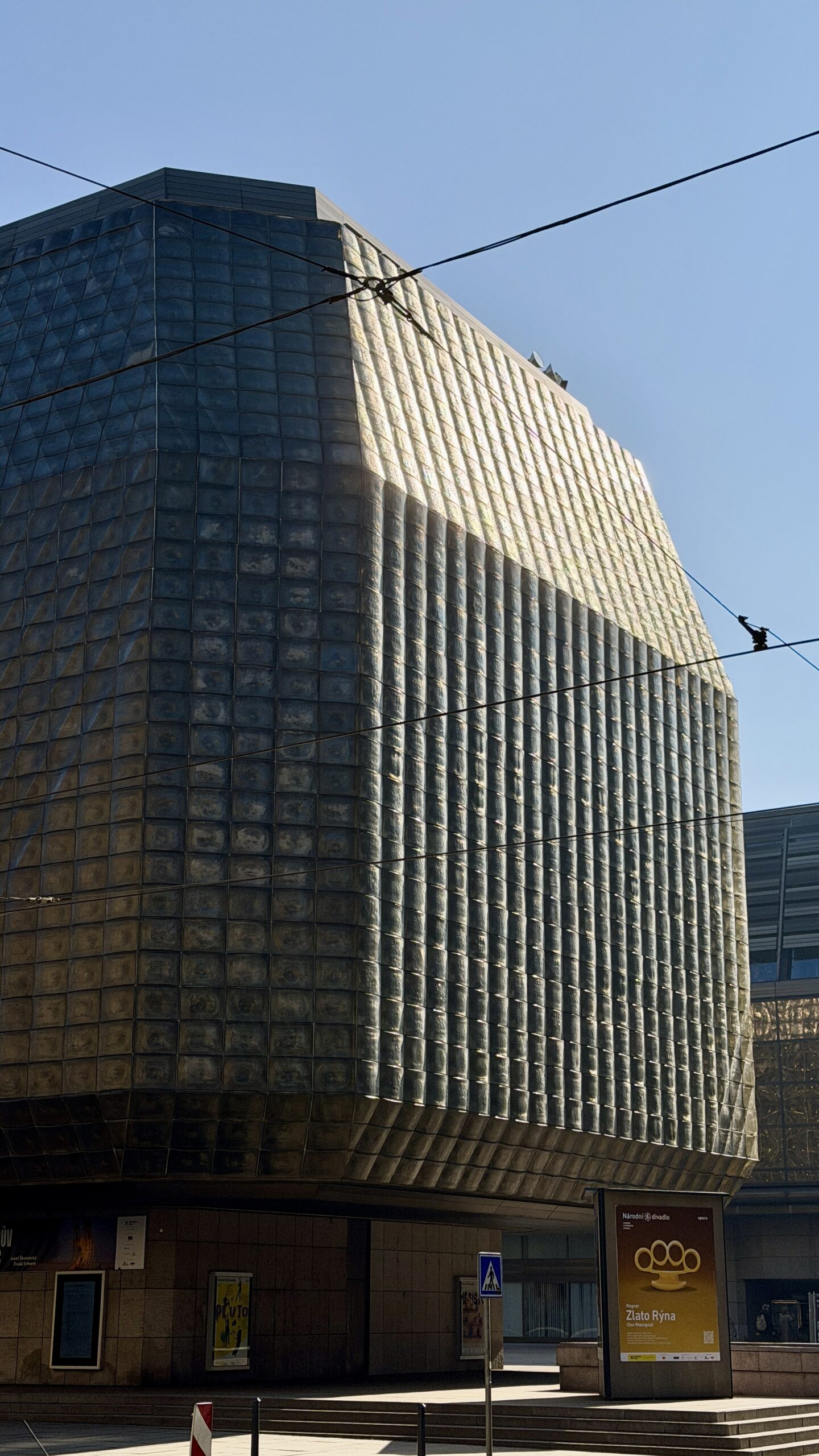
The New Stage of the National Theatre stands as a dark, crystalline block beside its historic counterpart. Its glass façade is layered and repetitive, its form unapologetically modern. For some, it contrasts too sharply with its surroundings. For others, that tension is precisely its strength.
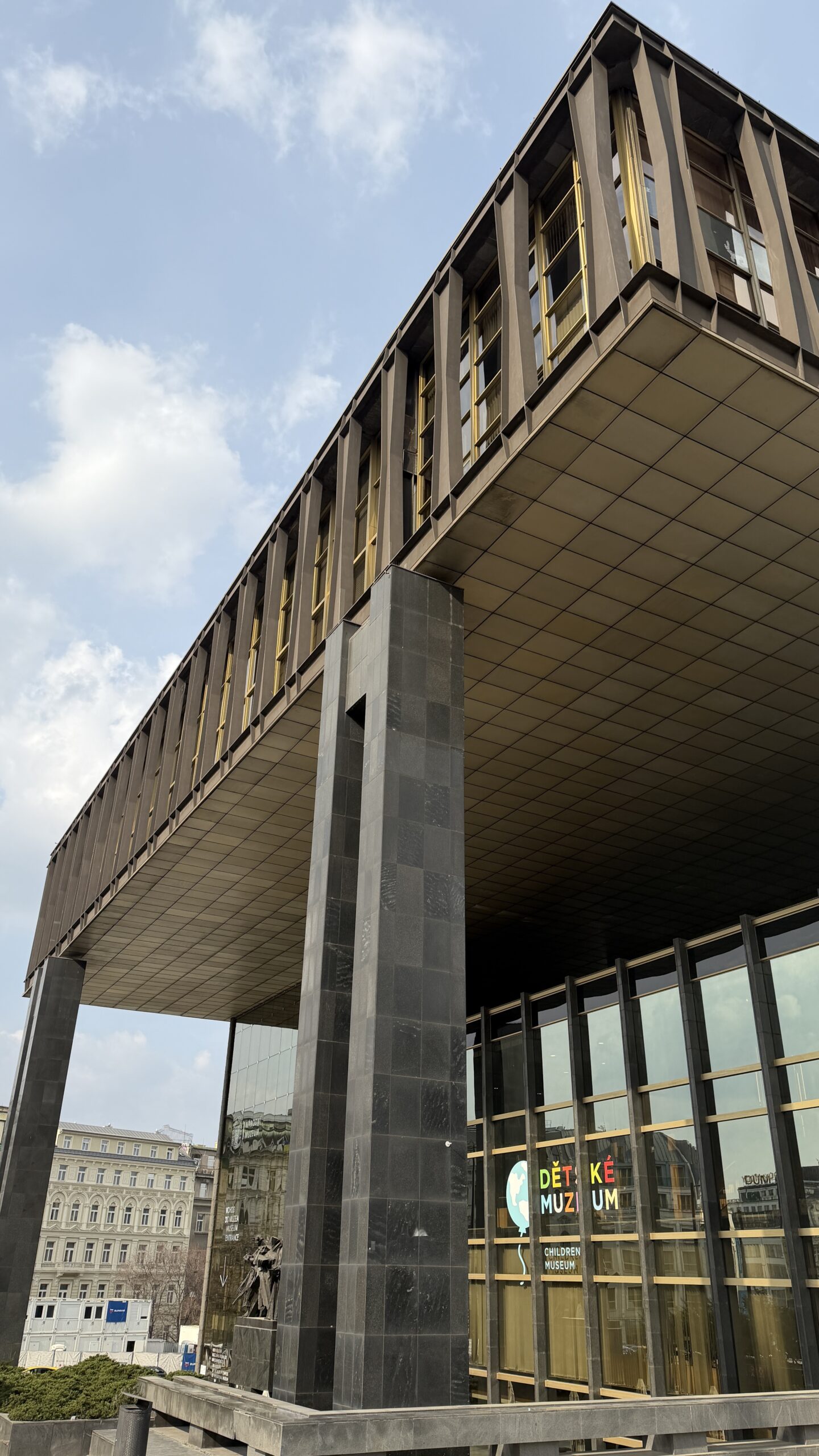
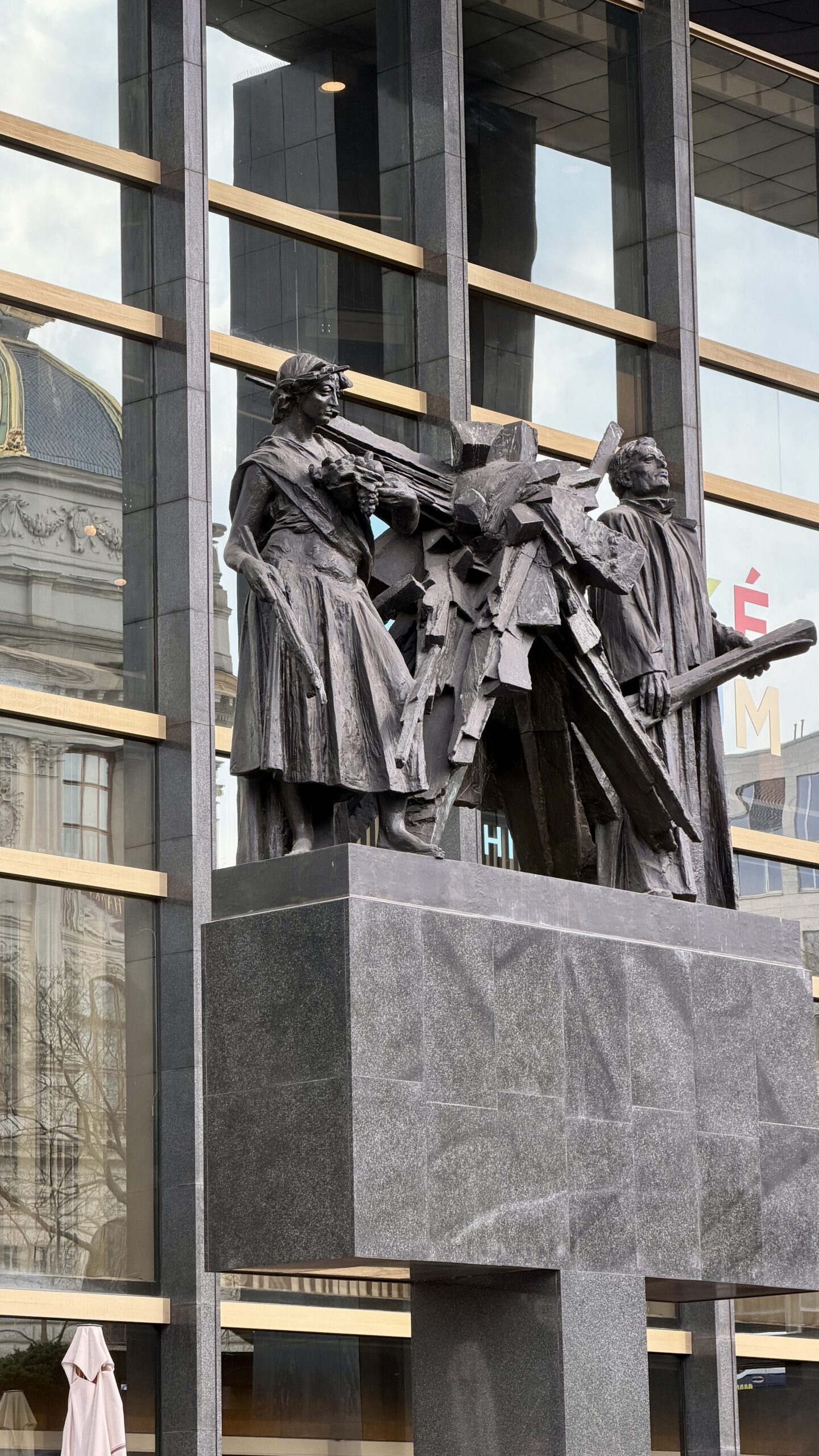
Nearby, the New Building of the National Museum — originally the Federal Assembly — embodies another face of Prague’s late twentieth century. Elevated structures, exposed materials, and bold volumes create an architecture that does not ask to be admired. It asks to be acknowledged.
Brutalism in Prague is not ornamental. It is direct. Concrete is not disguised. Structure is not softened. It reflects a political and social era that valued strength and monumentality over delicacy. And yet, within the broader mosaic, even this heavy layer finds its place. It anchors the city in its recent past. It adds weight — literal and symbolic — to the architectural composition.
Not everything must be beautiful in the conventional sense to be meaningful. In Prague, even concrete carries history.
Contemporary Architecture: Dialogue Rather Than Disruption
The mosaic continues to evolve.
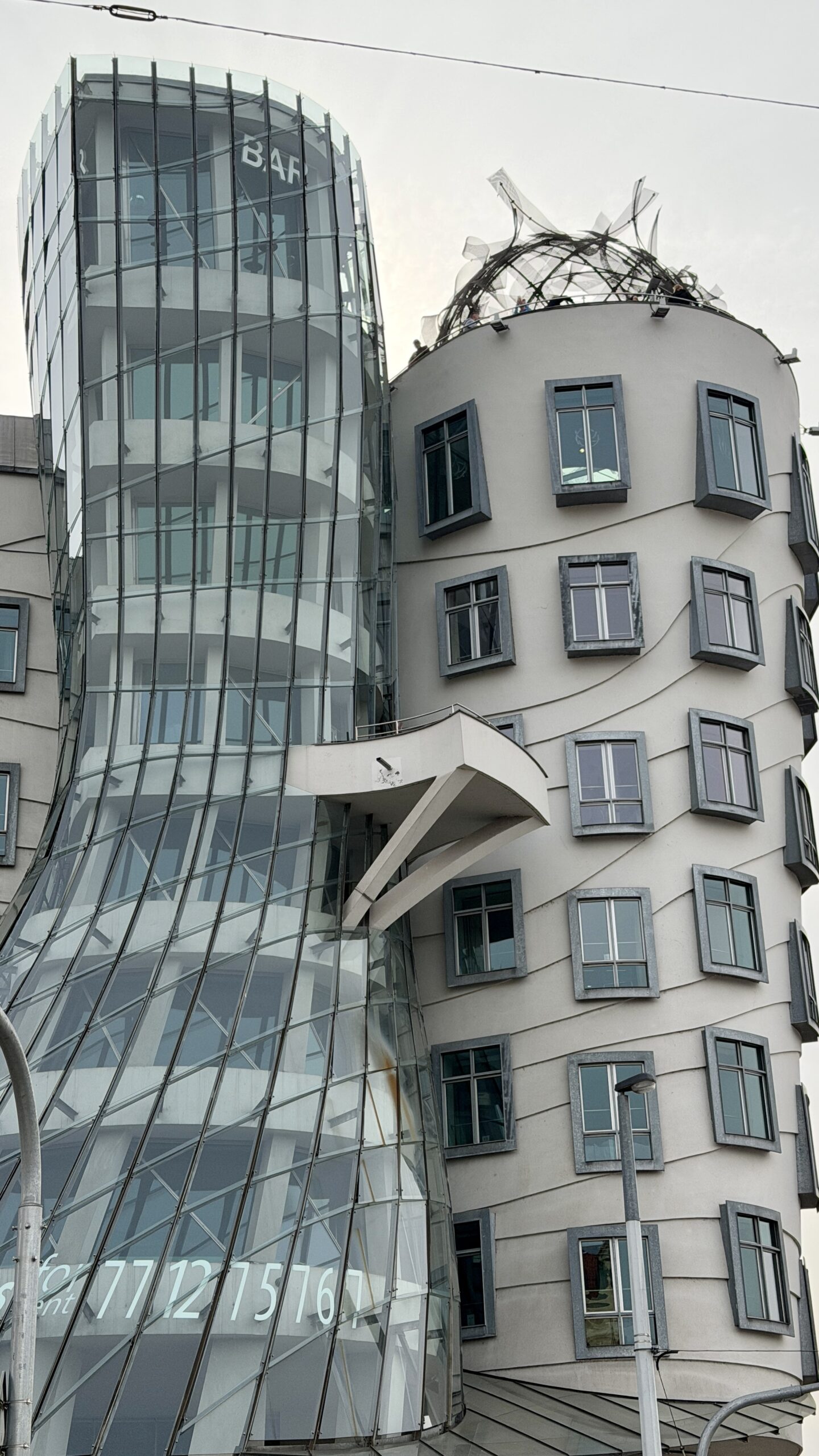
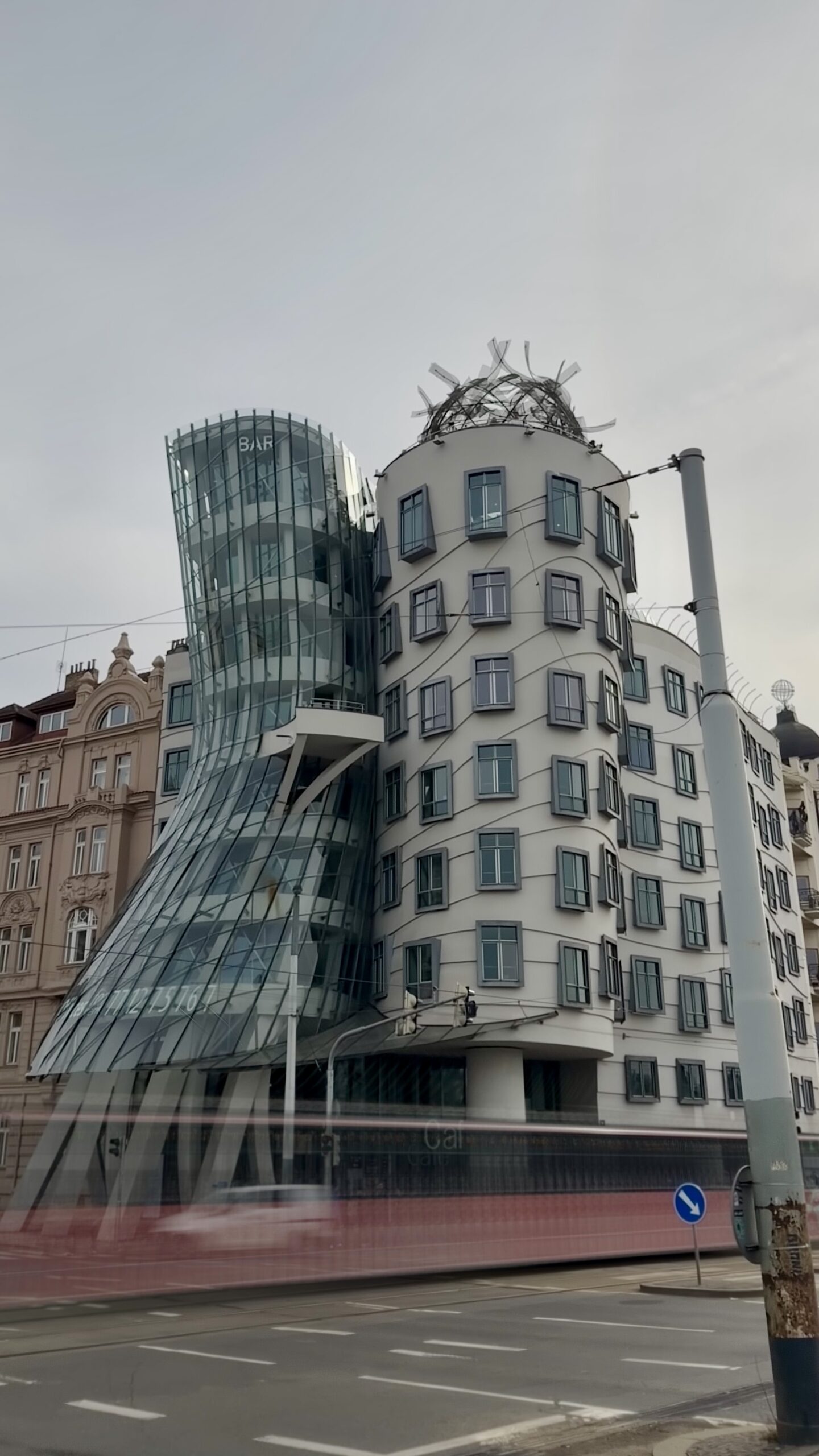
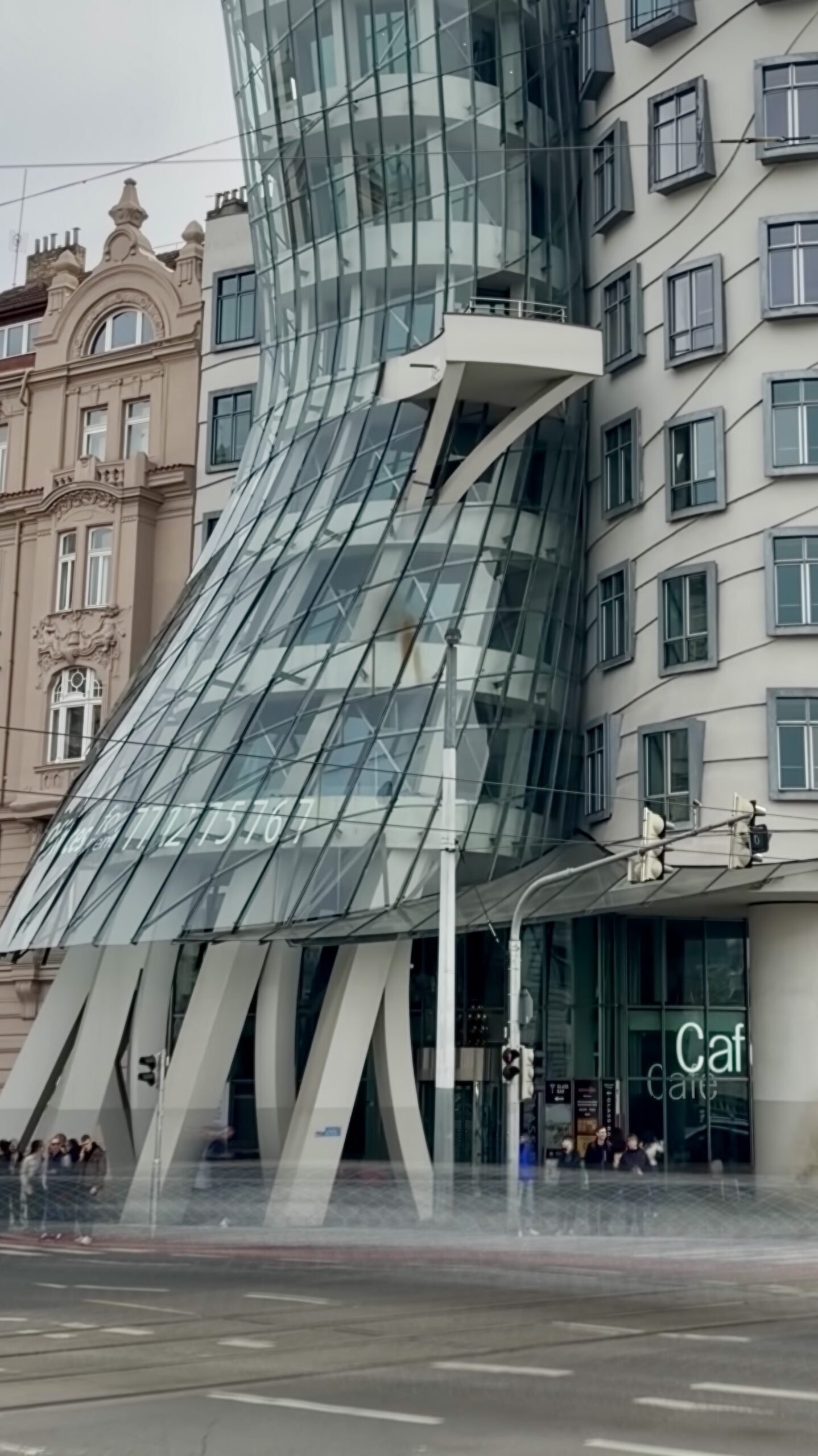
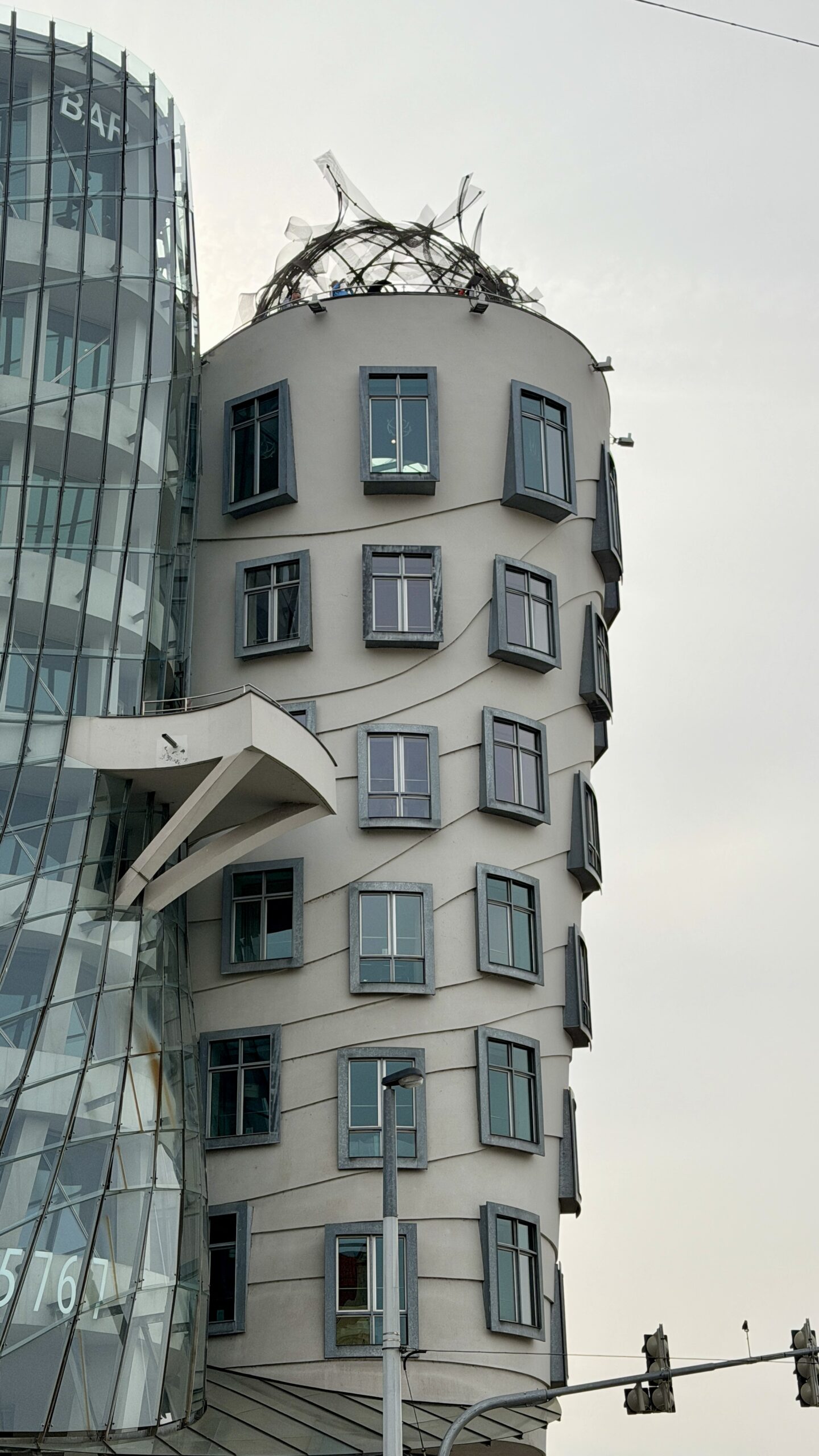
The Dancing House, with its fluid curves and playful silhouette, introduces motion back into the skyline. It bends rather than towers. It responds to its context while remaining unmistakably contemporary.
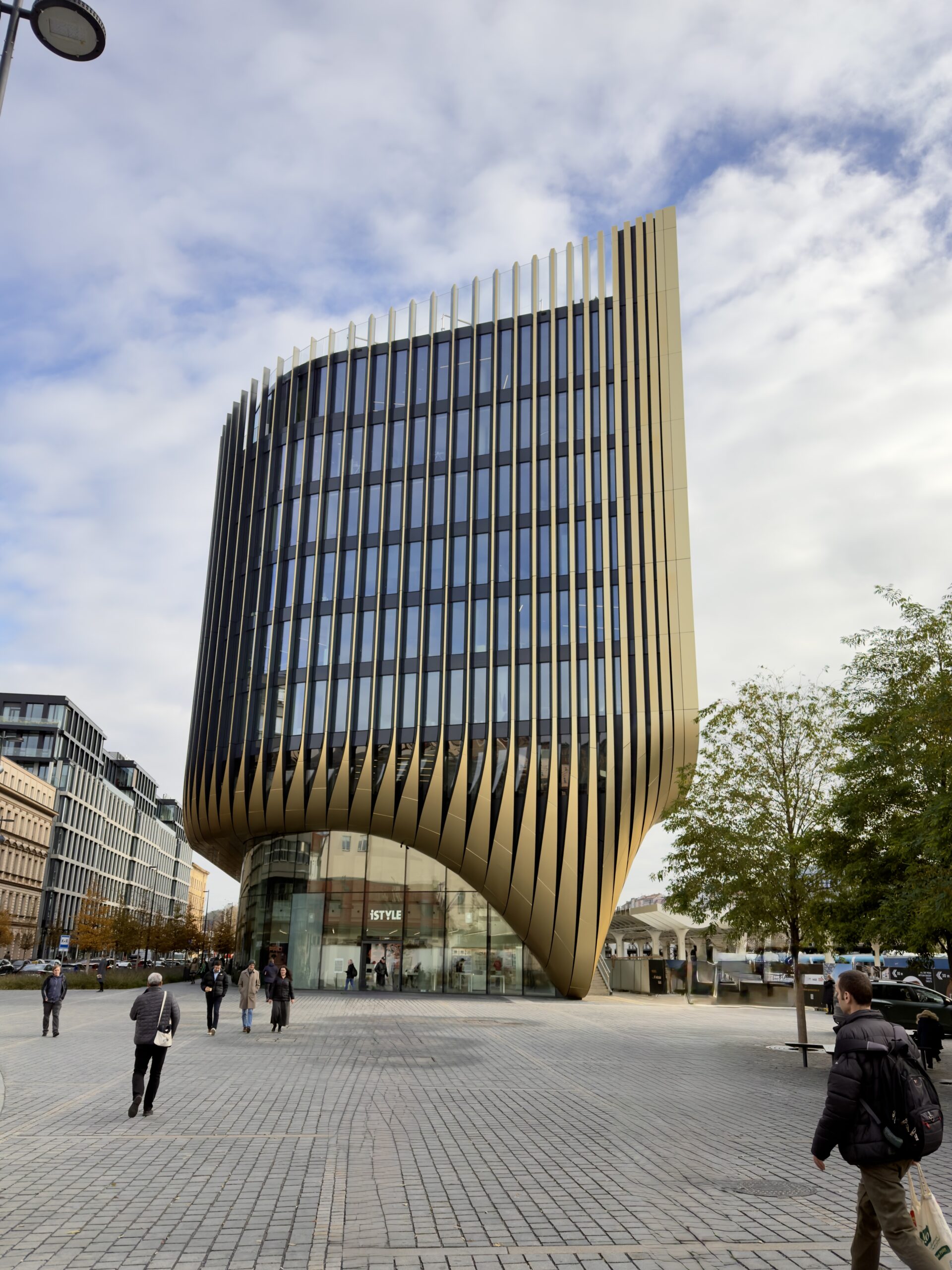
Further along the city’s urban axis, Masaryčka, designed by Zaha Hadid Architects, presents a different kind of modern intervention. Its flowing metallic façade catches light in shifting patterns, echoing movement without overwhelming the surrounding historic fabric. It does not erase what stands nearby; it converses with it.
Contemporary Prague does not seek uniformity. It negotiates. It inserts new forms between old ones. It respects scale while redefining material. This newest layer of the mosaic is not complete — nor should it be. Cities are never finished
compositions. They remain in progress.
A City Composed, Not Simplified
To view Prague through architecture is to understand that coherence here does not come from uniformity. It comes from accumulation.
Gothic stone, Baroque curves, Secession ornament, Cubist angles, Brutalist mass, and contemporary fluidity — none cancels the other. They coexist. They overlap. They contrast.
From the intimate streets surrounding K+K Hotel Central to the broader avenues near K+K Hotel Fenix, this mosaic reveals itself not as a curated exhibition, but as lived reality. You move from one era to another within minutes. The transition is rarely announced. It simply happens.
Perhaps that is Prague’s true architectural strength. It does not attempt to be a singular statement. It is a conversation across centuries.
Walk slowly. Look up. Look twice.
In Prague, every façade is a fragment. Every era is a tile. And together, they form a mosaic that continues to grow — not by replacing what came before, but by standing beside it.
If you would like to explore this layered city for yourself, step outside, choose a direction, and let the architecture guide you. Whether beginning in the decorative heart of the Old Town or along the broader urban lines near Wenceslas Square, you are already standing within centuries of design.
Prague does not need to be explained. It needs to be observed.
And the mosaic is waiting.