Prague in Black, White and Gold: Winter Streets and Warm Interiors
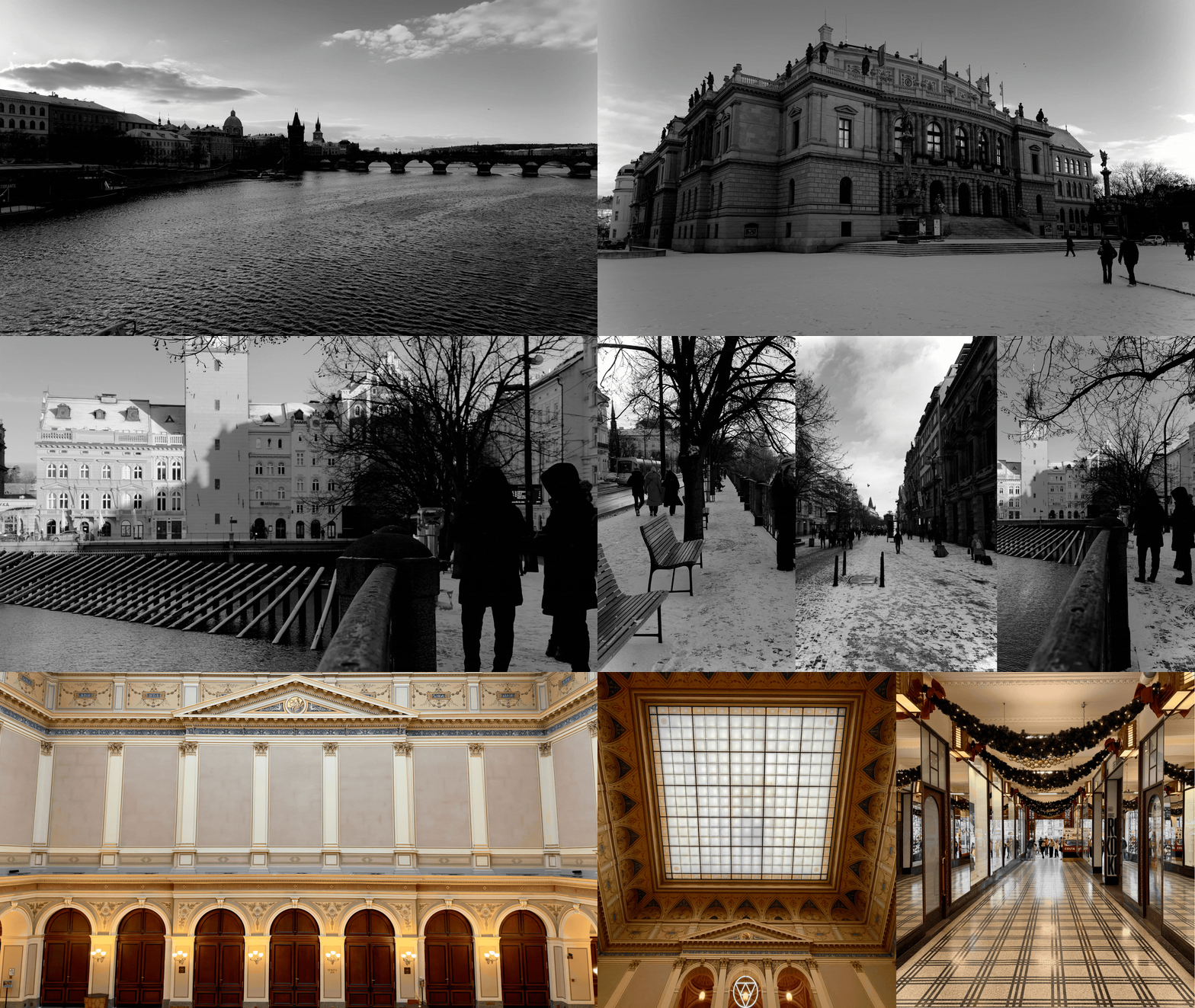
There is a particular stillness that settles over Prague in winter — not an emptiness, nor a lack of activity, but a kind of deliberate slowing. The city shifts from performance to presence. Buildings are no longer backdrops for crowds; instead, they stand in full view, unhurried and quietly dignified. Streets soften under the weight of snow and muted light. And whether you step outside from K+K Hotel Fenix near Wenceslas Square or from K+K Hotel Central closer to the historic centre, this atmosphere begins the moment the door closes behind you.
Winter does not transform Prague — it reveals it. With fewer distractions, the city becomes more readable, more intimate, more itself. What remains is a landscape of softened colours, resonant spaces, and quiet rhythms. This piece is not a guide, not an itinerary, and not a checklist of places to see. It is a portrait of Prague as it lives in winter: slow, atmospheric, and astonishingly honest.
Winter is Calling
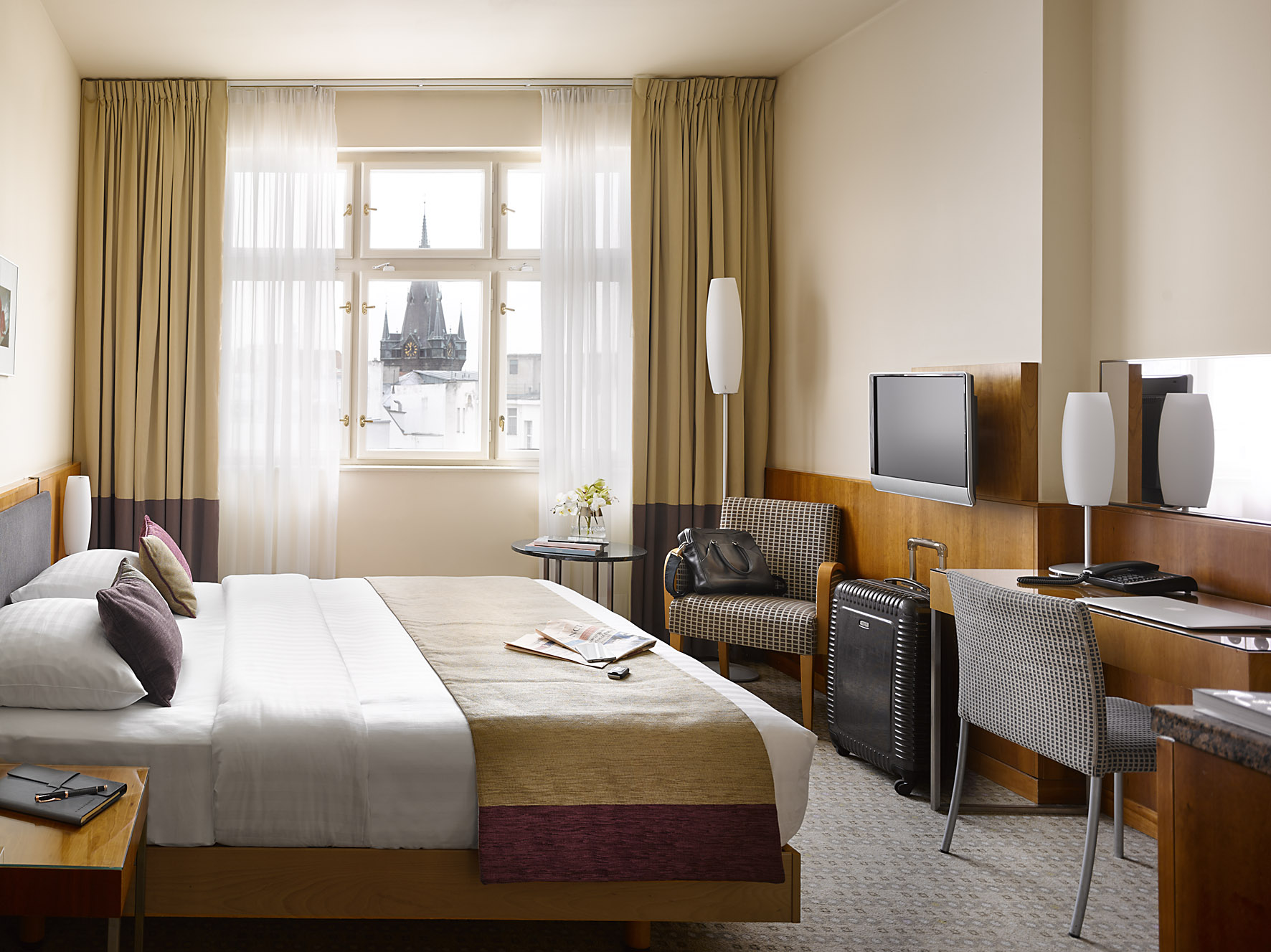
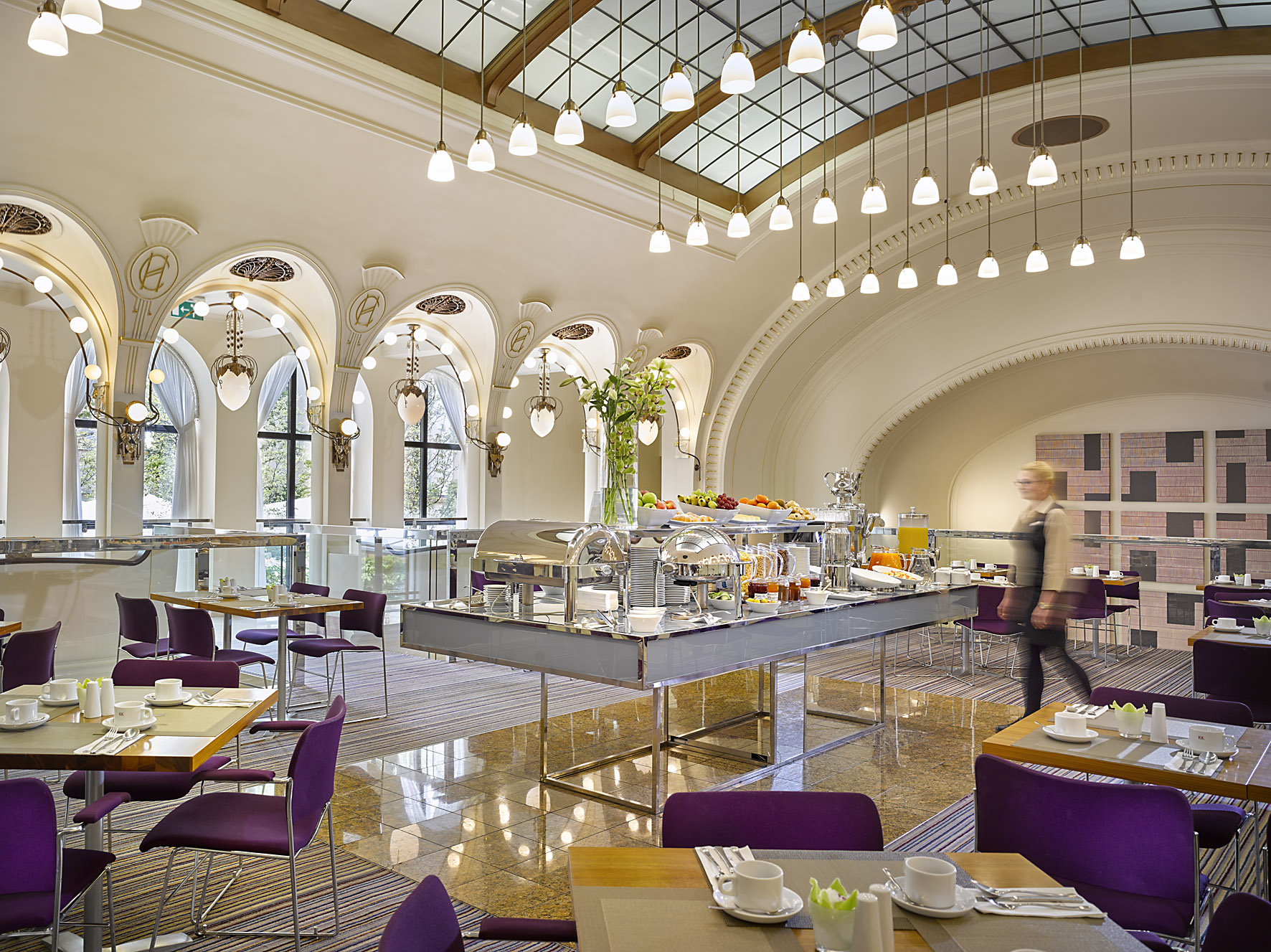
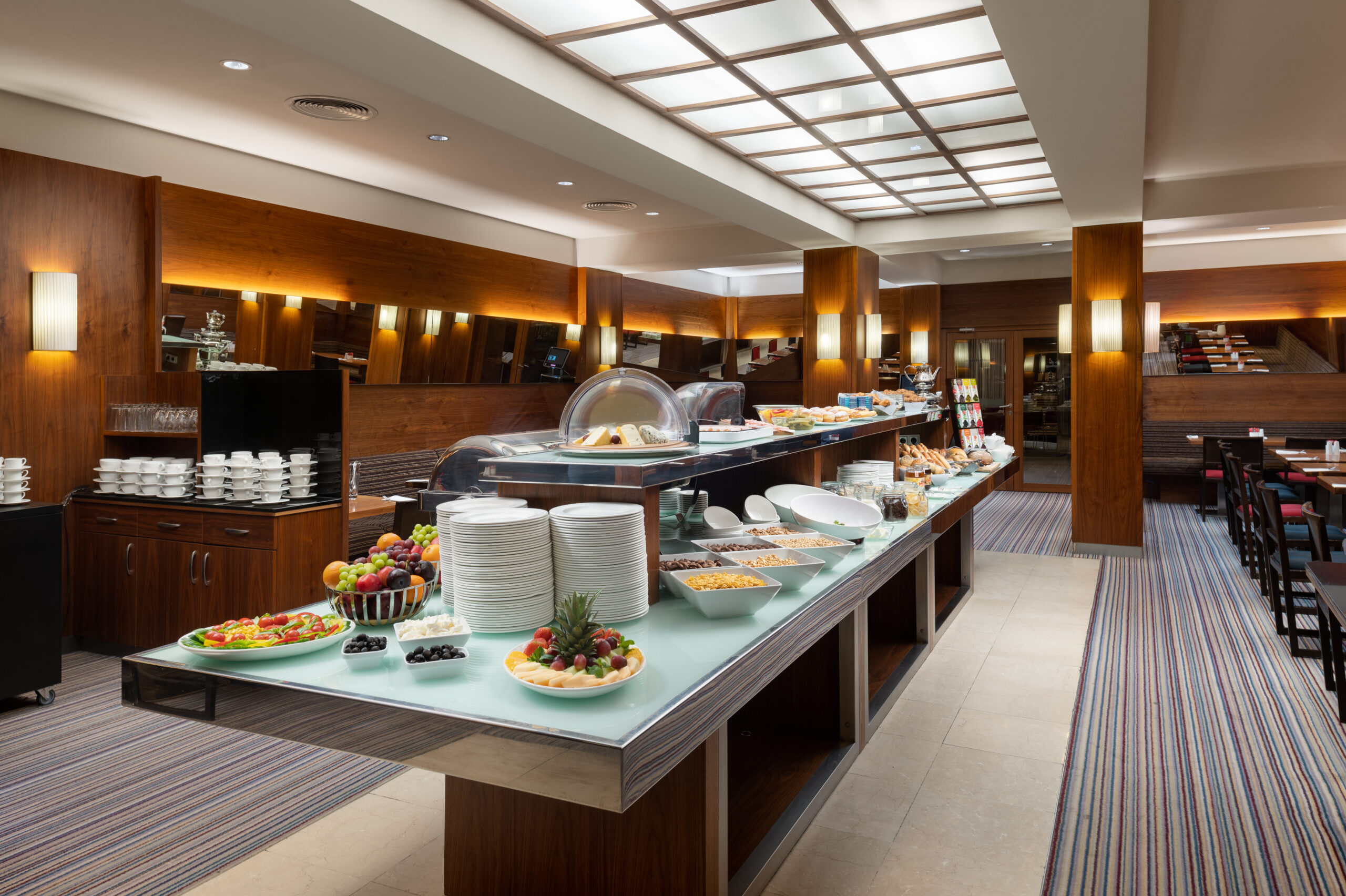
Make Prague your first stop in 2026. Experience the stillness and the beauty for yourself with 20% off your winter stay. We’ll even have a warm breakfast waiting for you each morning.
When Prague Pauses
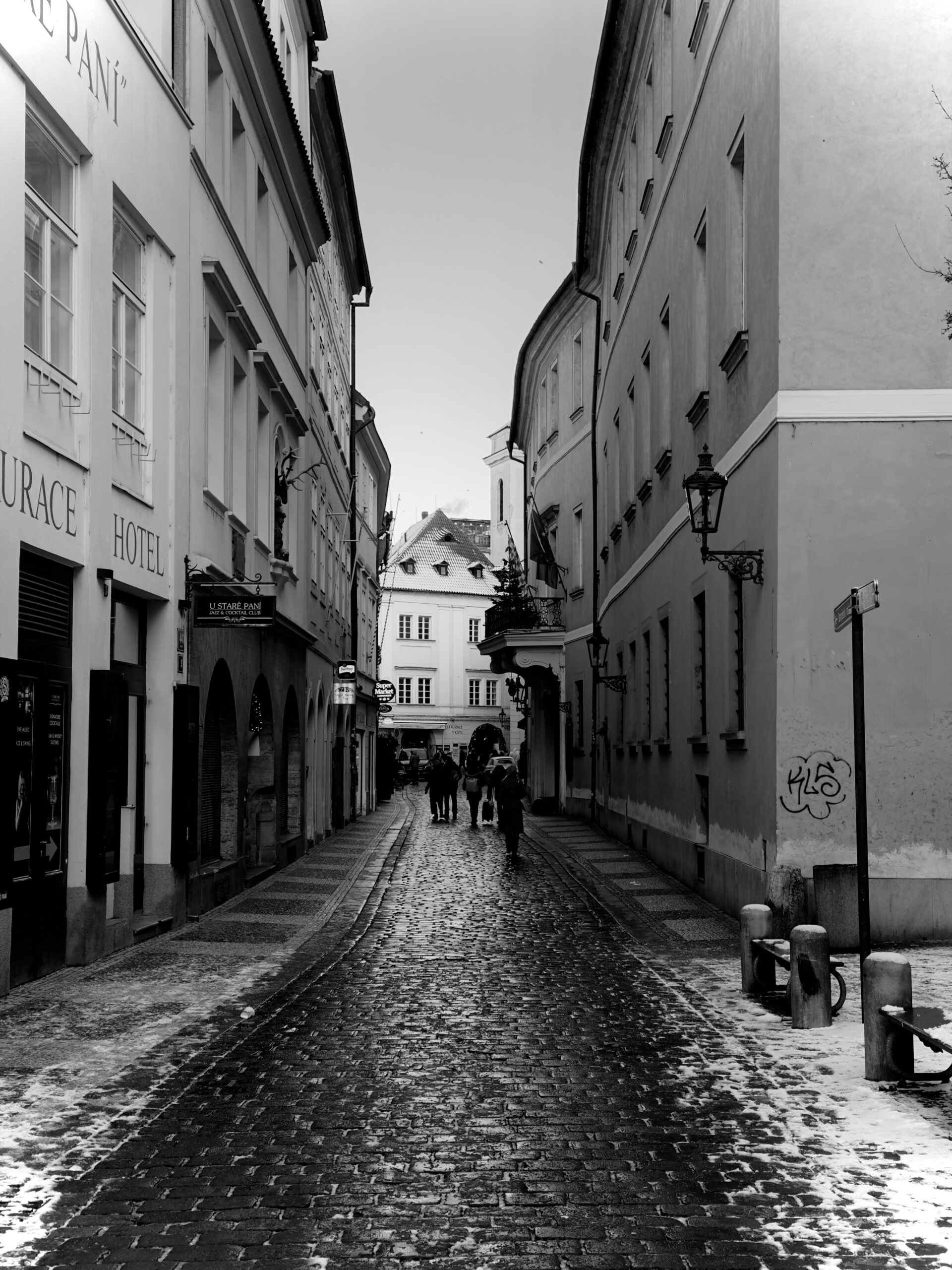
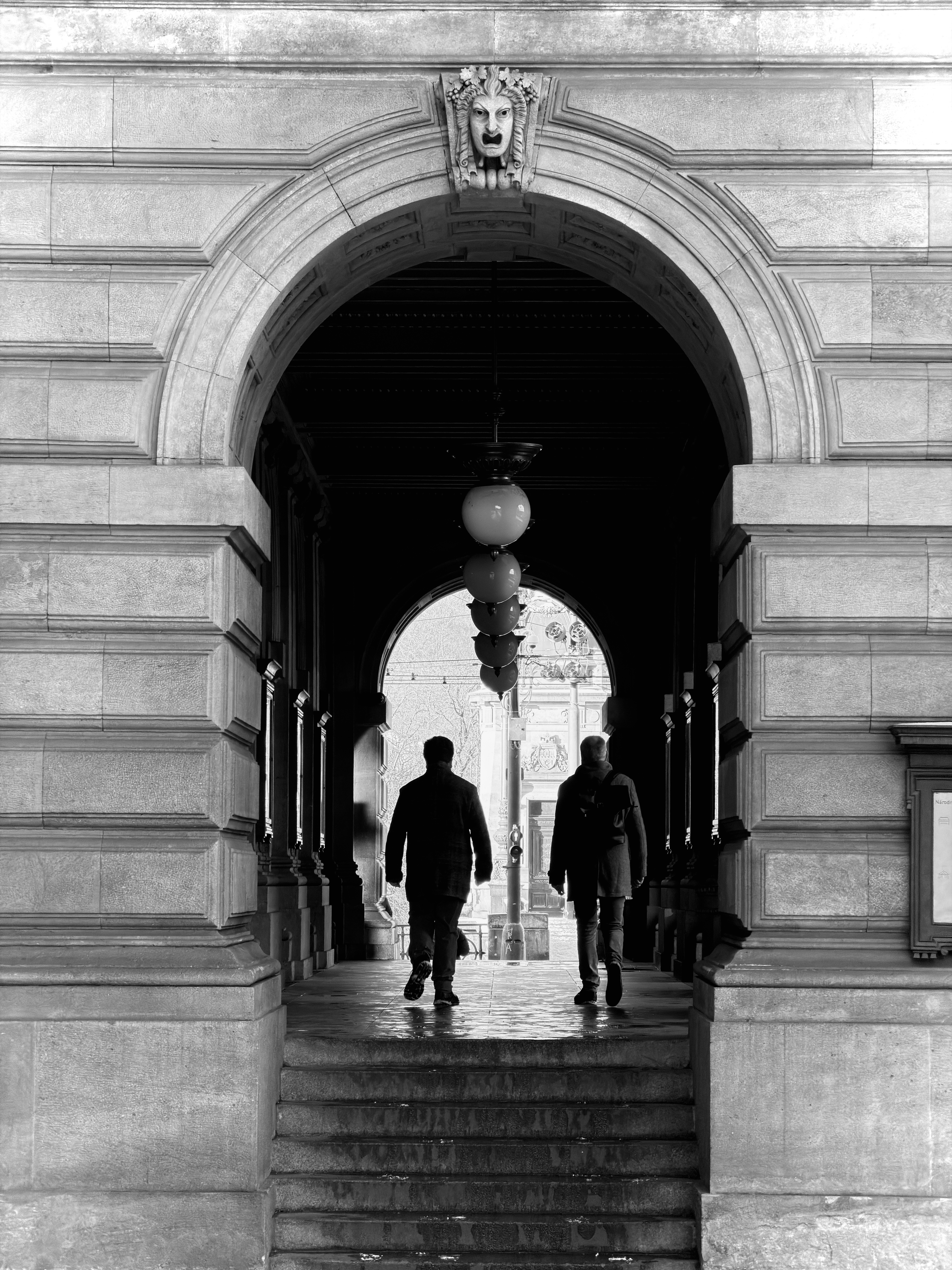
Winter shortens the days, but it stretches the quiet. The hours between morning and dusk feel suspended, as if the city has chosen to inhale and hold the breath for a moment longer. Footsteps echo differently. The wind reshapes familiar corners. Snow gathers in irregular patterns, softening statues, staircases, and rooftops.
This is not the Prague of postcards or summer crowds. This is Prague stripped of its noise.
Without the constant flow of visitors, the city stands open and unguarded. Squares appear larger, façades clearer, and the geometry of the streets more intentional. You begin to see the relationships between buildings, the symmetry of avenues, the sculptural details normally lost in movement.
Winter allows Prague to speak in a quieter voice — one that rewards attention rather than haste.
A City of Light and Absence
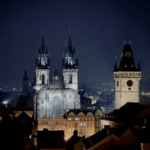
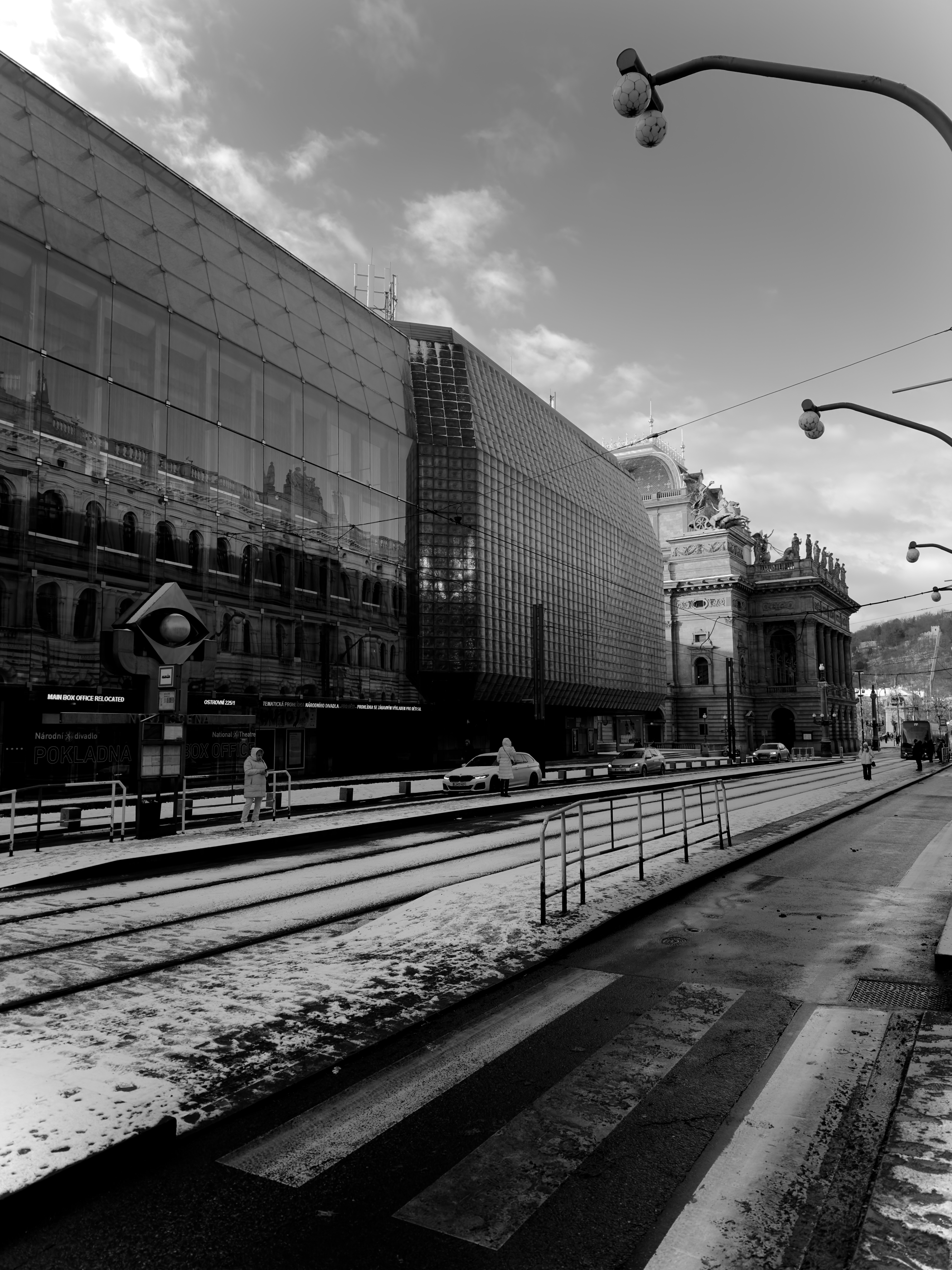
In winter, colour retreats, but the city does not become dull. Instead, Prague leans into contrast. The pale sky turns façades into natural monochrome compositions. Lamps ignite early, glowing in warm pockets along the streets. Reflections shimmer on wet cobblestones. Shadows stretch longer.
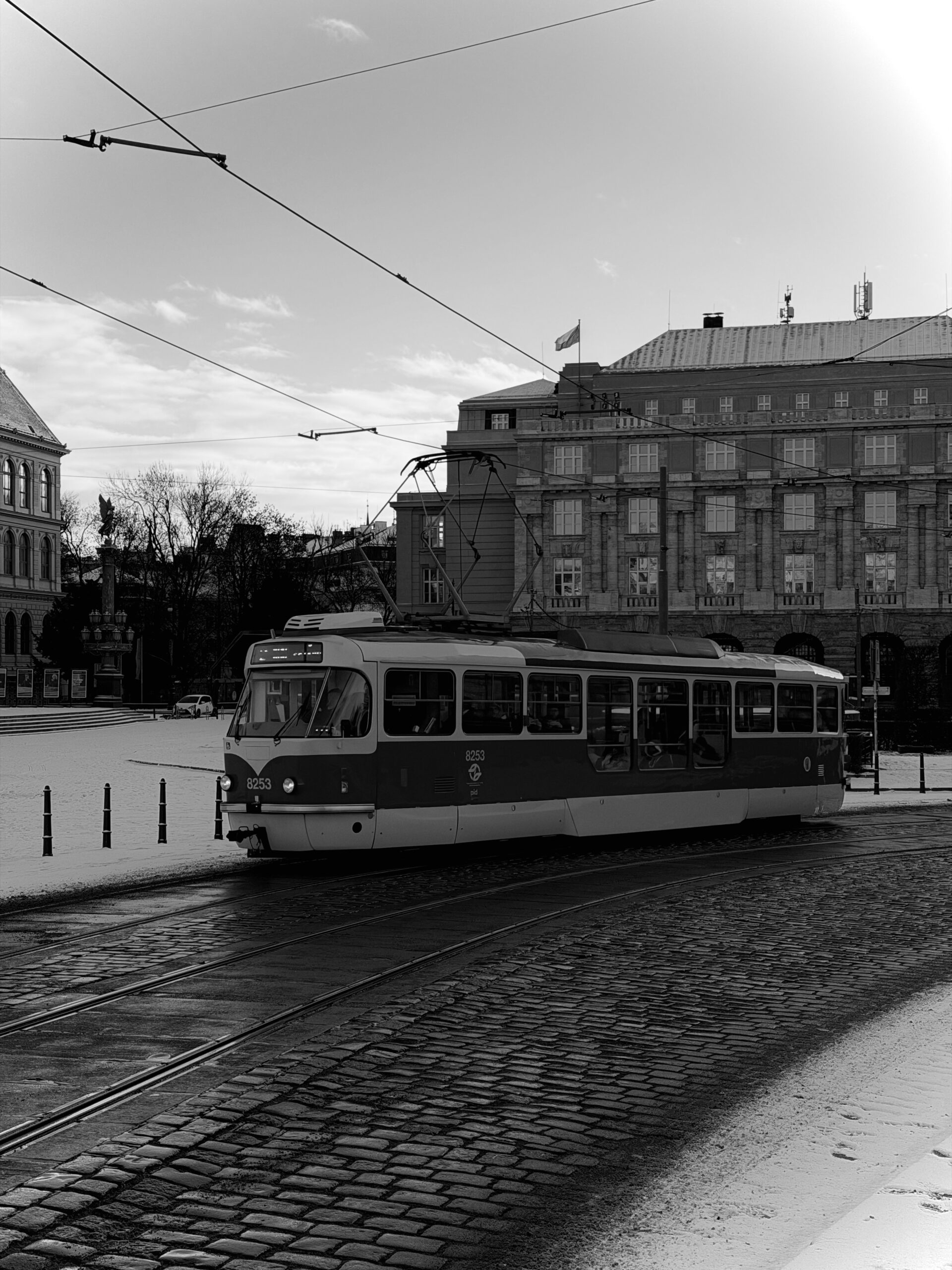
Snow does not fall evenly here. It collects in corners, on tram tracks, along the edges of rooftops. These irregularities don’t obscure the city — they deepen it. They invite you to look twice.
Walking in winter often means moving without an agenda. You follow instinct: a narrow lane softened by snow, a courtyard framed by quiet windows, a stairway leading into a muted glow. The lack of colour makes texture the main storyteller — the grain of stone, the lines of balconies, the weight of clouds. Prague asks only that you slow down enough to notice.
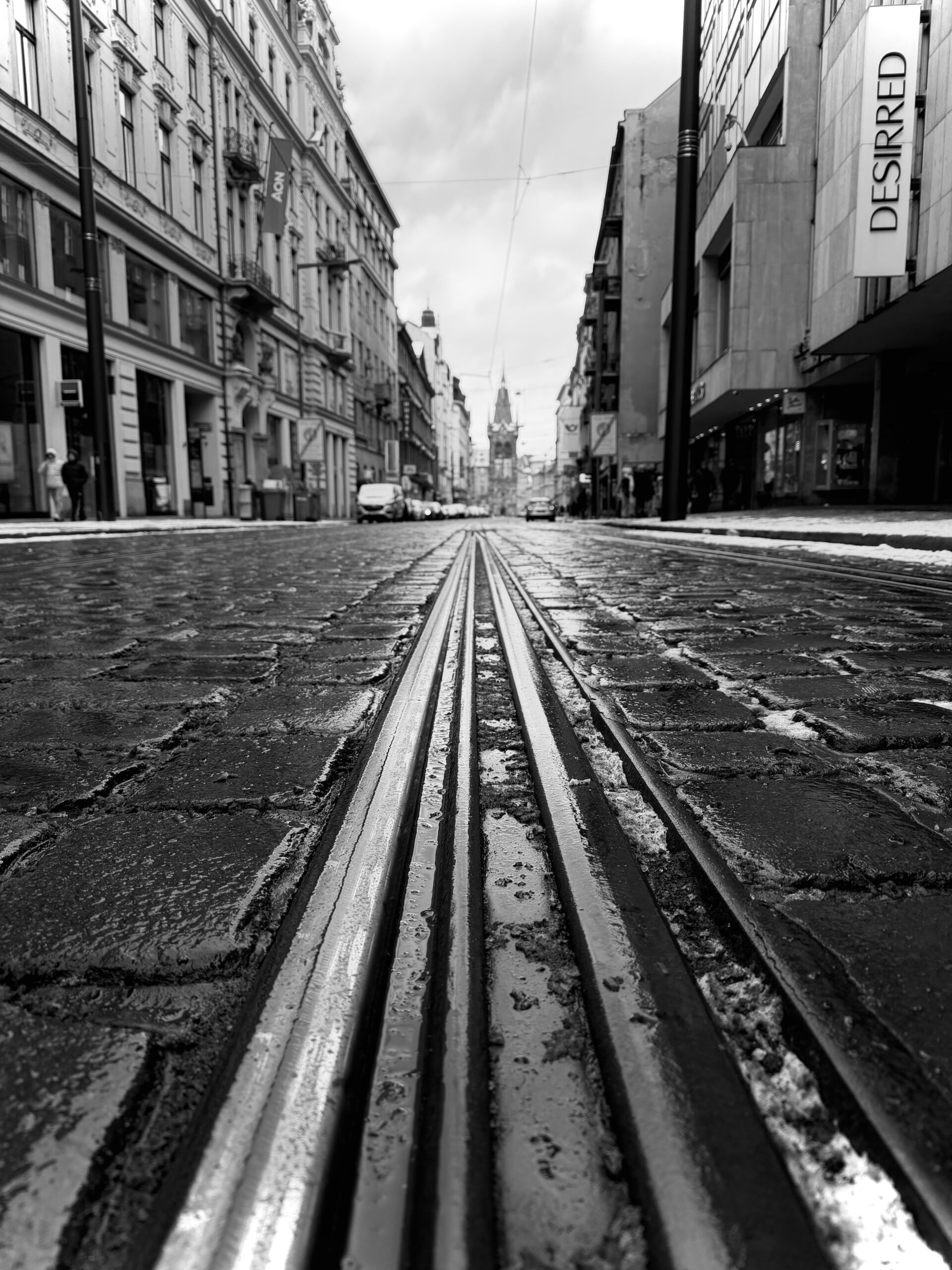
The Beauty of Empty Streets
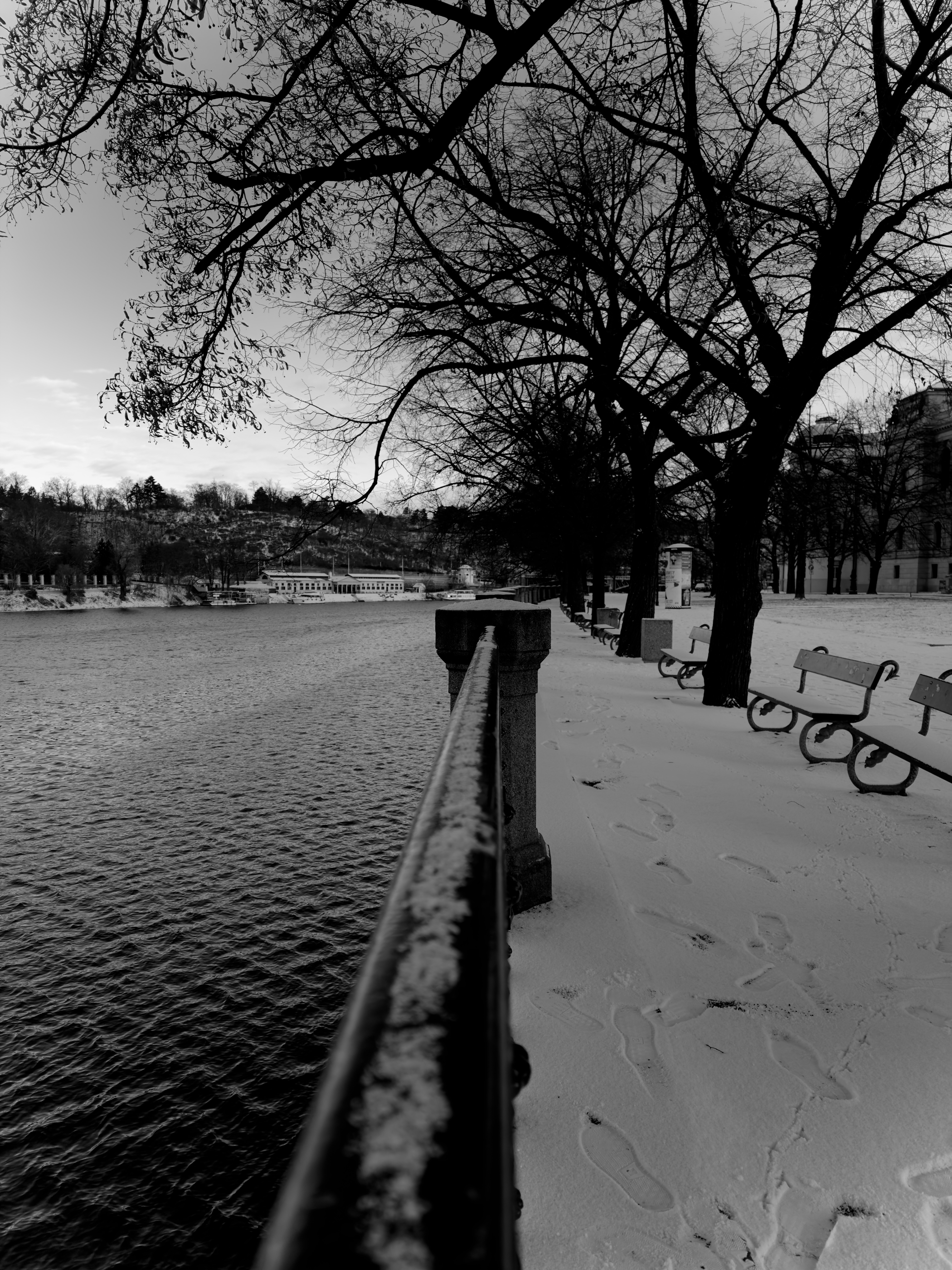
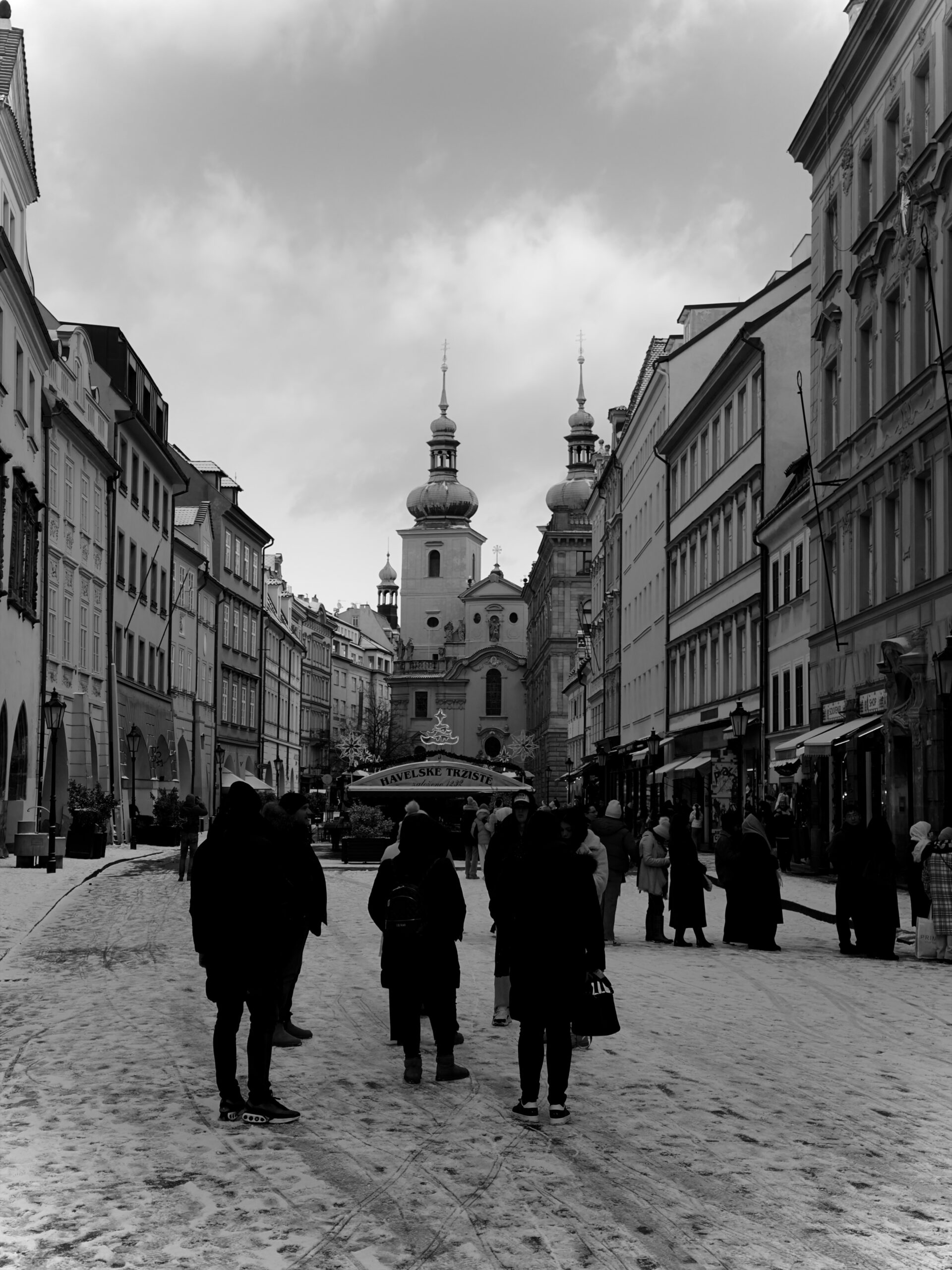
There is a rare pleasure in recognising a familiar place and finding it nearly empty.
In winter, Wenceslas Square feels expansive and measured. Without the urgency of crowds, its architecture regains its presence. Decorative façades become visible from a distance, and the slow illumination of streetlights at dusk creates a sequence of warm highlights along the avenue. Even in the cold, there is generosity in the space — a sense of calm that is impossible in warmer seasons.
On Na Příkopě, one of the city’s busiest streets transforms into a steady, unhurried rhythm. People walk with purpose but without haste. Shop windows create warm frames of colour against the soft greys of winter. The absence of pressure — no crowds pushing, no rush to overtake — turns the walk into something almost meditative.
Beyond the main avenues, smaller streets take on a poetic quiet. Snow settles unevenly along the cobblestones. Wooden doors, wrought-iron balconies, and old stone arches reveal themselves in a new clarity. A single lantern can define an entire scene. A light snowfall can turn an ordinary street into a space suspended between the past and the present.
Moving towards the water changes the atmosphere once again.
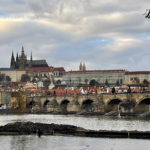
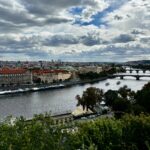
On Dvořák Embankment, the river becomes a long, calm mirror. Fog drifts above the surface in gentle waves, blurring the outlines of bridges and towers. Boats sit still in their moorings, and reflections stretch softly across the water. Here, winter feels expansive — a pause wide enough for breath.
Walking Without a Plan
Prague in winter rewards wandering more than arriving. Without crowds, the city feels like a network of invitations rather than destinations. A quiet alleyway pulls you inward. A courtyard reveals unexpected symmetry. A street curves gently, promising something just out of view.
There is no urgency.
No list to complete.
No pressure to move quickly.
Snow makes the city slower but also more legible. Your footsteps become part of the atmosphere. The muted soundscape draws attention to subtle things — a tram bell in the distance, the rustle of coats, the hush of wind turning a corner. Winter redefines what it means to explore: not to seek, but to receive.
This is the version of Prague most residents recognise and love — the one that asks nothing except presence.
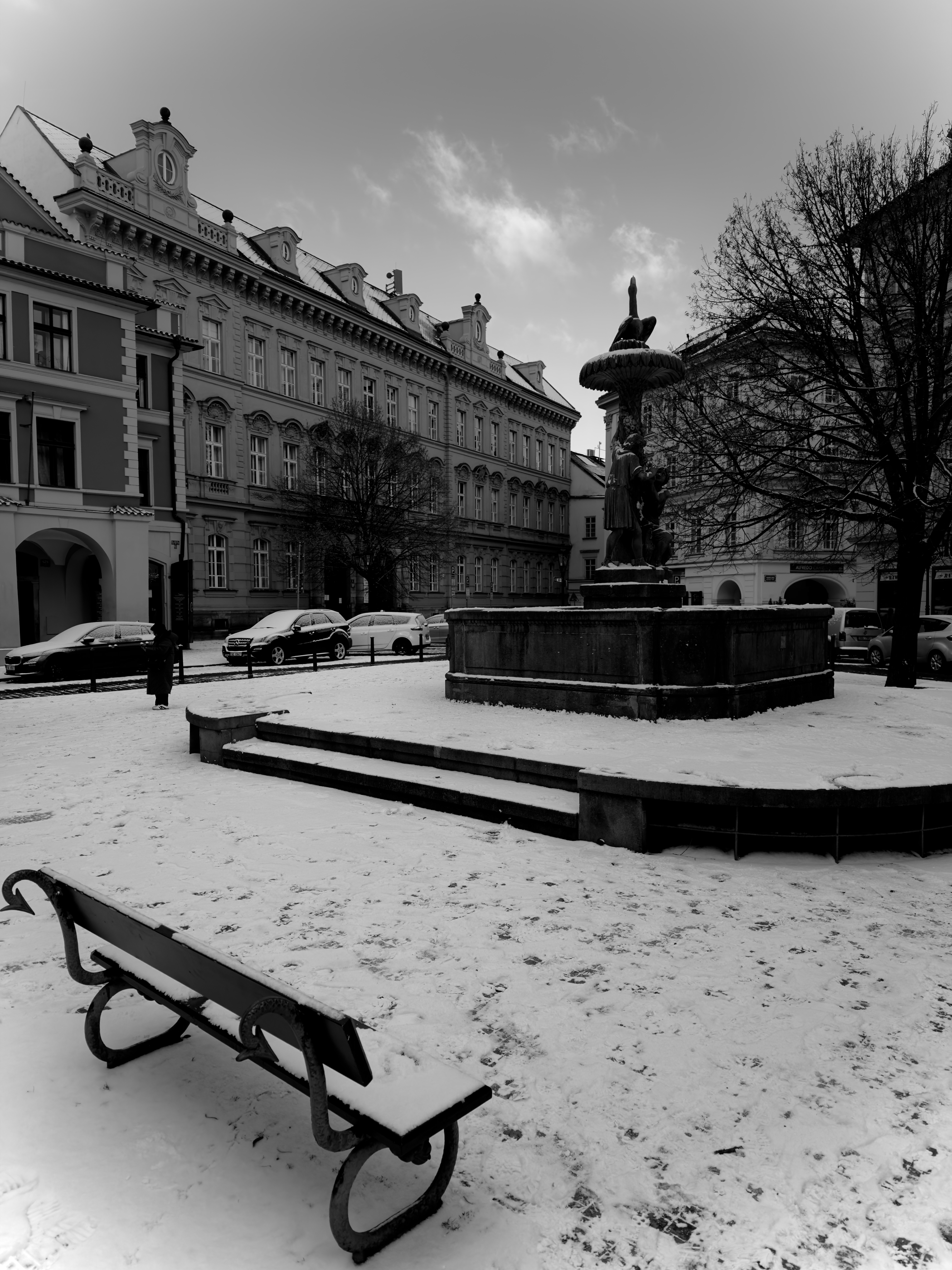
Stepping Inside: The Warm Interiors of Winter
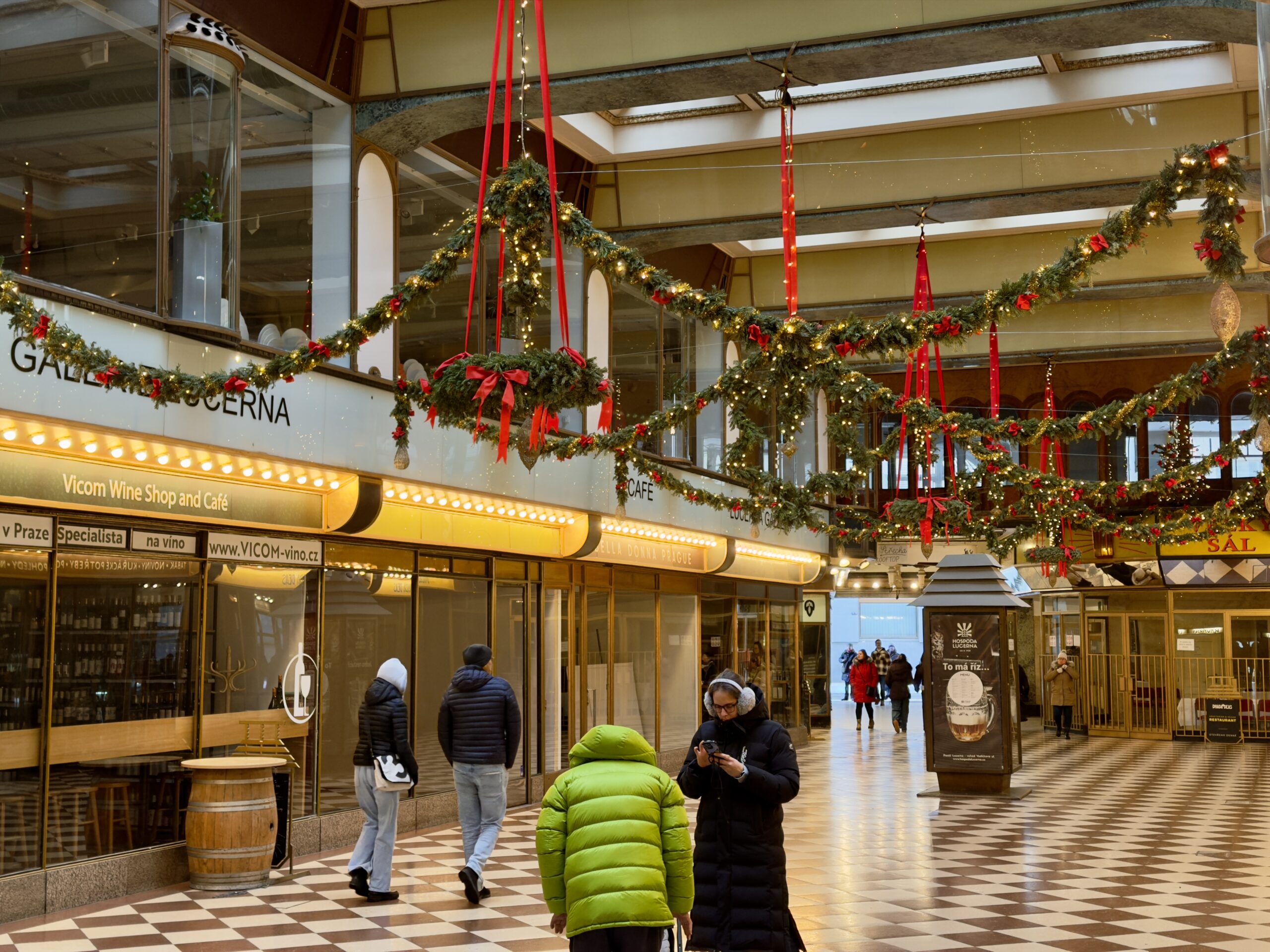
Winter’s restraint outdoors makes Prague’s interiors feel especially generous. They are not escapes; they are counterpoints. Spaces where colour returns, where detail is illuminated, where warmth takes physical form.
Each of the interiors below offers a different kind of winter refuge. They are not chosen for grandeur alone, but for atmosphere — and for the way they complement the quiet of the city outside.
Rudolfinum — Quiet Elegance by the River
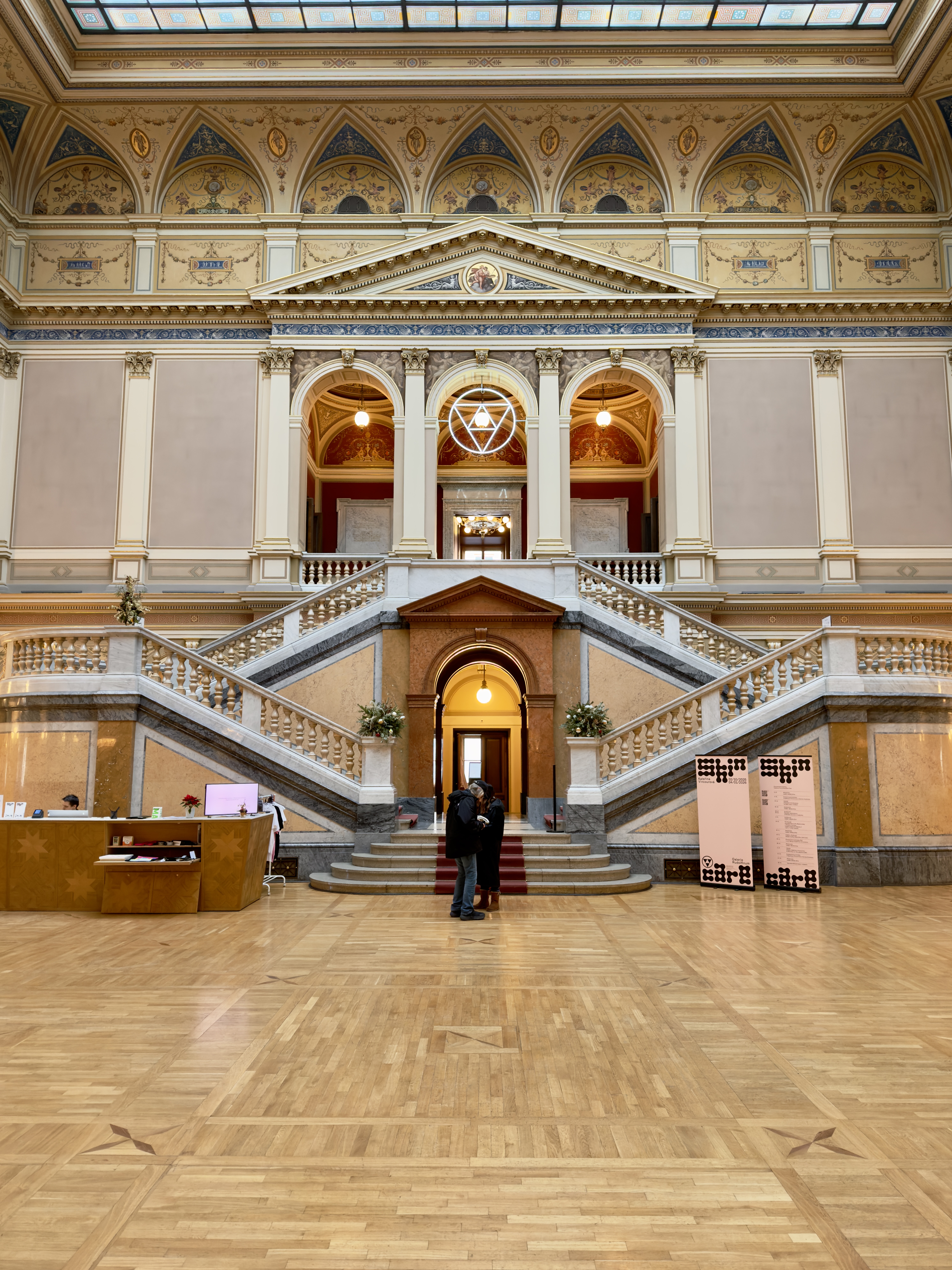
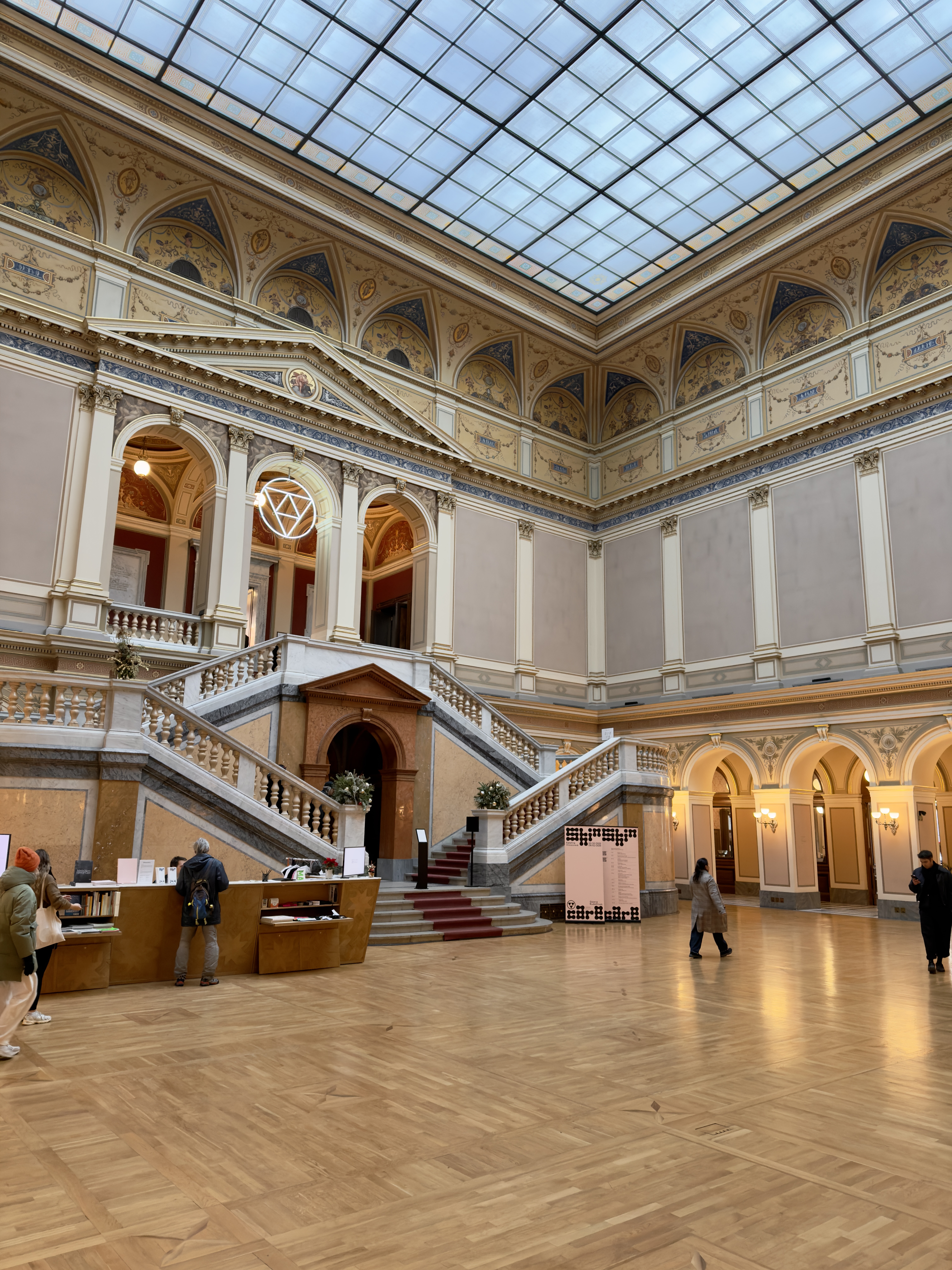
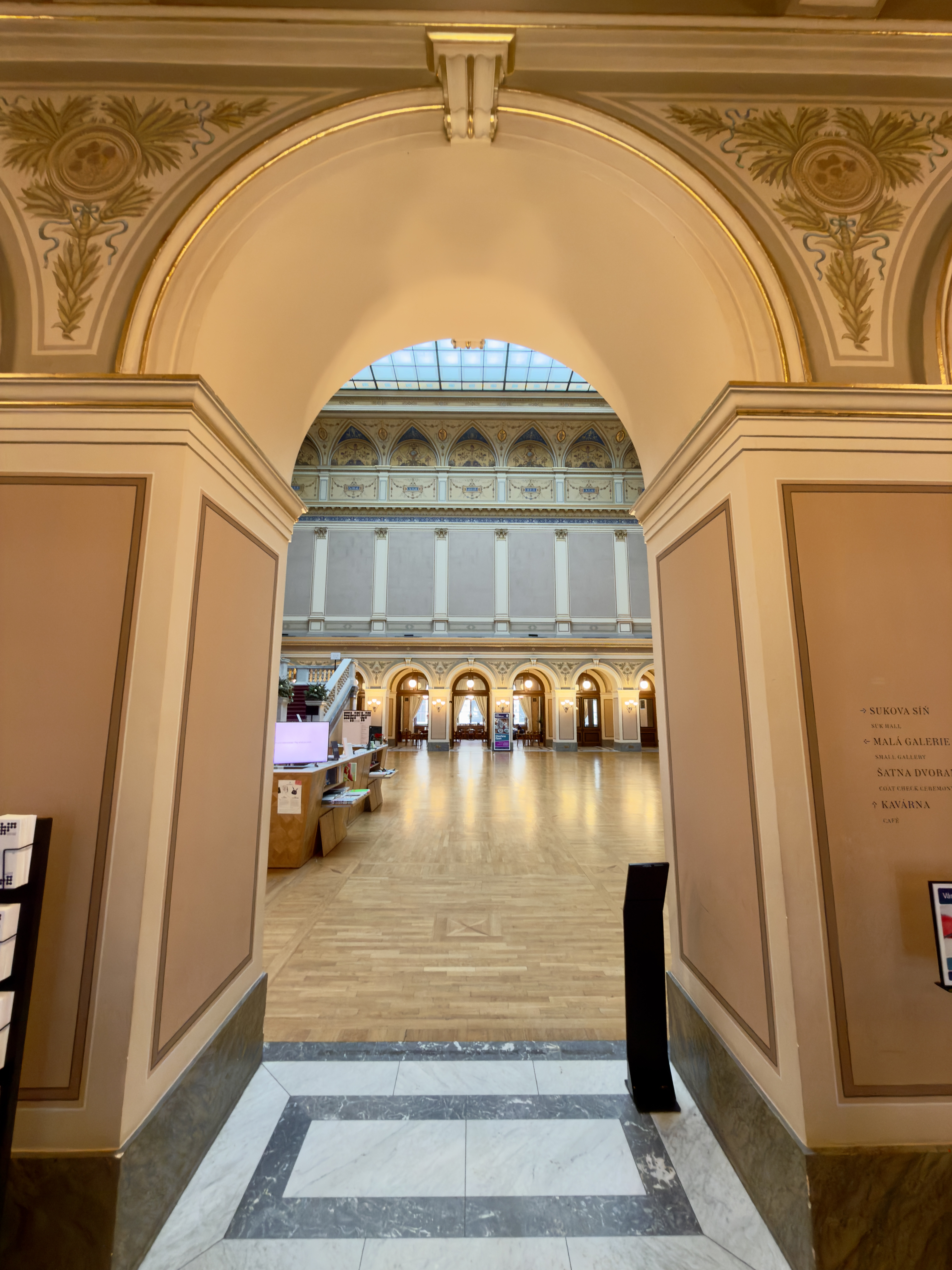
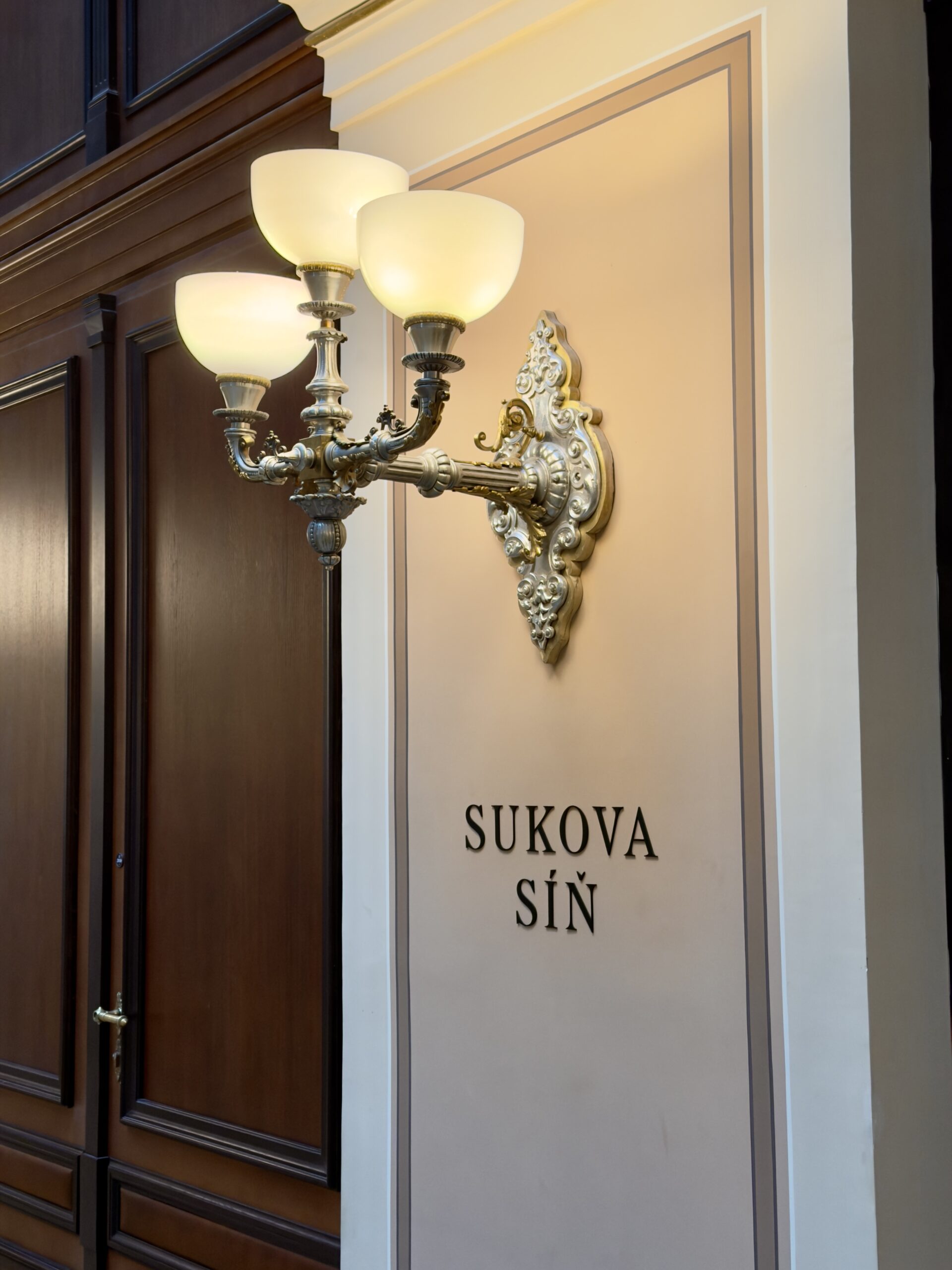
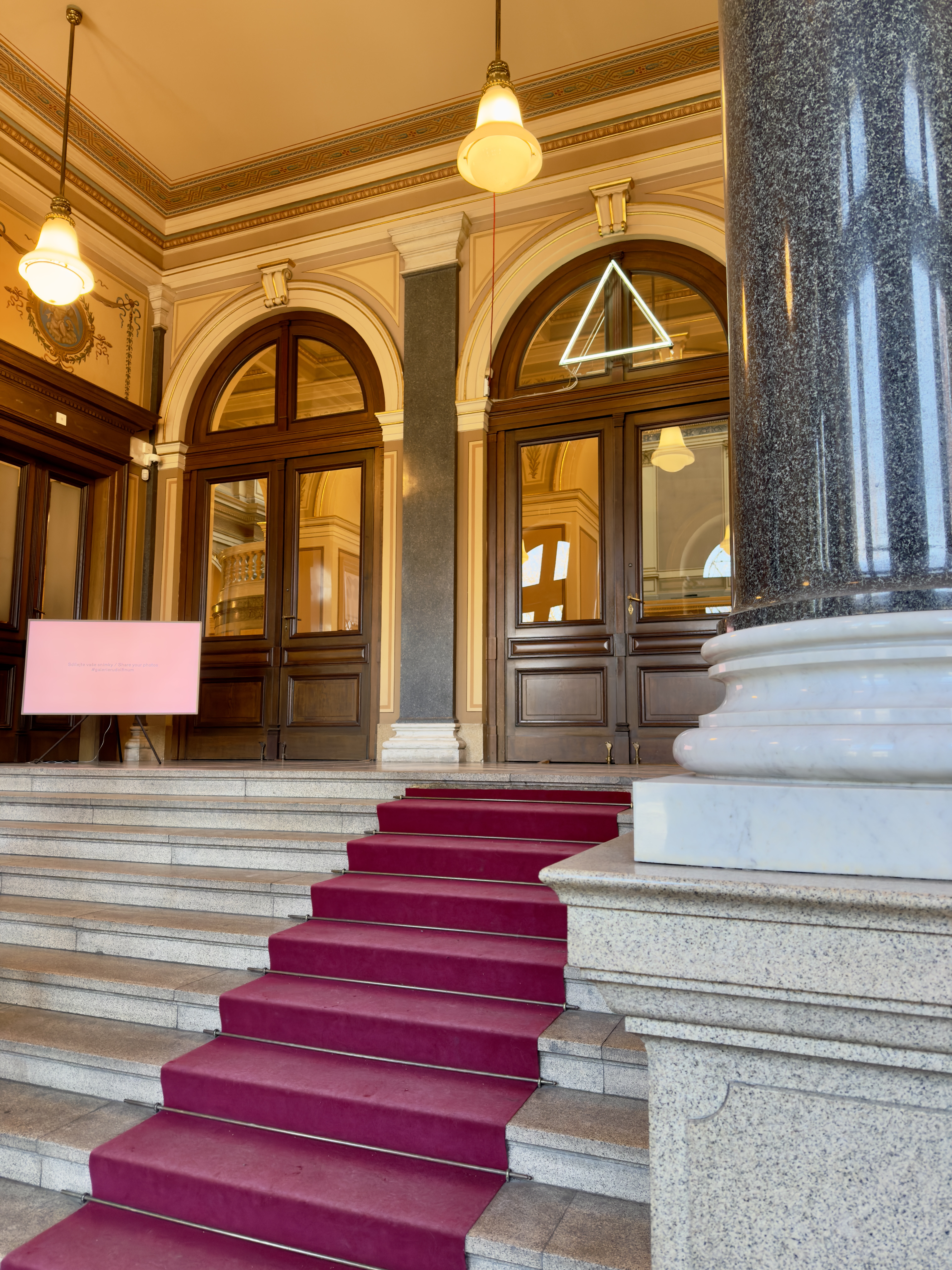
In winter, Rudolfinum feels especially calm. Its neoclassical façade stands in clear contrast against the pale sky, and the river beside it moves in a slow, steady rhythm. Stepping inside replaces the cold air with soft light and warm tones. Corridors unfold gently, and the building’s ornamental details — polished stone, delicate mouldings, subtle gold accents — appear more defined against the muted season.
Rudolfinum isn’t overwhelming; it’s composed.
In winter, that restraint becomes its charm. Even without attending a performance, the atmosphere alone offers a sense of quiet clarity — a brief pause from the stillness outside, expressed through architecture rather than sound.
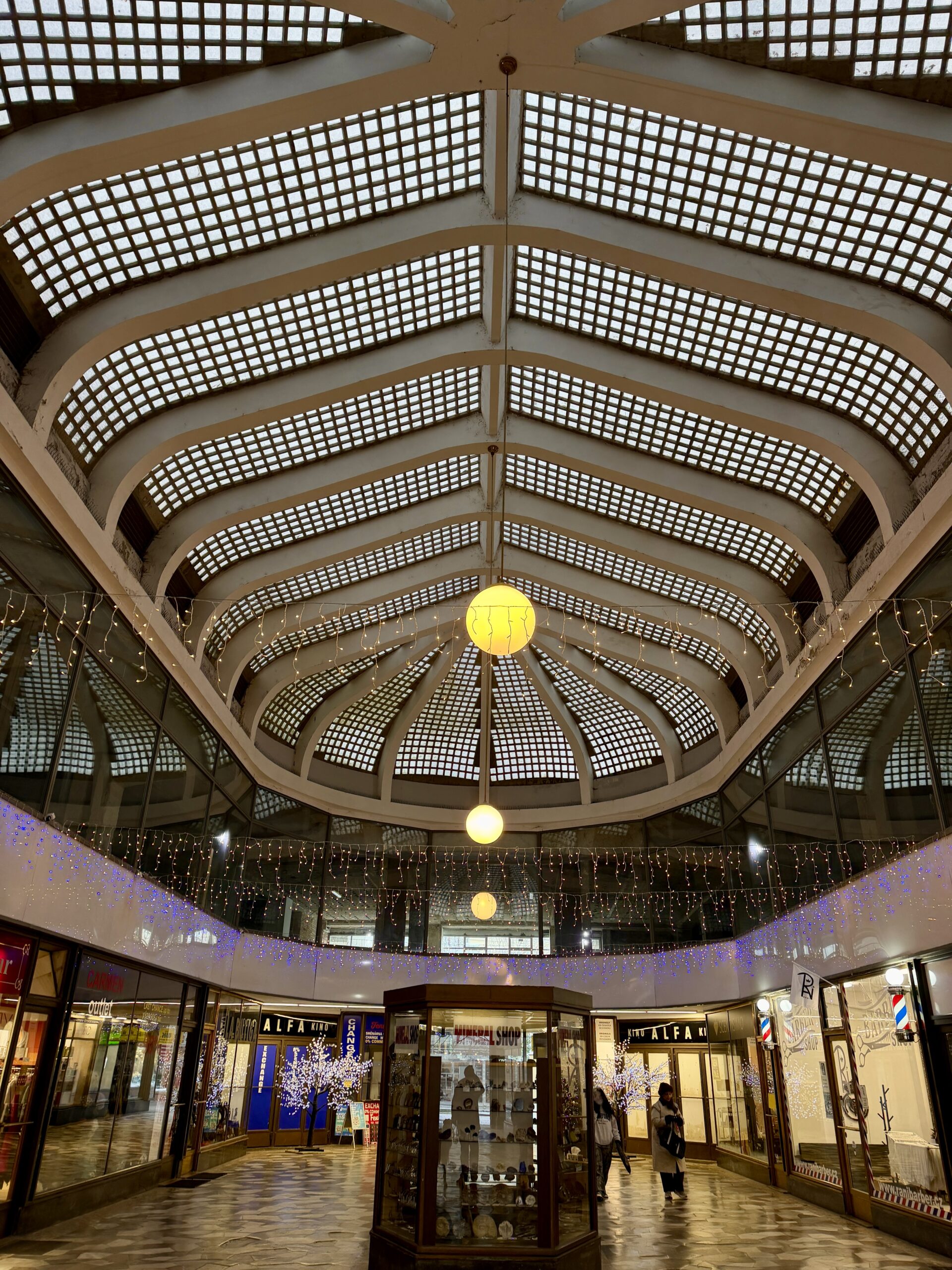
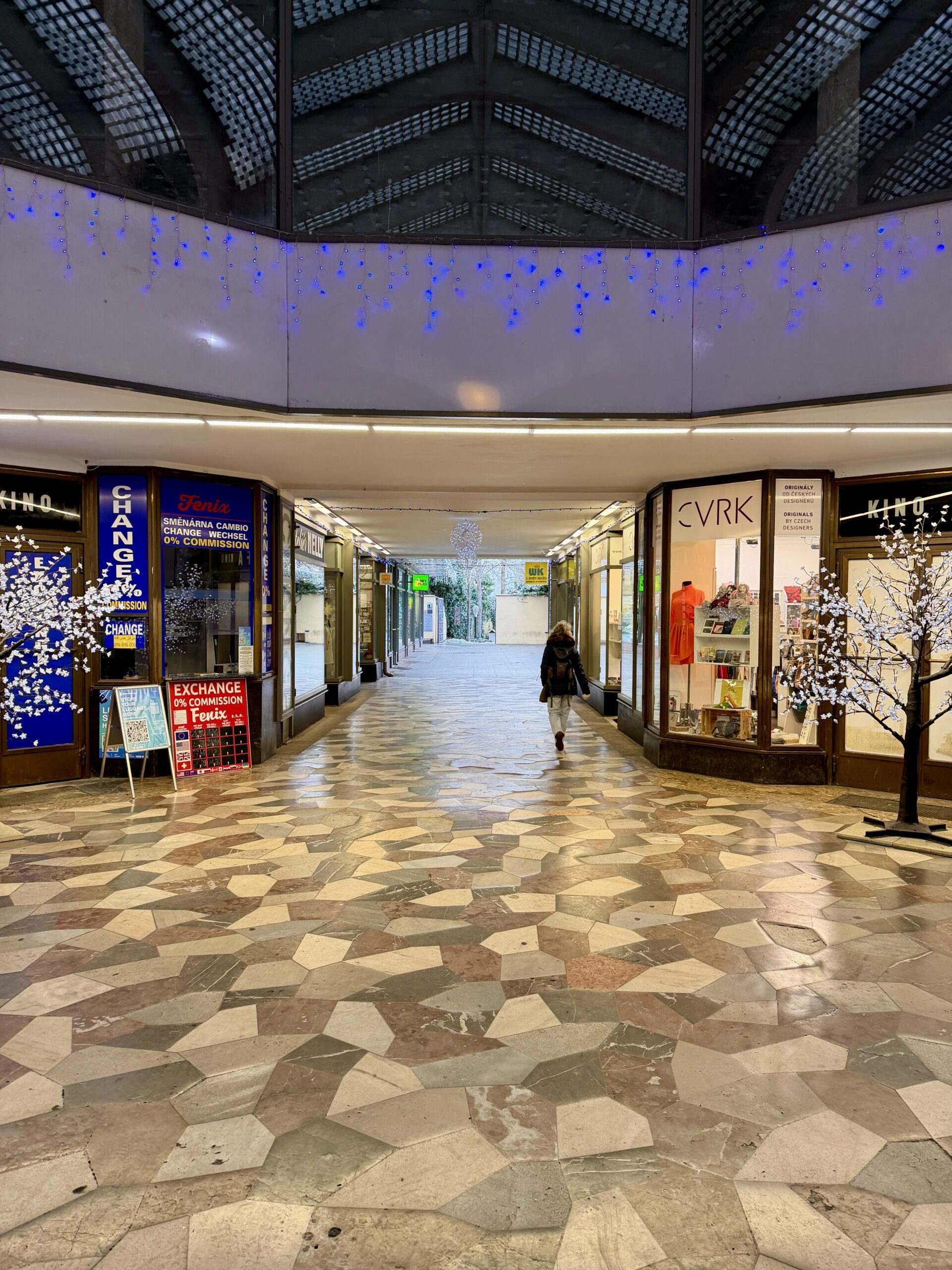
Pasáž U Stýblů — A Pause Between Two Worlds
Prague’s passageways are veins running through the city, offering seamless transitions between exterior and interior life. Pasáž U Stýblů is one of the most understated examples — a space that prioritises calm over spectacle.
Here, the lighting is soft, the air warm, the echo of footsteps gentler. People move quietly, neither lingering nor rushing. In winter, this passage becomes a place to reset your pace. It reflects the city’s desire to move slowly and deliberately.
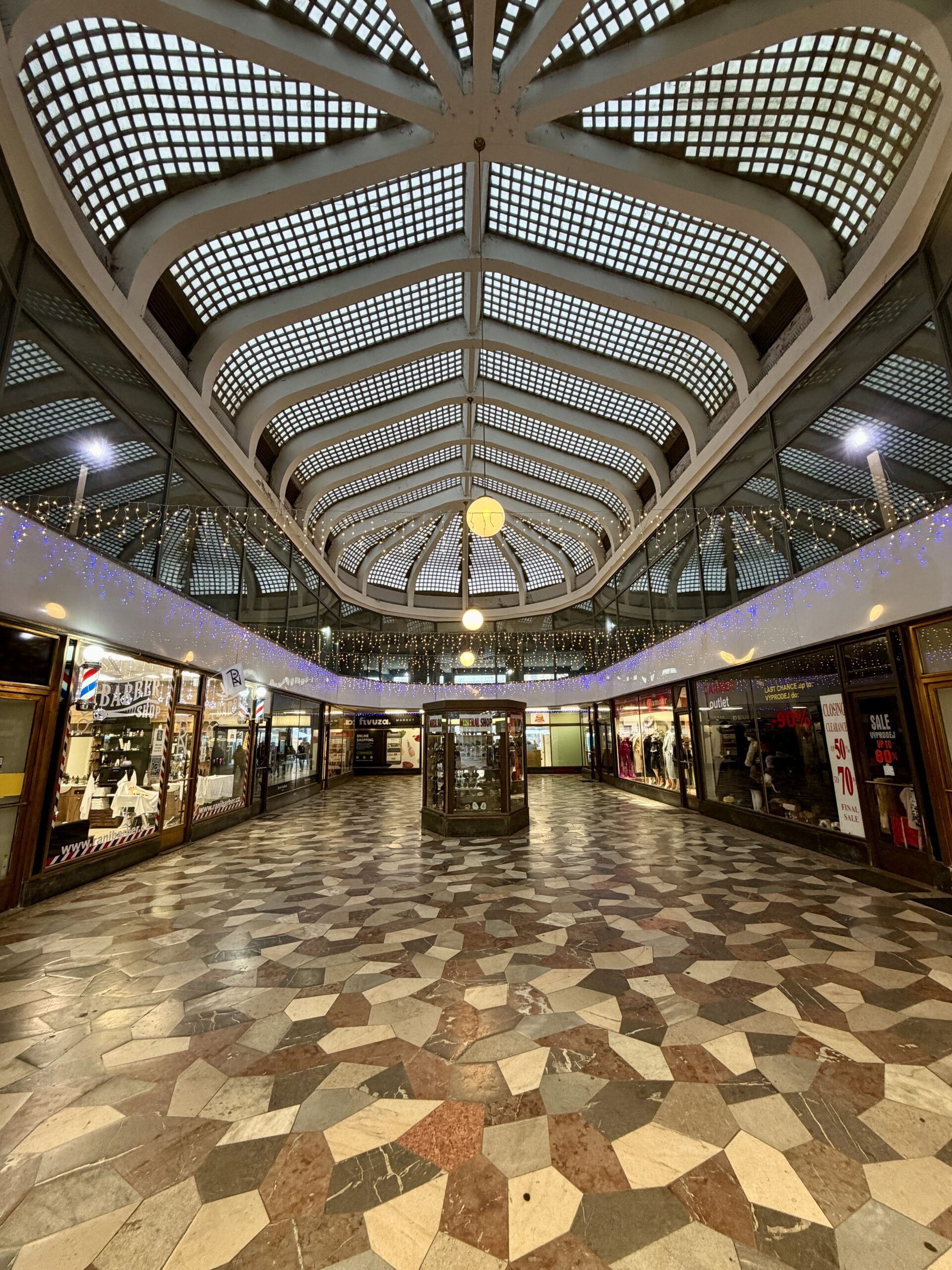
Pasáž Světozor — The Rhythm of Everyday Warmth
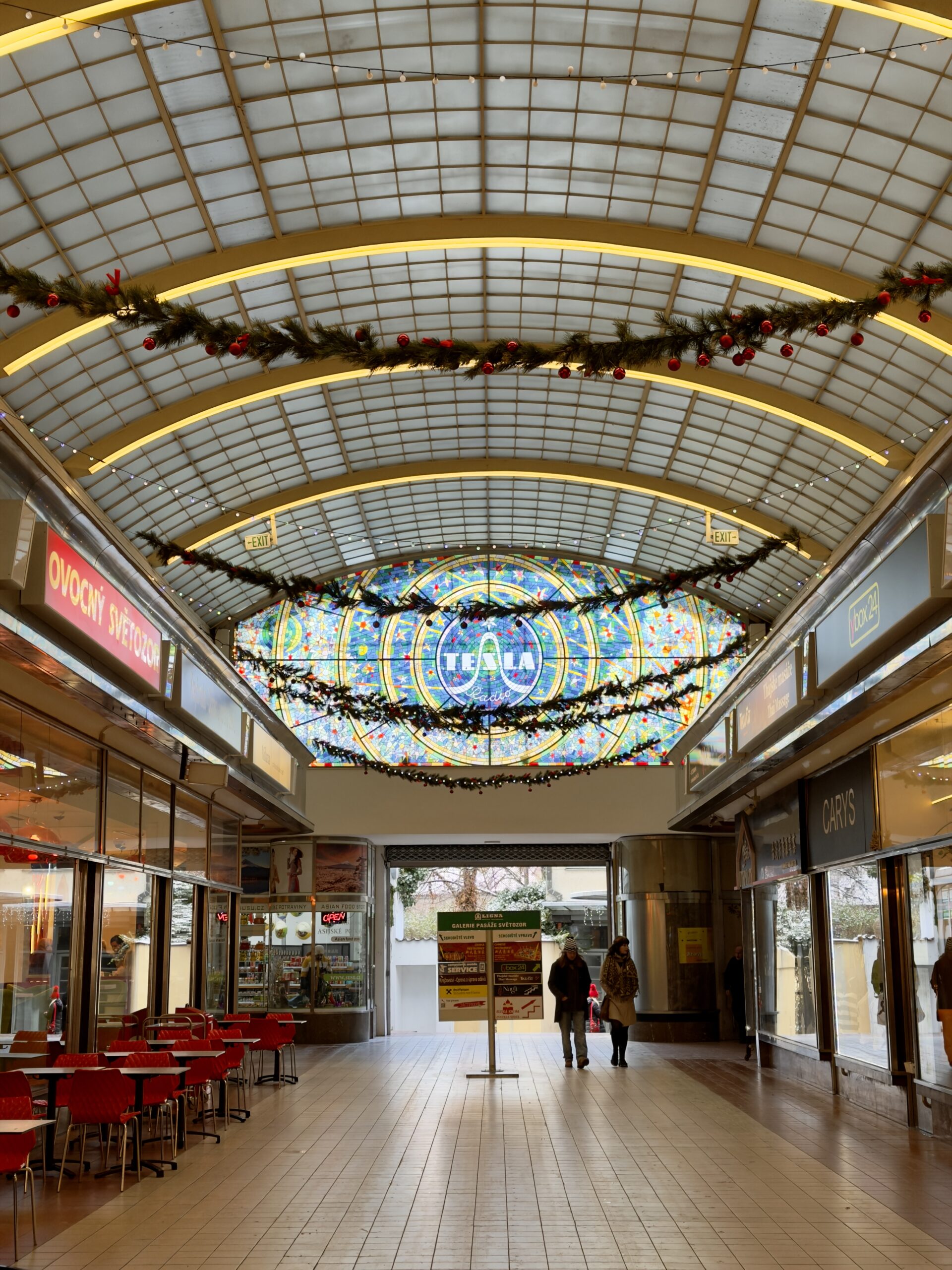
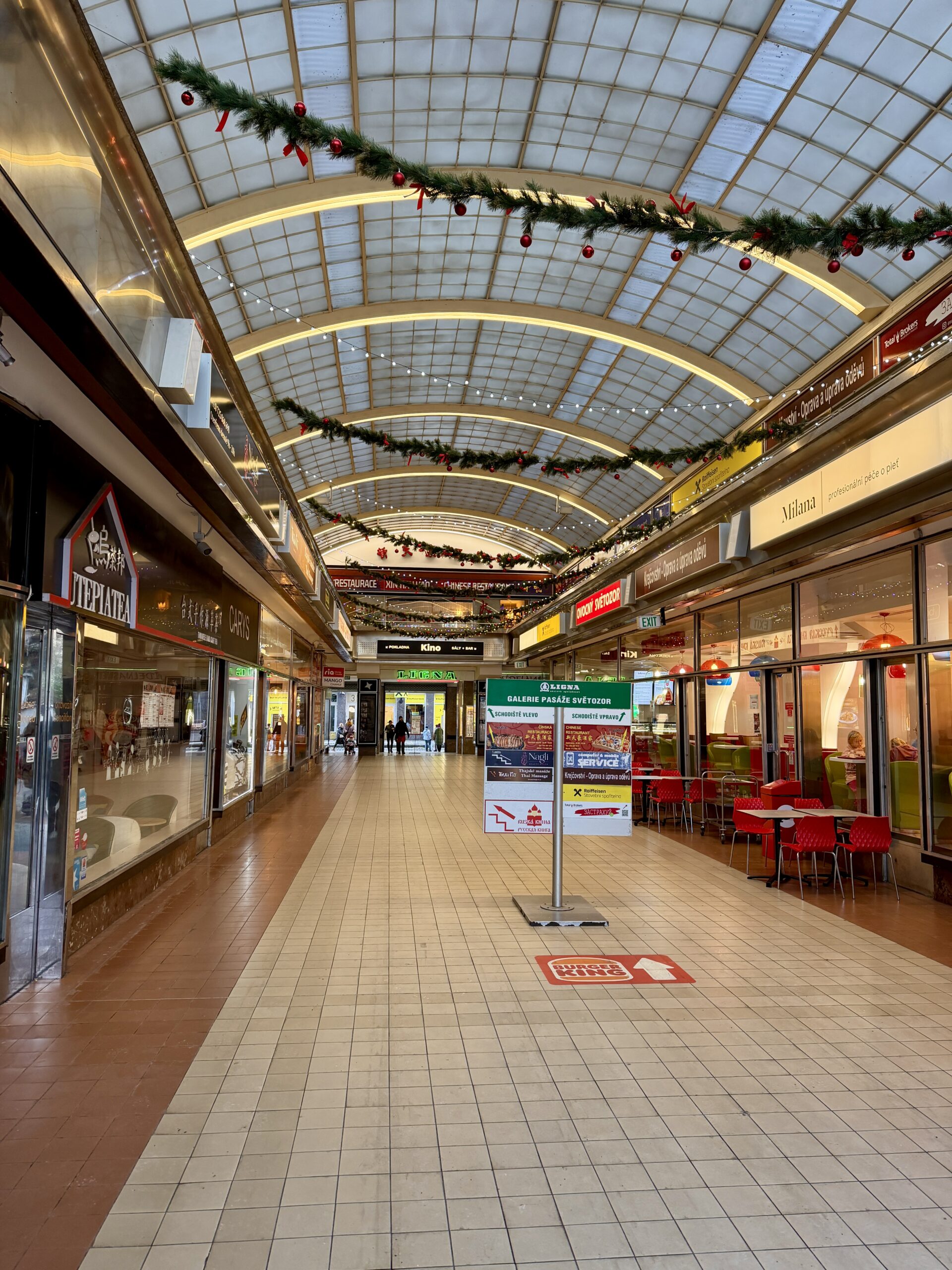
Světozor is functional, lived-in, and honest. It offers not grandeur, but continuity. In winter, the transition from cold air to steady indoor light feels grounding. People pass through quietly, absorbed in their own rhythm. The passage becomes a thread that connects the calm outside with the warmth inside.
Here, winter is not dramatic — it is simply part of the city’s cadence.
Lucerna Passage — A Glow That Feels Familiar
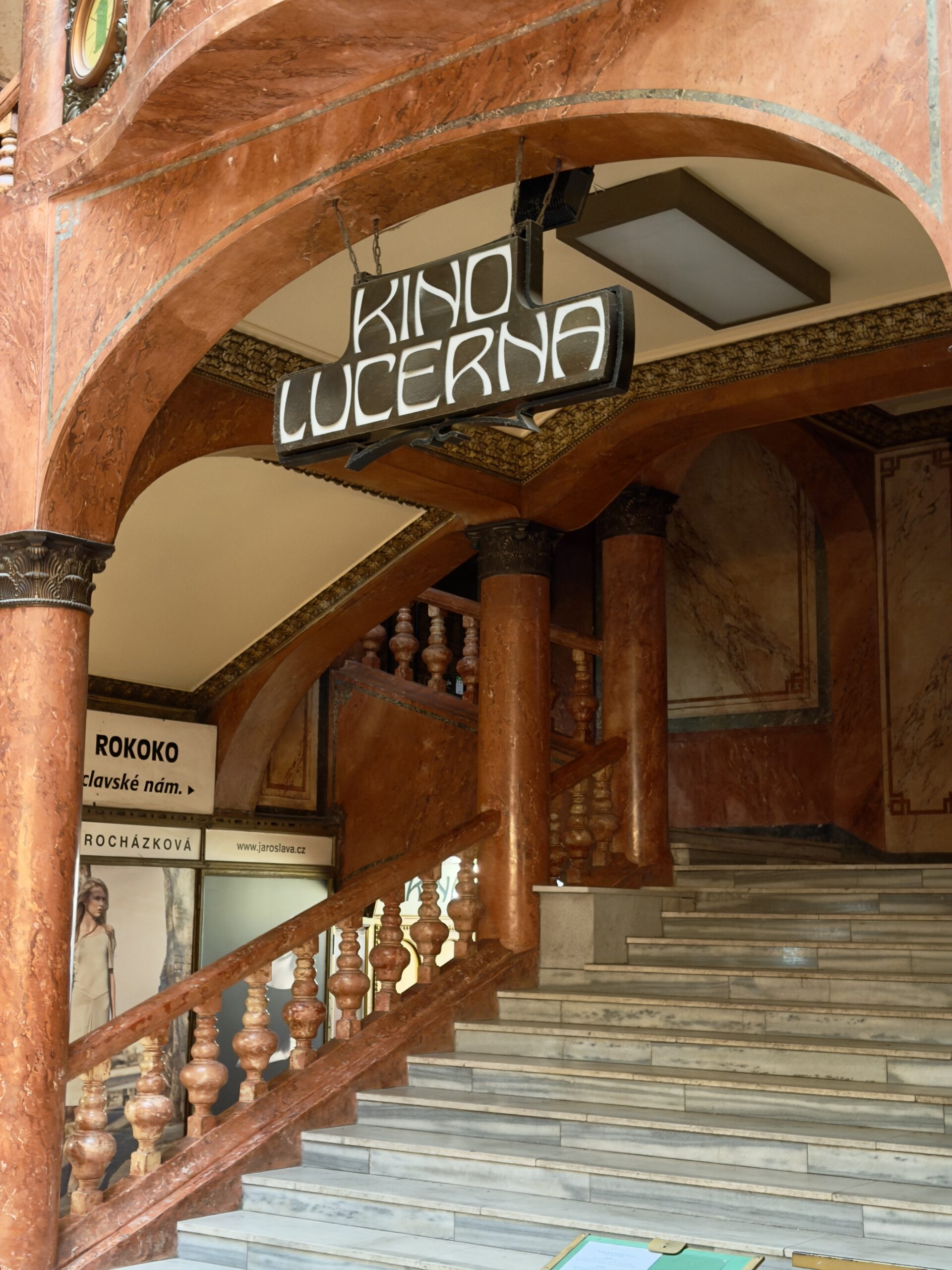
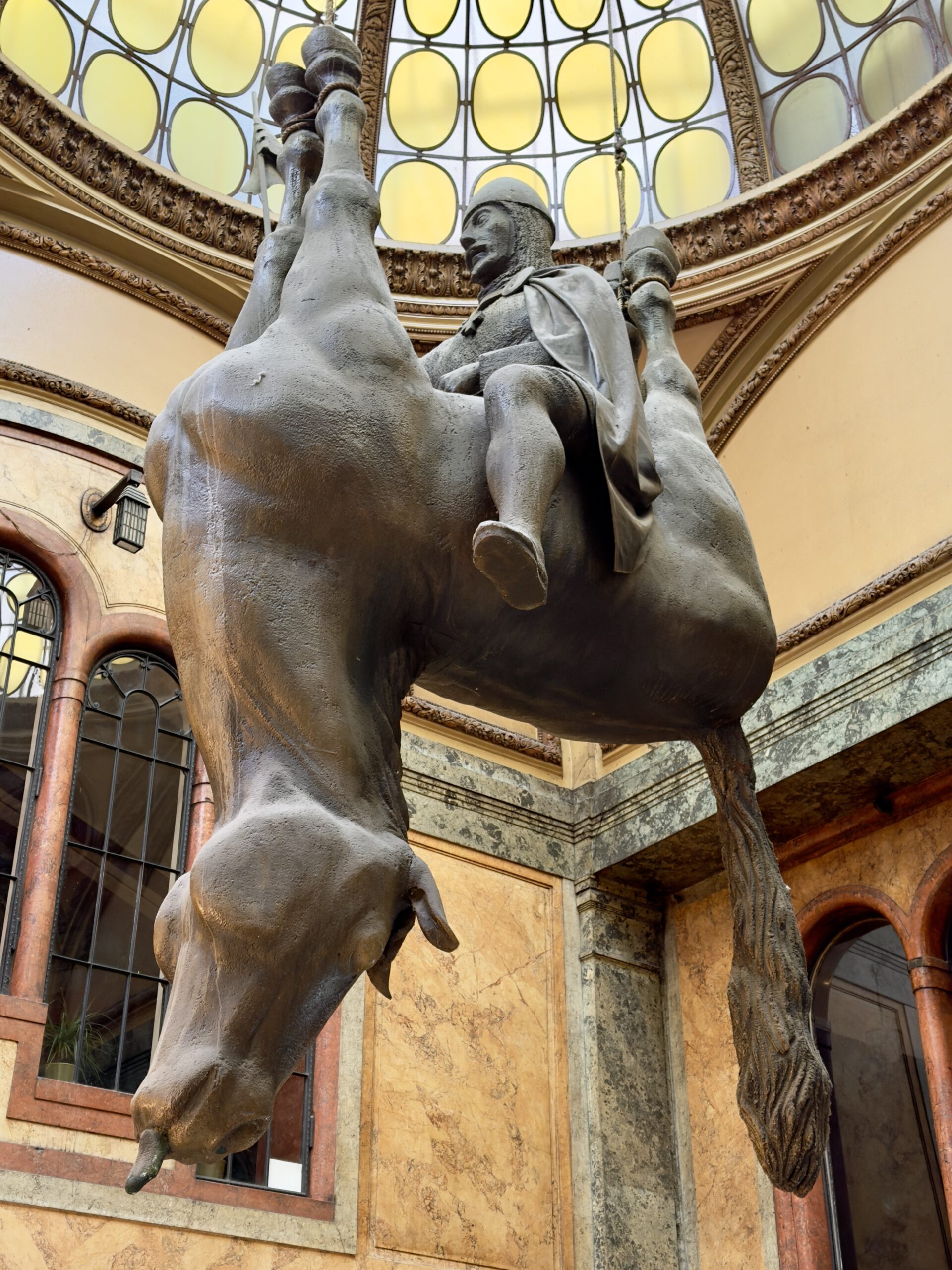
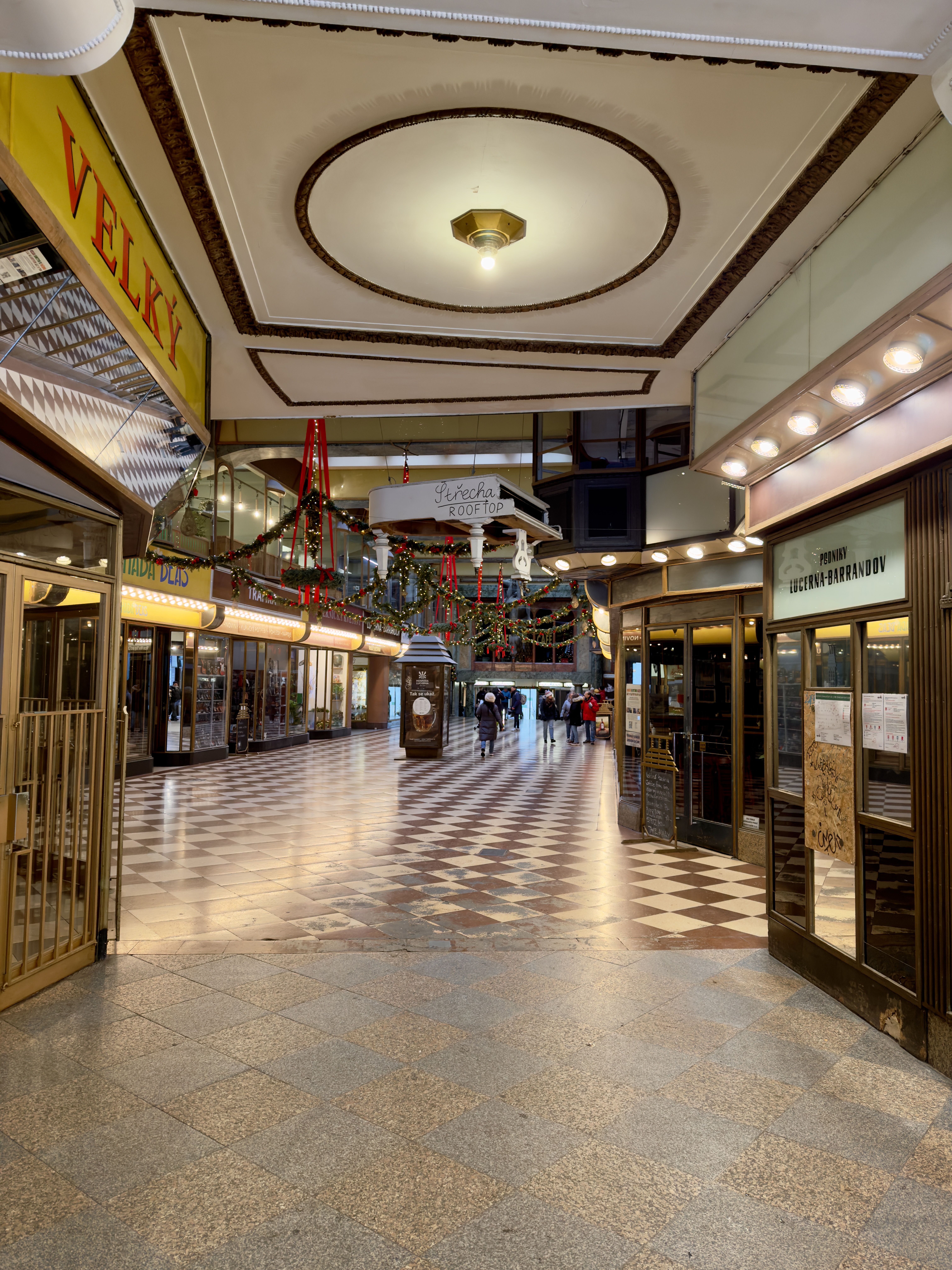
Lucerna is one of Prague’s cultural icons, but its winter charm lies in its atmosphere rather than its history. Warm light gathers beneath balconies and arches. Reflections soften along the floors. Architectural details appear theatrical without feeling staged.
Lucerna in winter feels lived-in — as though generations have passed through, each adding a layer of warmth.
Rokoko — Ornament, Intimacy, and Detail
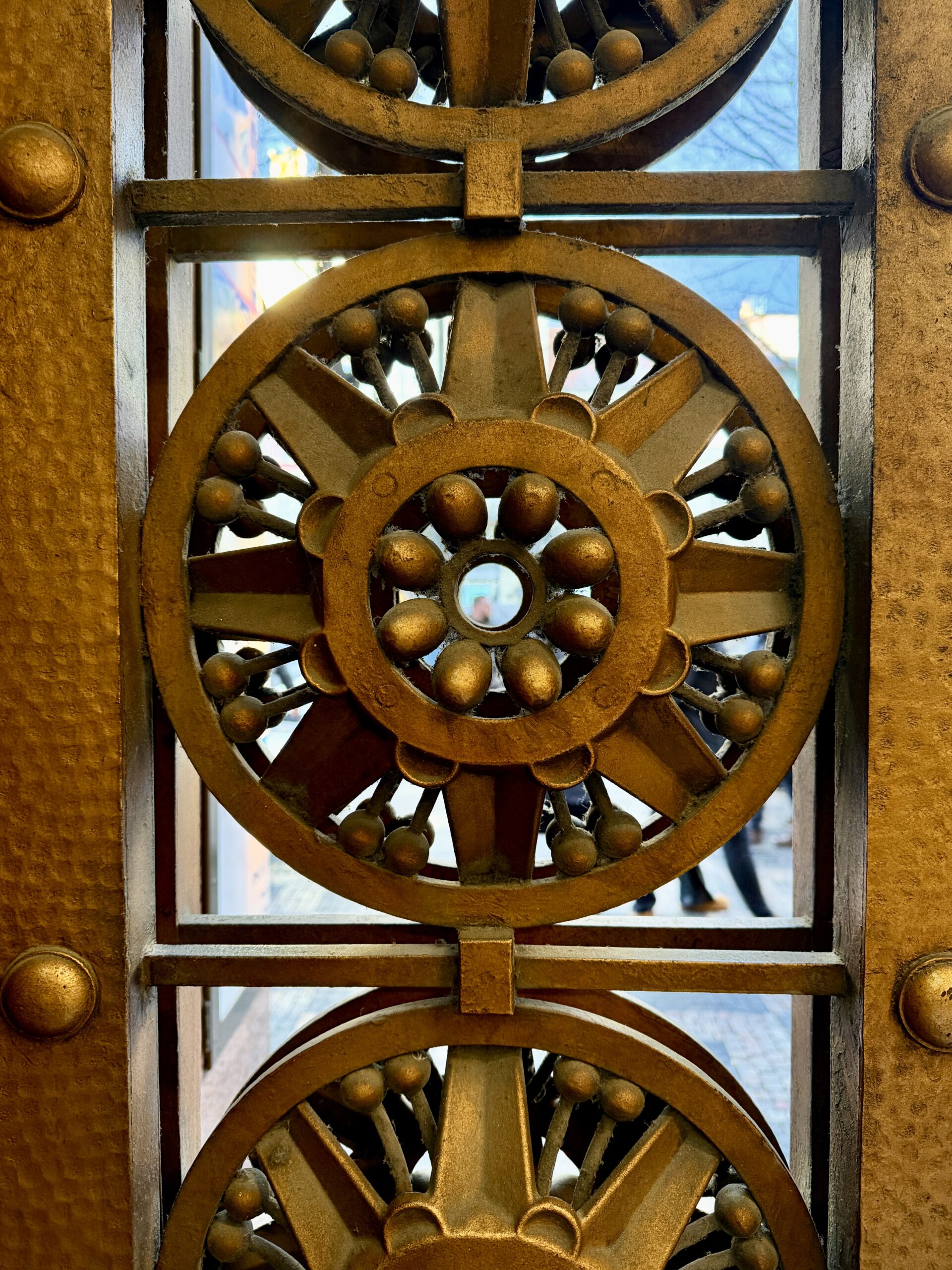
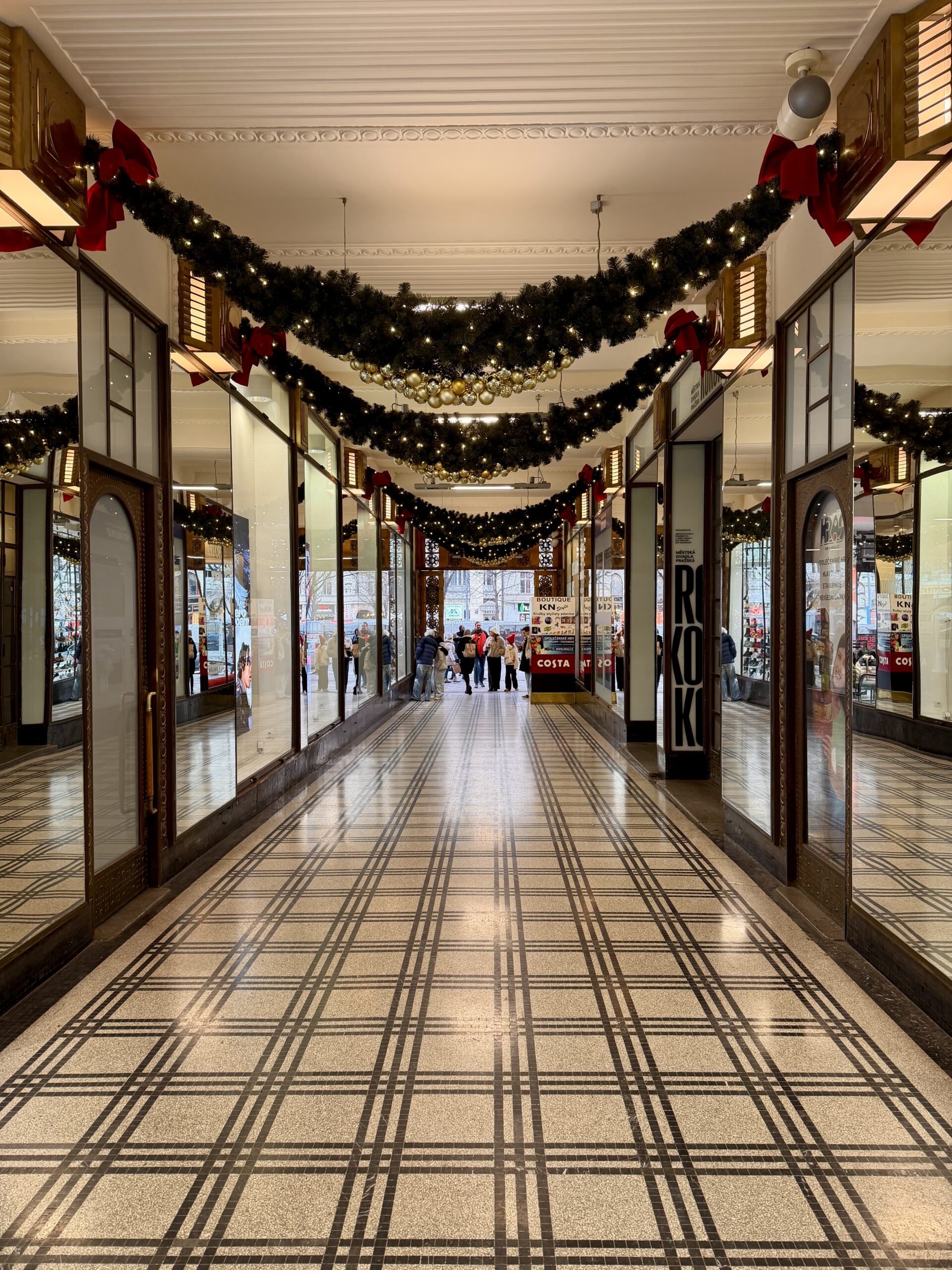
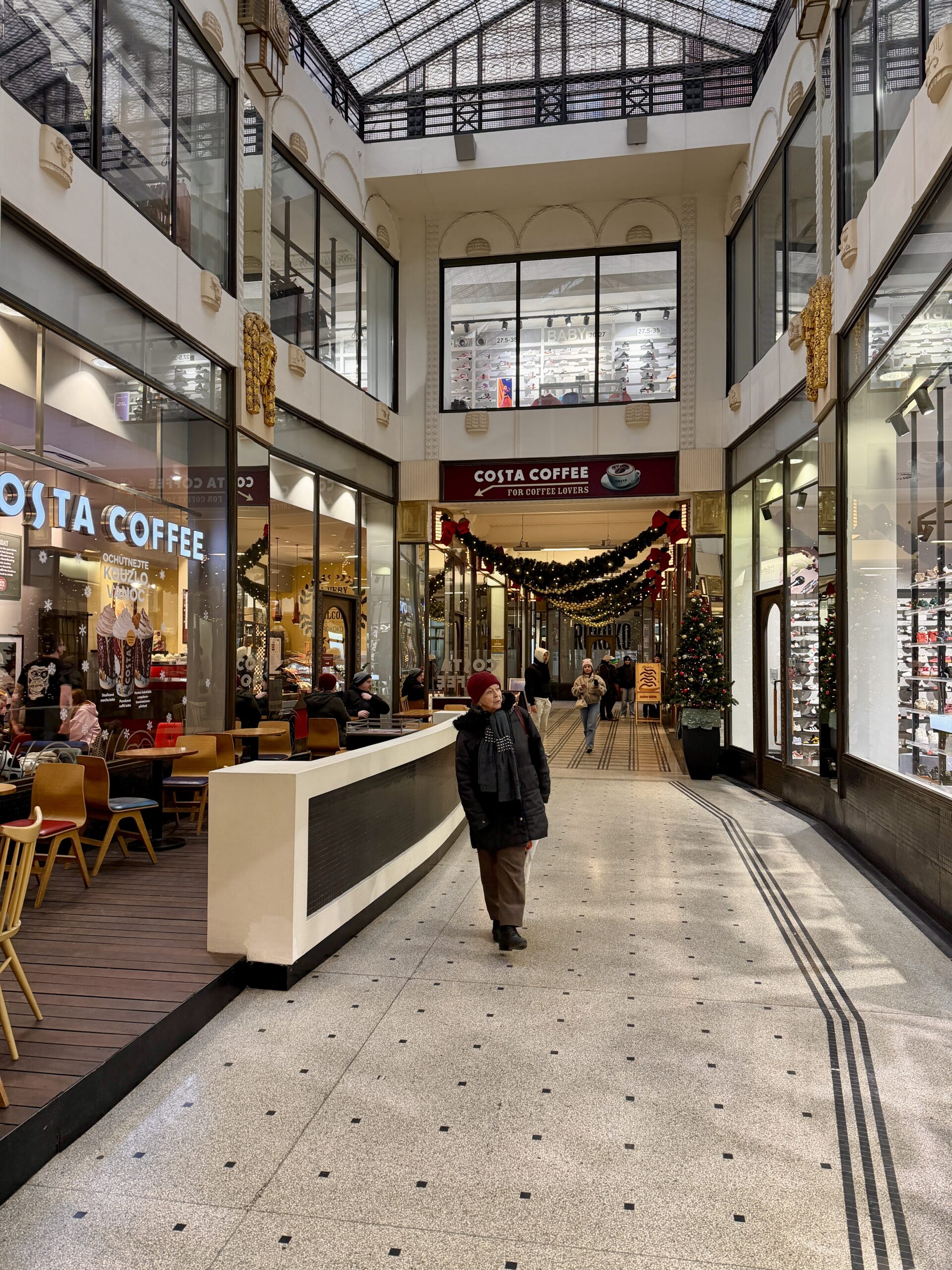
Where some interiors impress through scale, Rokoko captivates through intimacy. Soft curves, delicate mouldings, and warm lighting create a sense of closeness. In winter, these details become even more soothing. The contrast with the crisp air outside makes the space feel comforting, almost enveloping.
Rokoko is less about spectacle and more about feeling — and that makes it the perfect winter refuge.
Obecní dům — Where Light Becomes Warmth
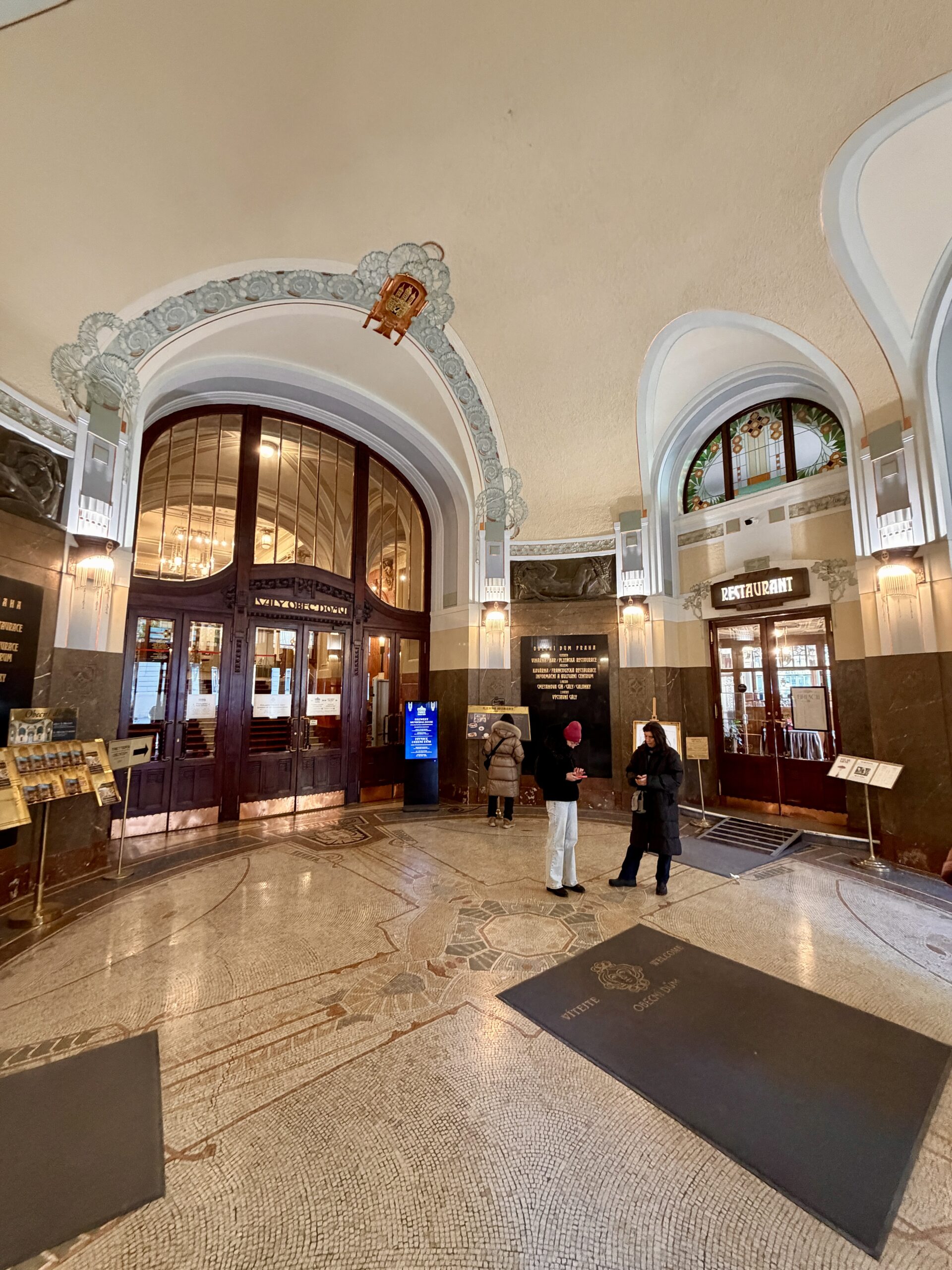
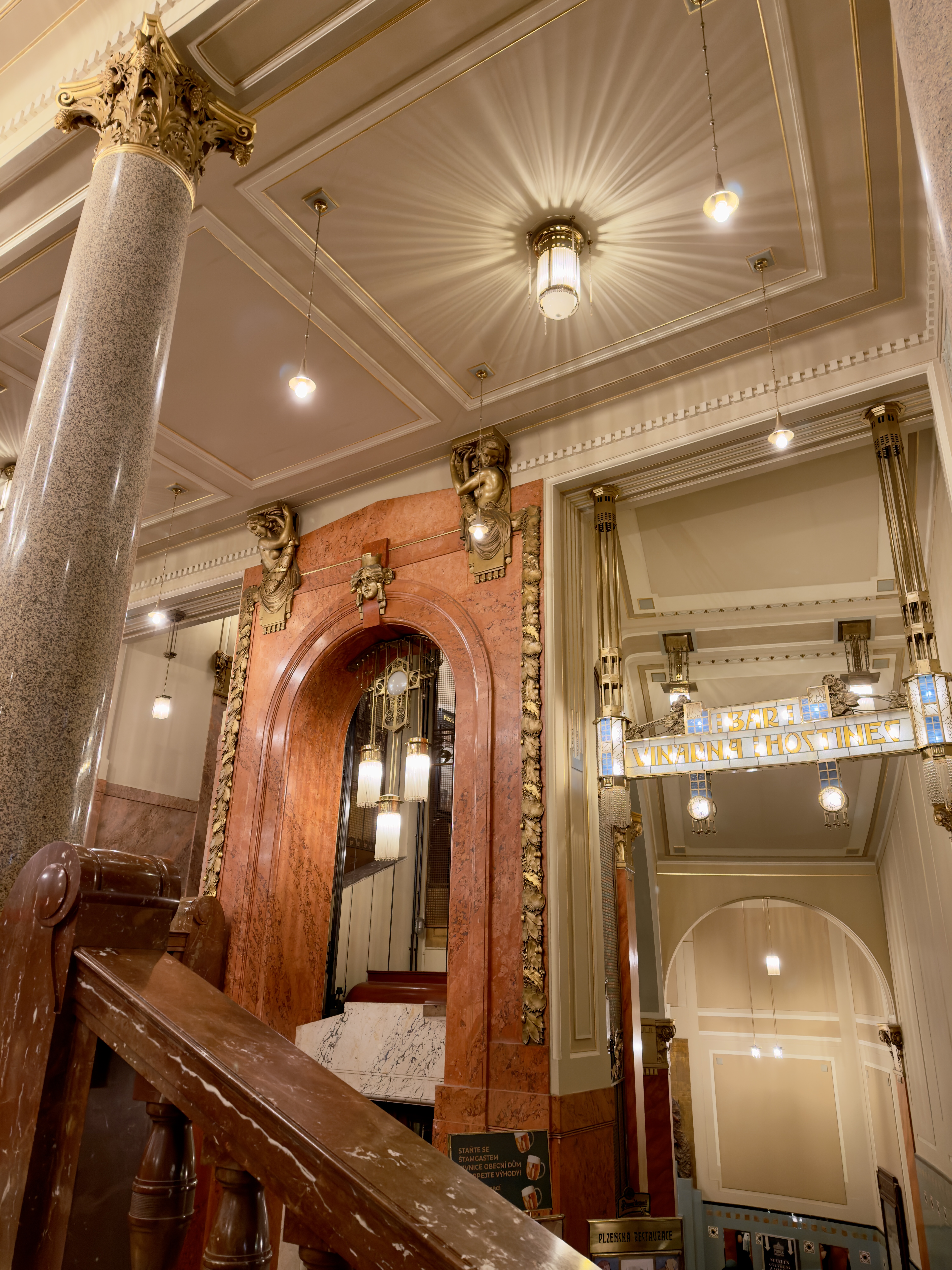
Few buildings capture winter’s duality as beautifully as the Municipal House. Outside, its façade reflects the cold, pale tones of the season. Inside, light transforms into warmth.
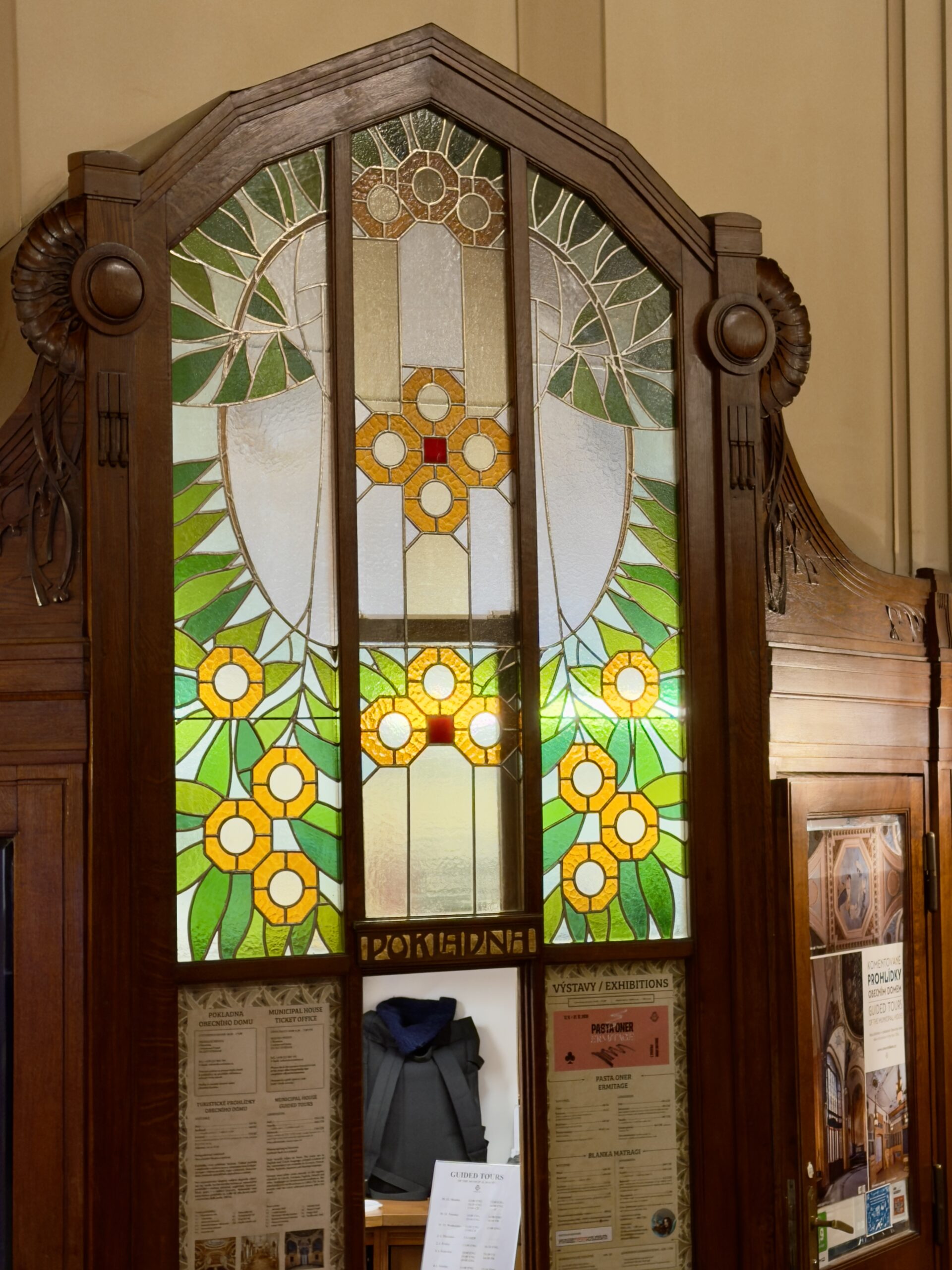
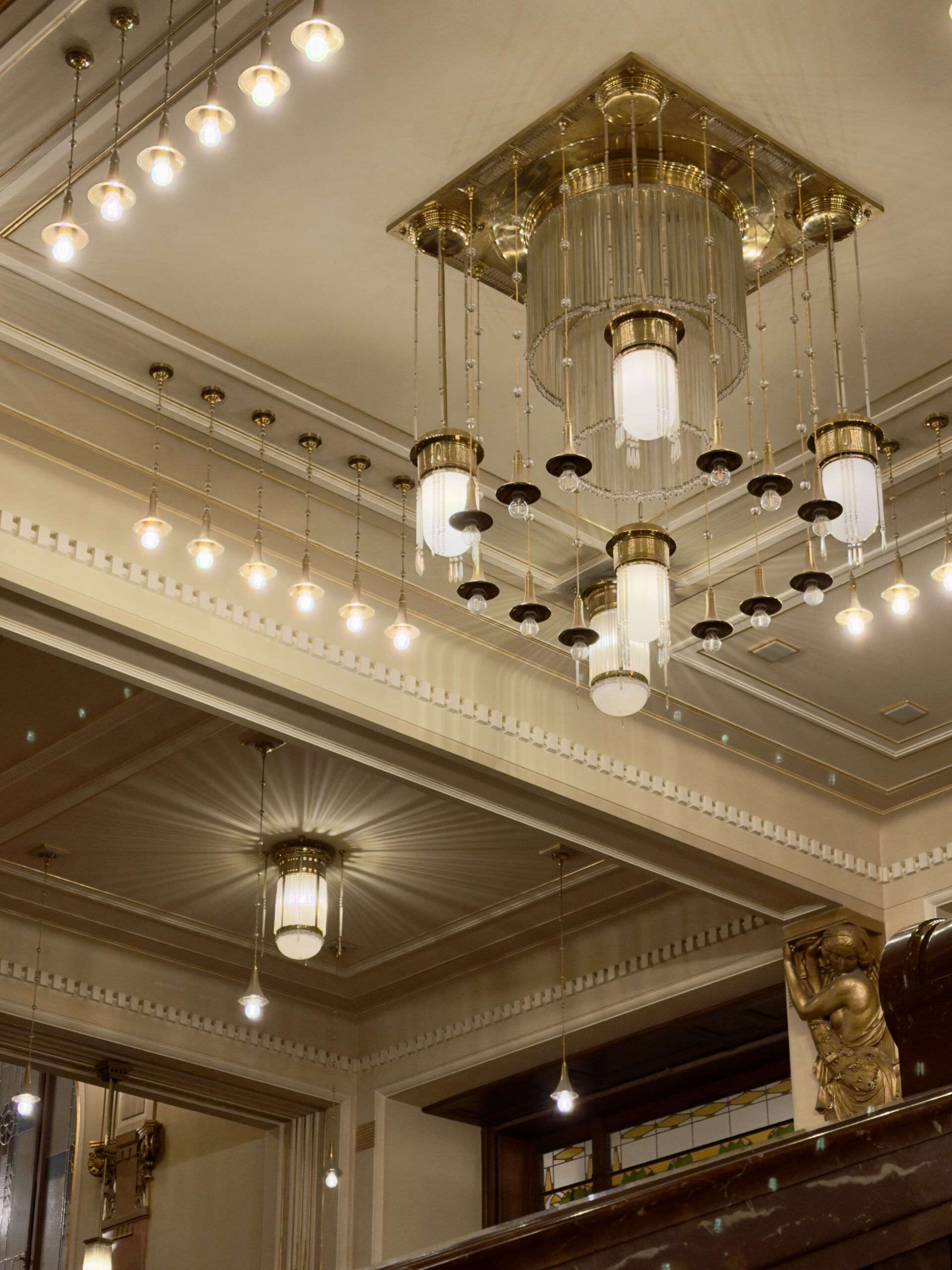
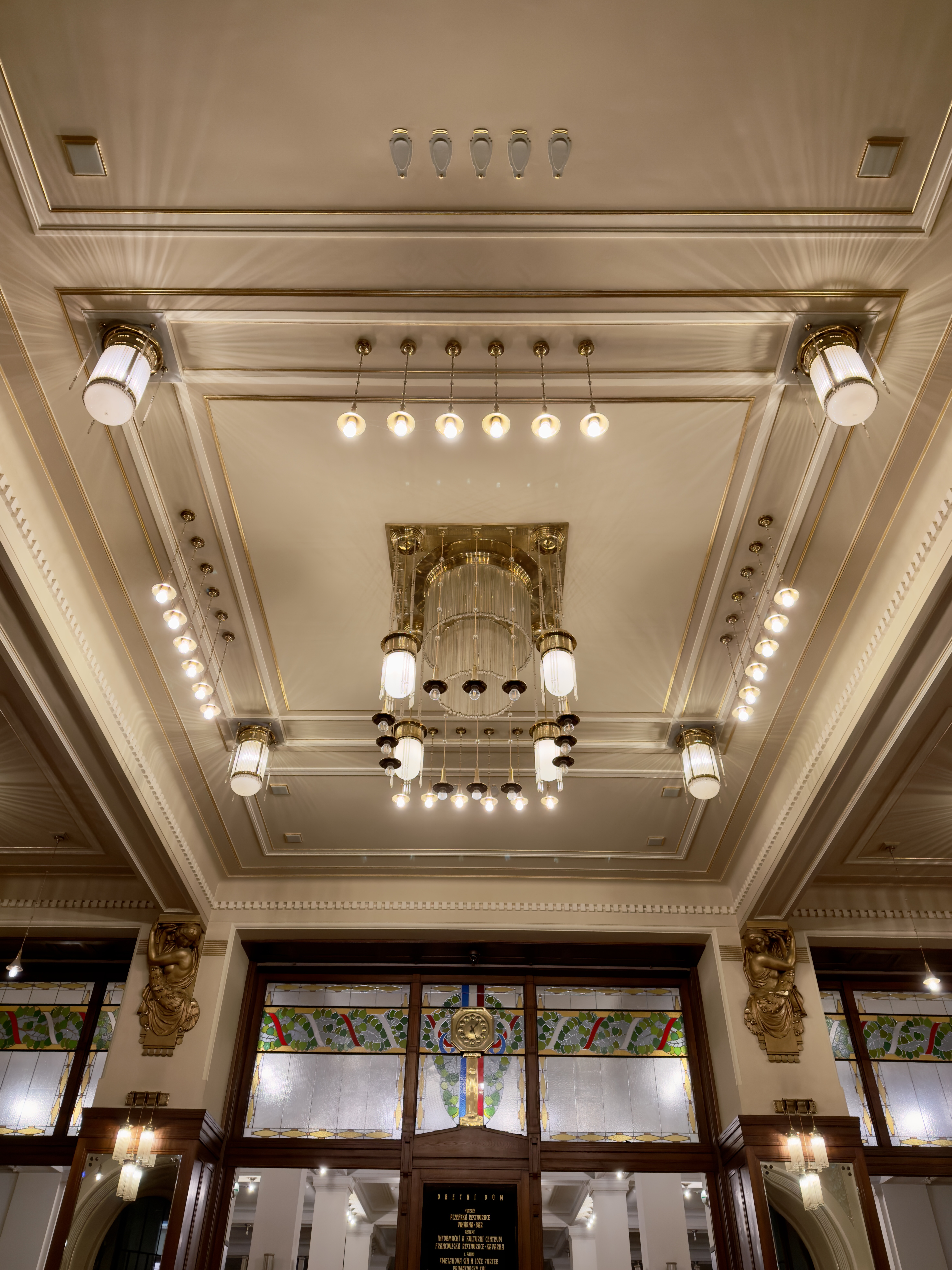
Soft gold accents glow against polished surfaces. Stained glass diffuses light into honey-like hues. Even the grand curves of staircases seem to embrace rather than impress. You don’t need to enter any of the famous halls to feel the building’s impact — the public spaces alone are enough to shift your mood.
In winter, this contrast becomes almost cinematic. The monochrome world outside meets the rich, deliberate elegance of Art Nouveau. The transition feels less like stepping indoors and more like changing languages.
Pasáž českého designu — Contemporary Calm
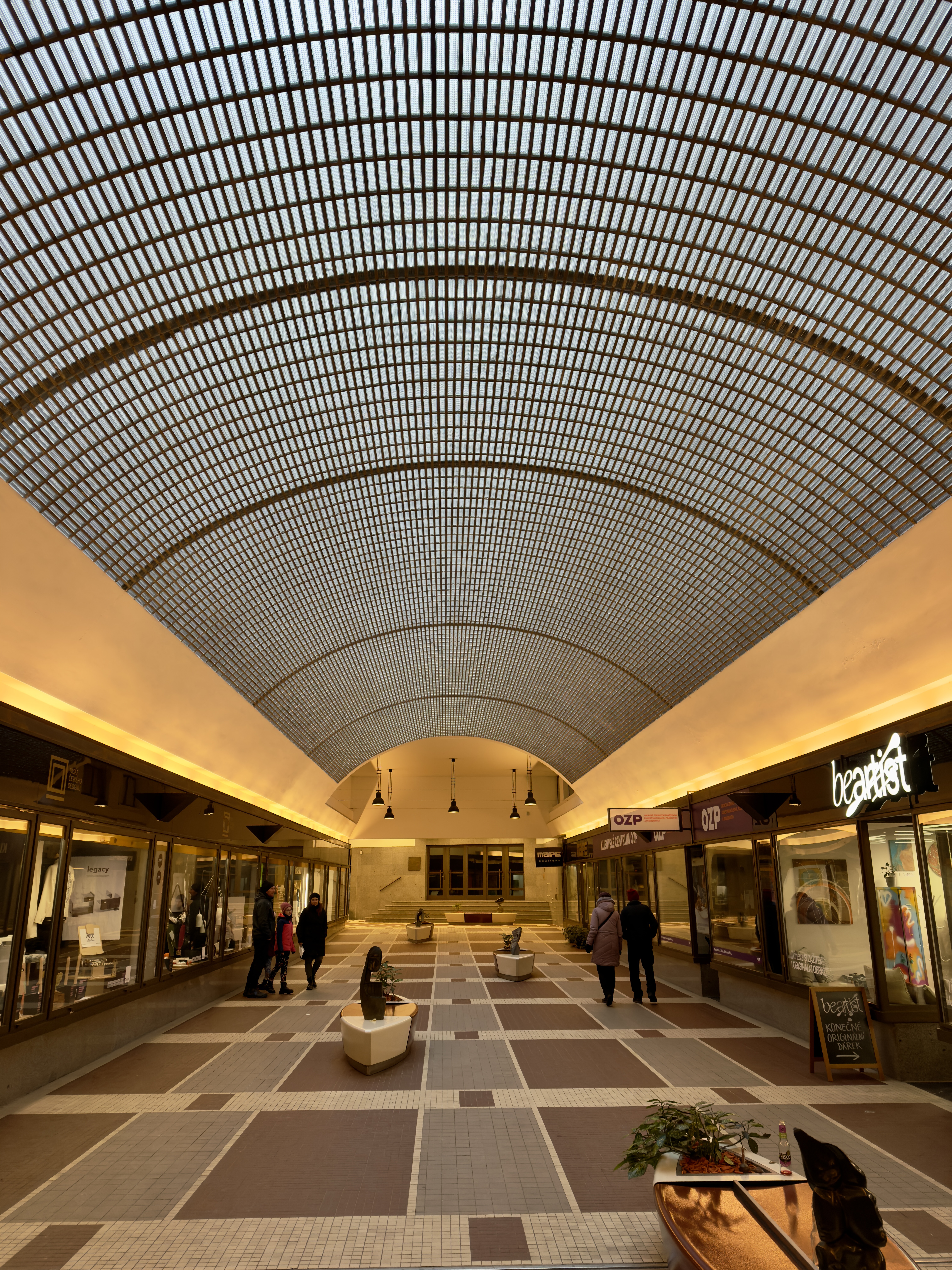
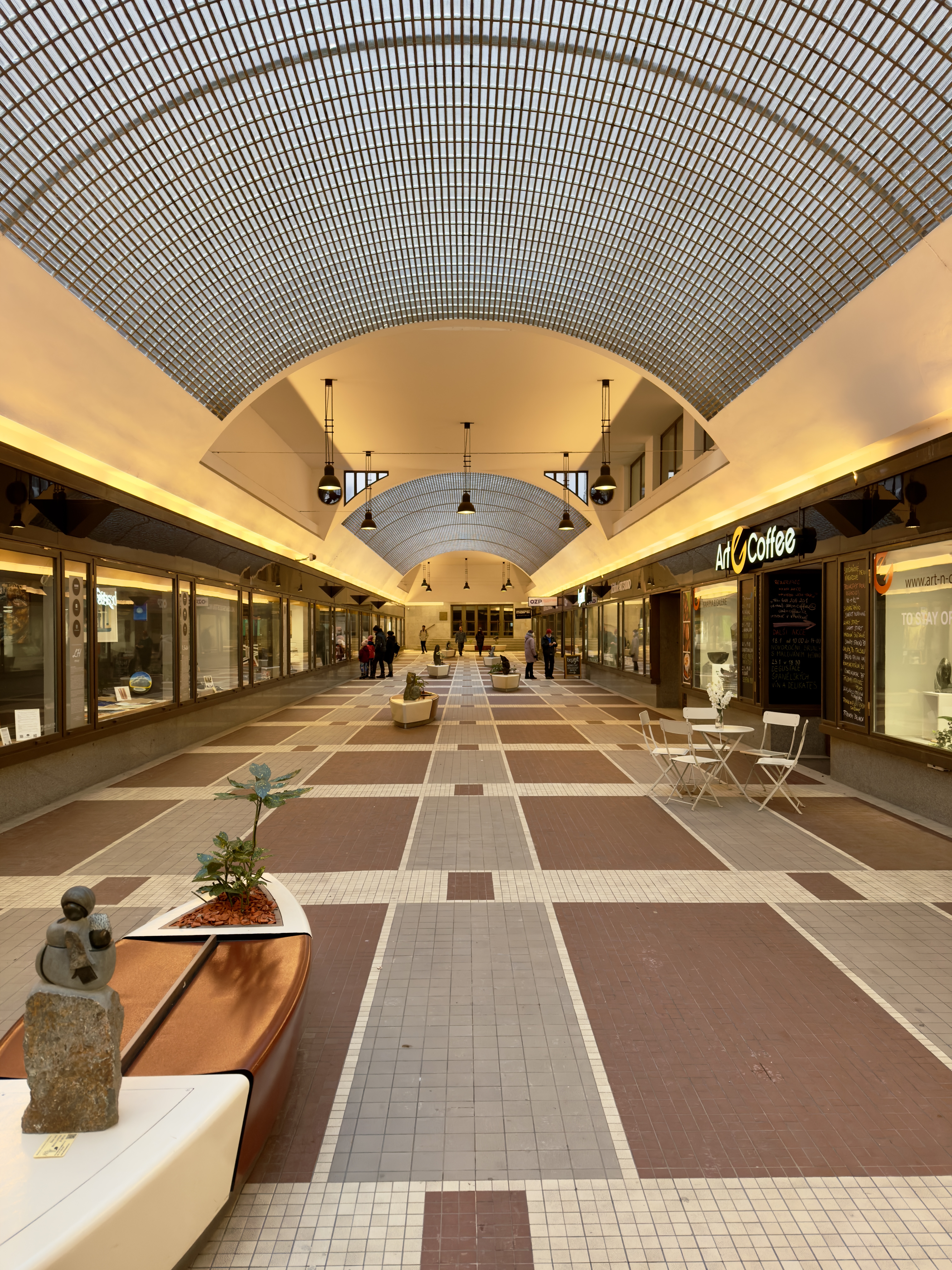
Among the city’s interiors, the Passage of Czech Design stands out for its clean lines and modern aesthetic. It brings clarity into winter’s subdued palette. Displays are curated, lighting restrained, and the overall impression is one of quiet precision. In winter, this contemporary calm forms a refreshing dialogue with Prague’s more ornate interiors. It shows that the city’s design culture continues to evolve.
The Dialogue Between Outside and Inside
What makes winter in Prague so compelling is the constant interplay between exterior restraint and interior warmth.
Outside: muted tones, softened edges, slow rhythm. Inside: colour, detail, luminosity.
Walking between the two is not a contrast — it is a conversation.
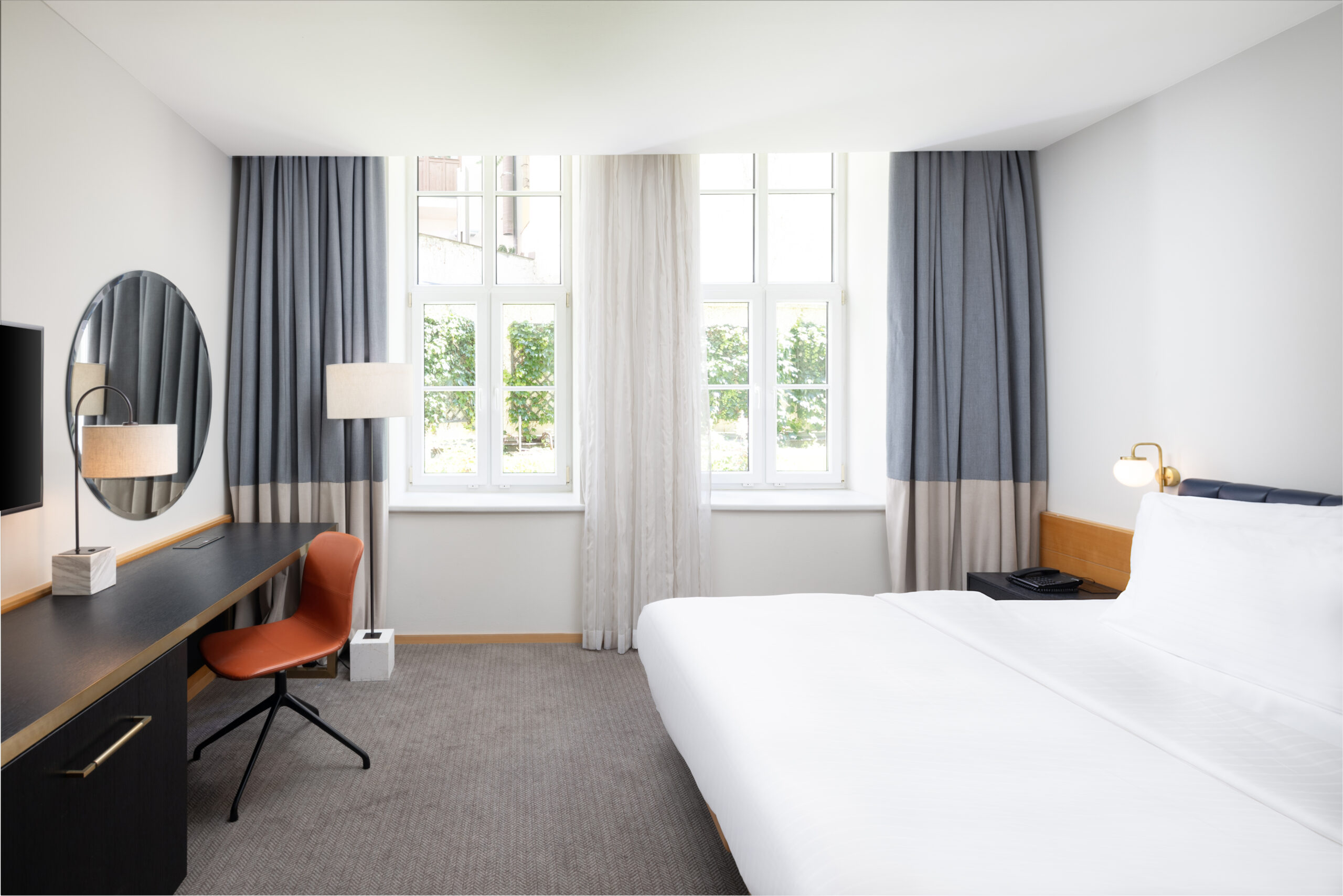
From either K+K Hotel Fenix or K+K Hotel Central, you step into this dialogue within minutes. There is no need for planning. No fixed route. No required stops. The city reveals itself naturally, one mood at a time.
Returning to your hotel at the end of the day feels less like ending a walk and more like completing a cycle. The warmth inside mirrors the warmth of the spaces you’ve visited. The quiet outside lingers in your mind.
Why Winter Belongs to Prague
In many cities, winter is a pause — a season between seasons. In Prague, winter is clarity.
It strips away excess and leaves only what matters: shape, light, rhythm, stillness.
Winter reveals Prague not as a destination, but as an experience — one that deepens the longer you walk, observe, and simply exist within it.
This is Prague at its most honest.
Its most introspective.
Its most quietly beautiful.
And in winter, the city finally has the space to show it.