Walking Prague with a Dog
Some cities are designed to be seen quickly, their landmarks arranged into a sequence of must-visit points. Prague resists that kind of experience. It reveals itself more gradually — not through a checklist, but through movement.
It is a city best understood on foot. Distances feel shorter than expected. Neighbourhoods transition seamlessly. Streets narrow and open again without warning. A turn leads into a quiet square, a passage into a wider avenue, a moment of movement into an opportunity to pause. The city does not impose a route. It allows one.
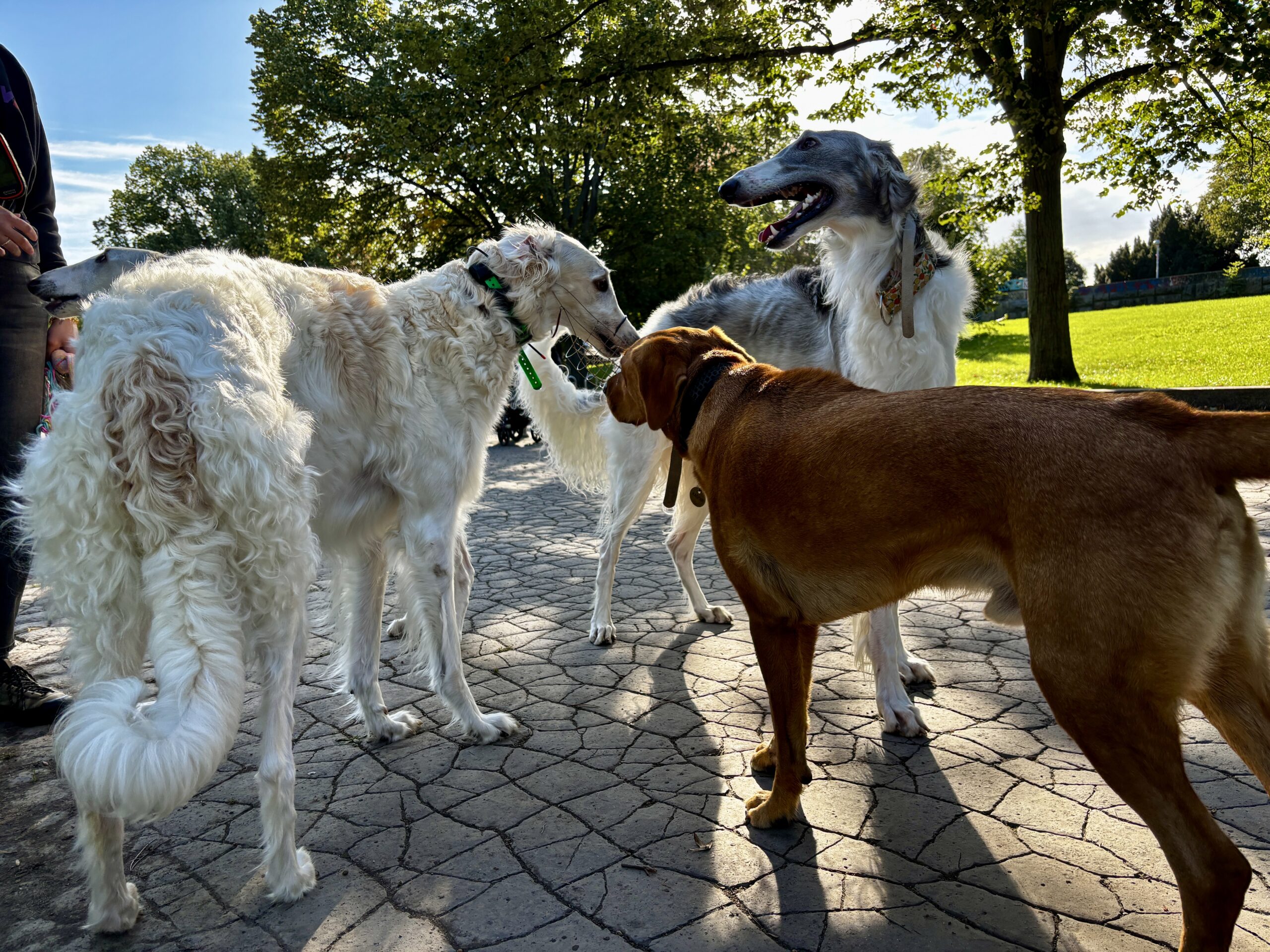
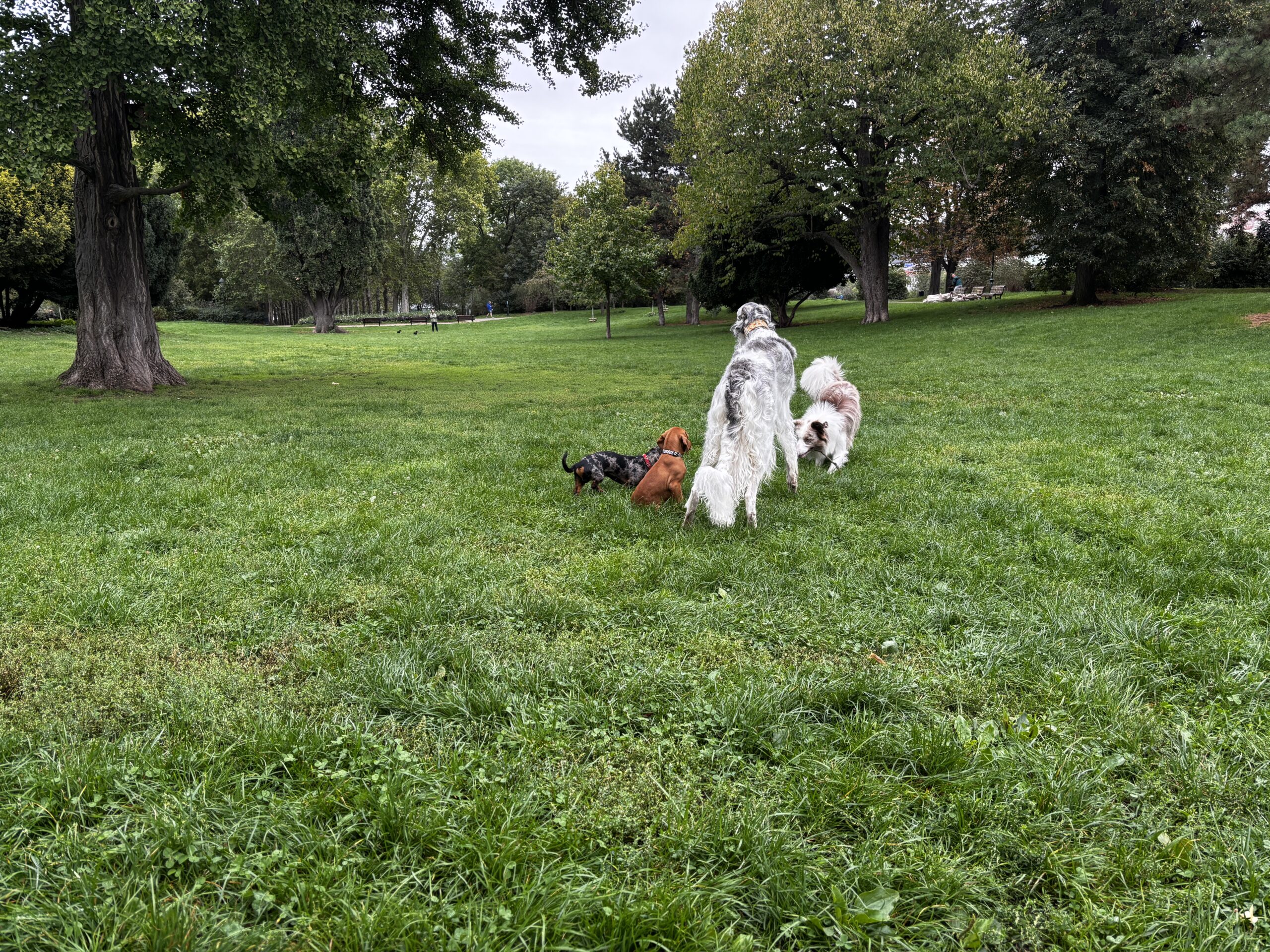
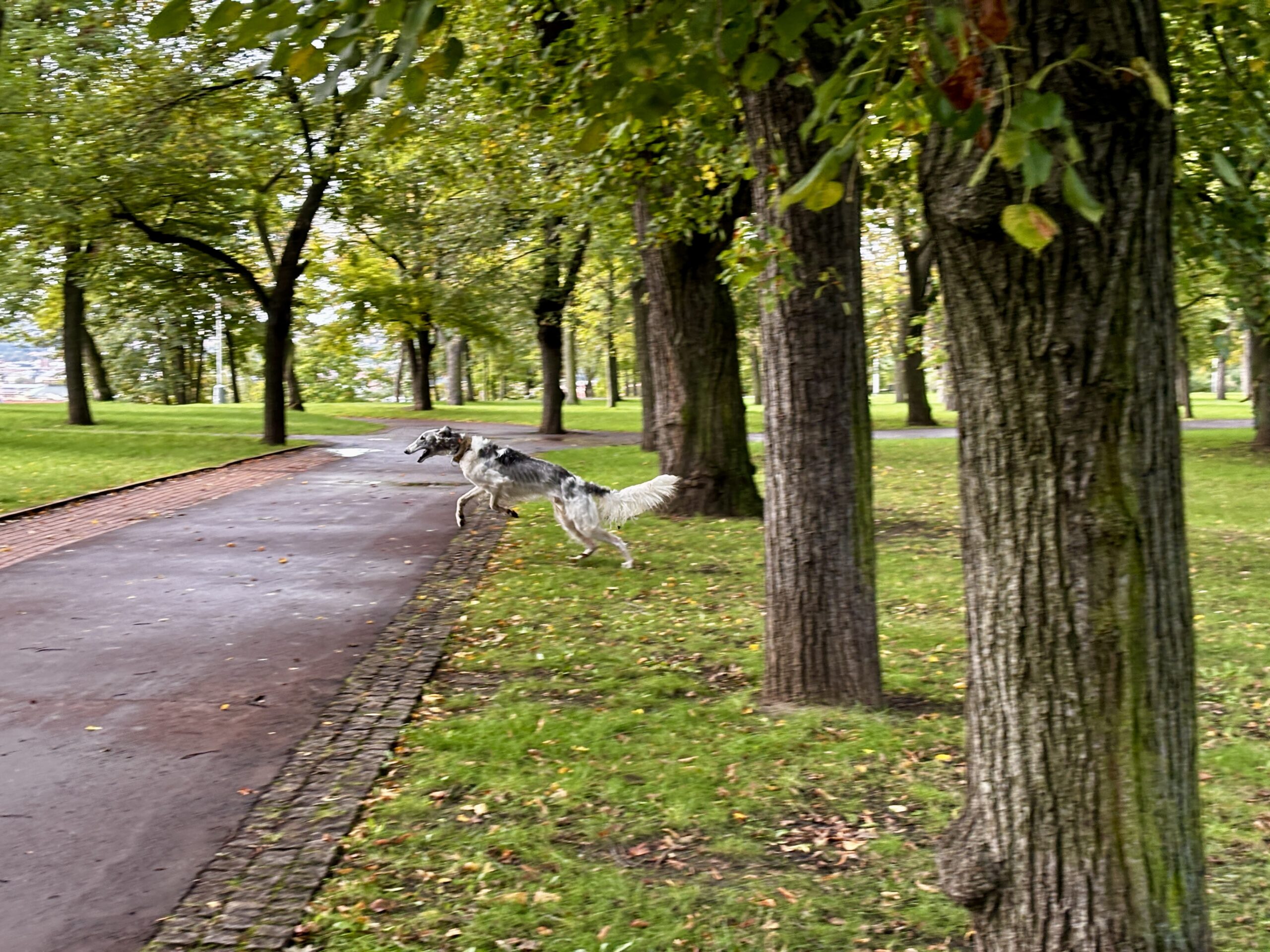
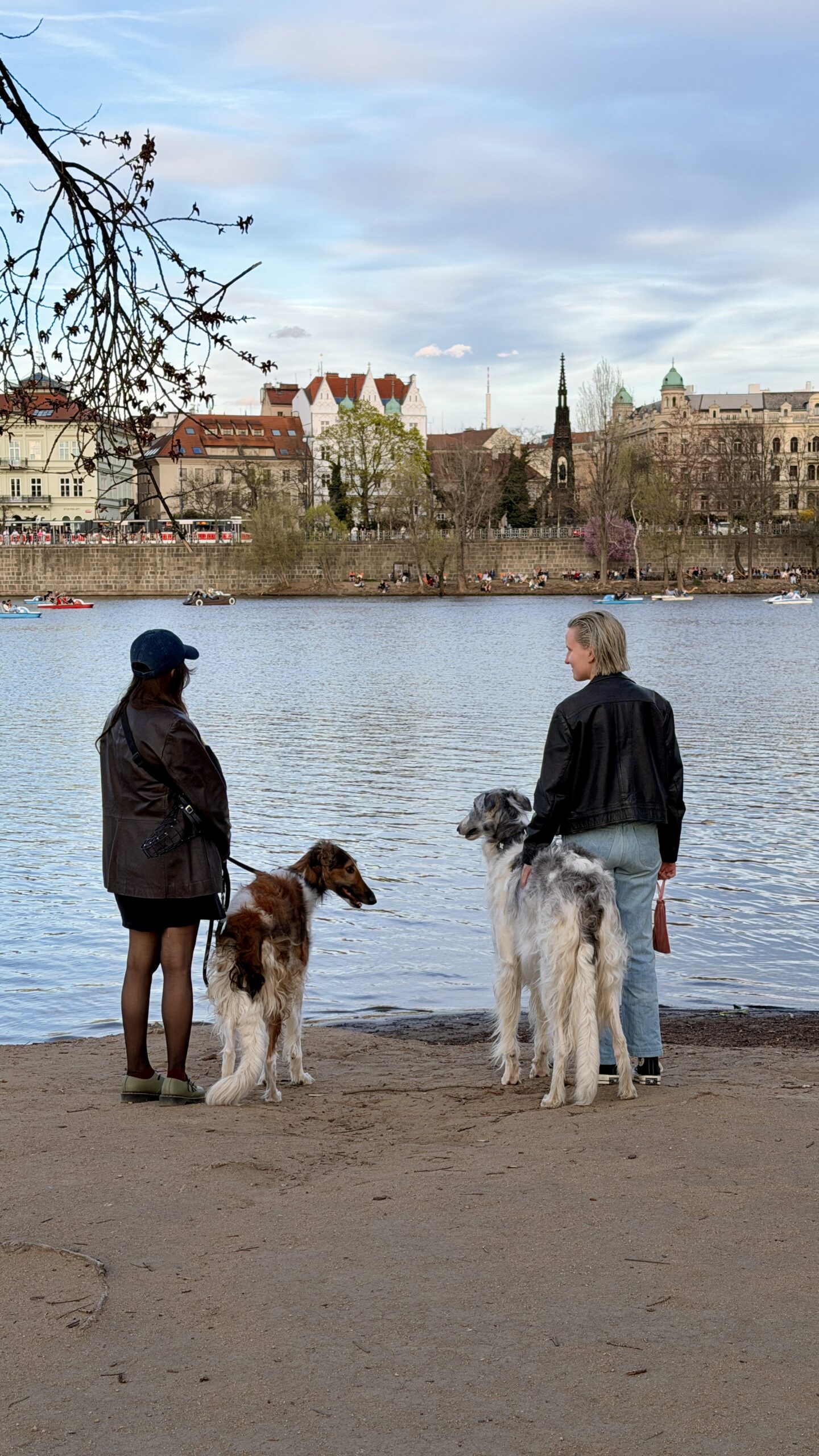
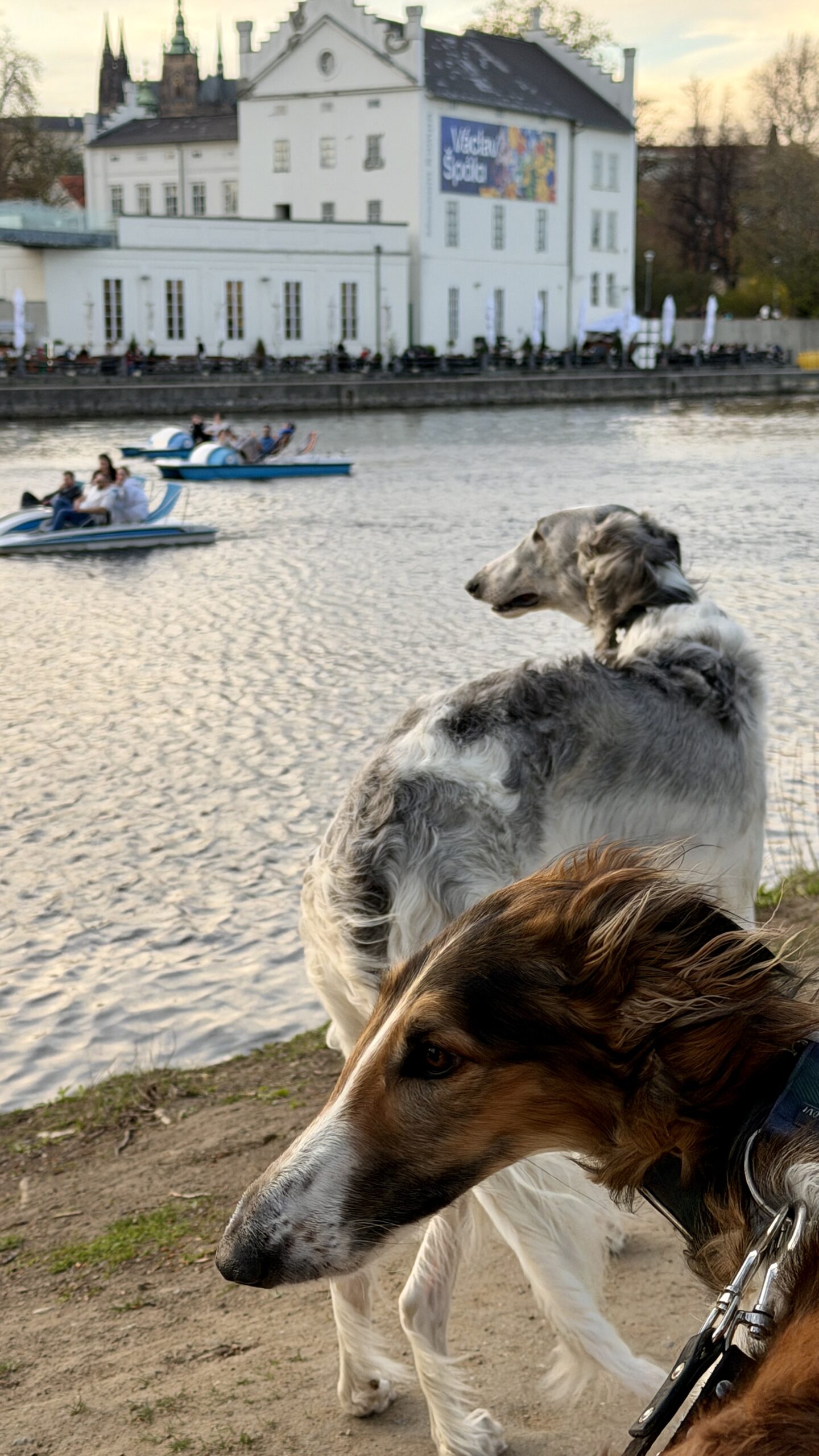
This rhythm becomes even more apparent when moving through Prague with a dog — in my case, a borzoi named Ravi, though in this city, that is far from unusual.
Dogs are not an exception here. They are part of Prague’s everyday life.
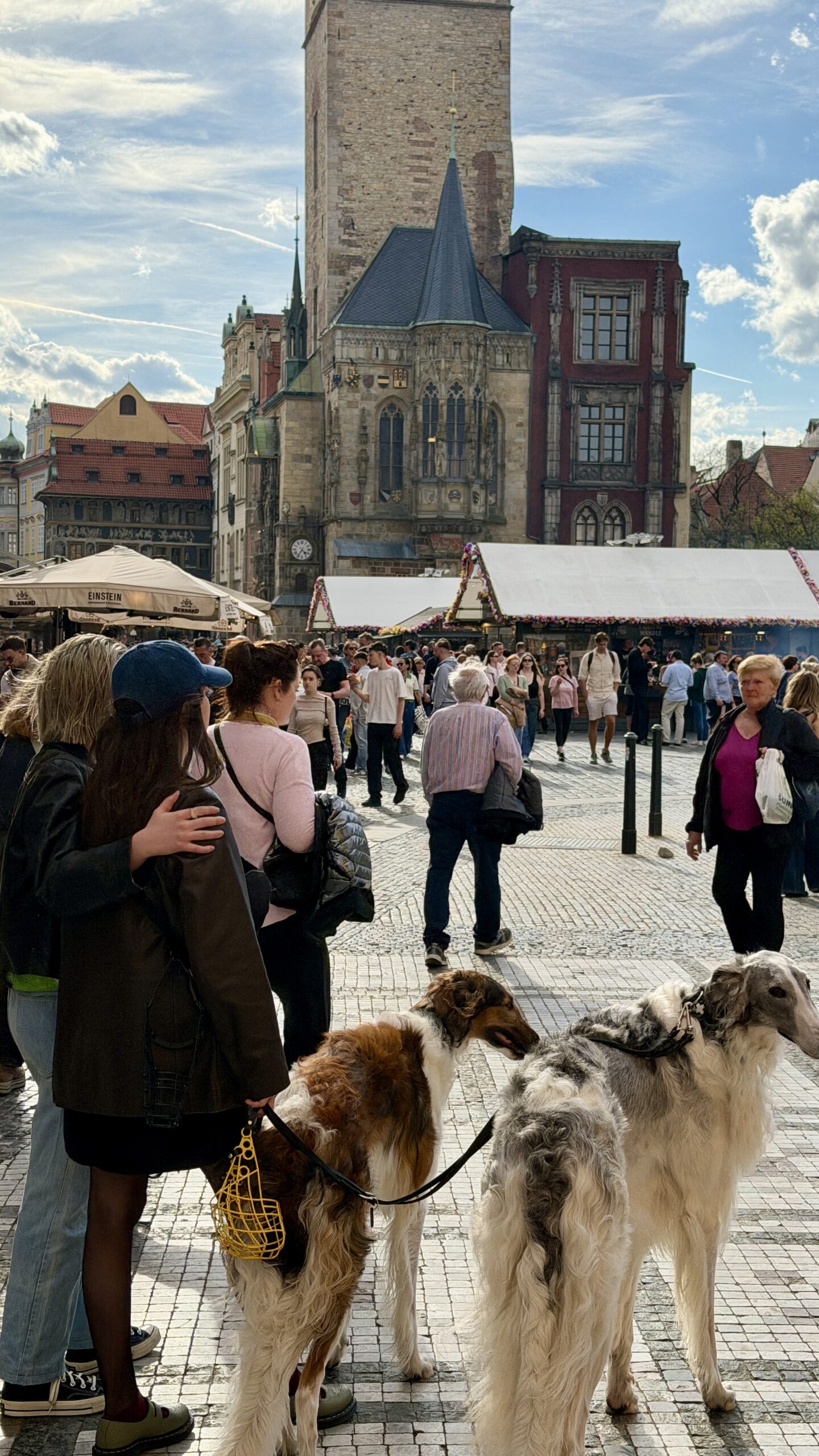
The Rhythm of the Walk
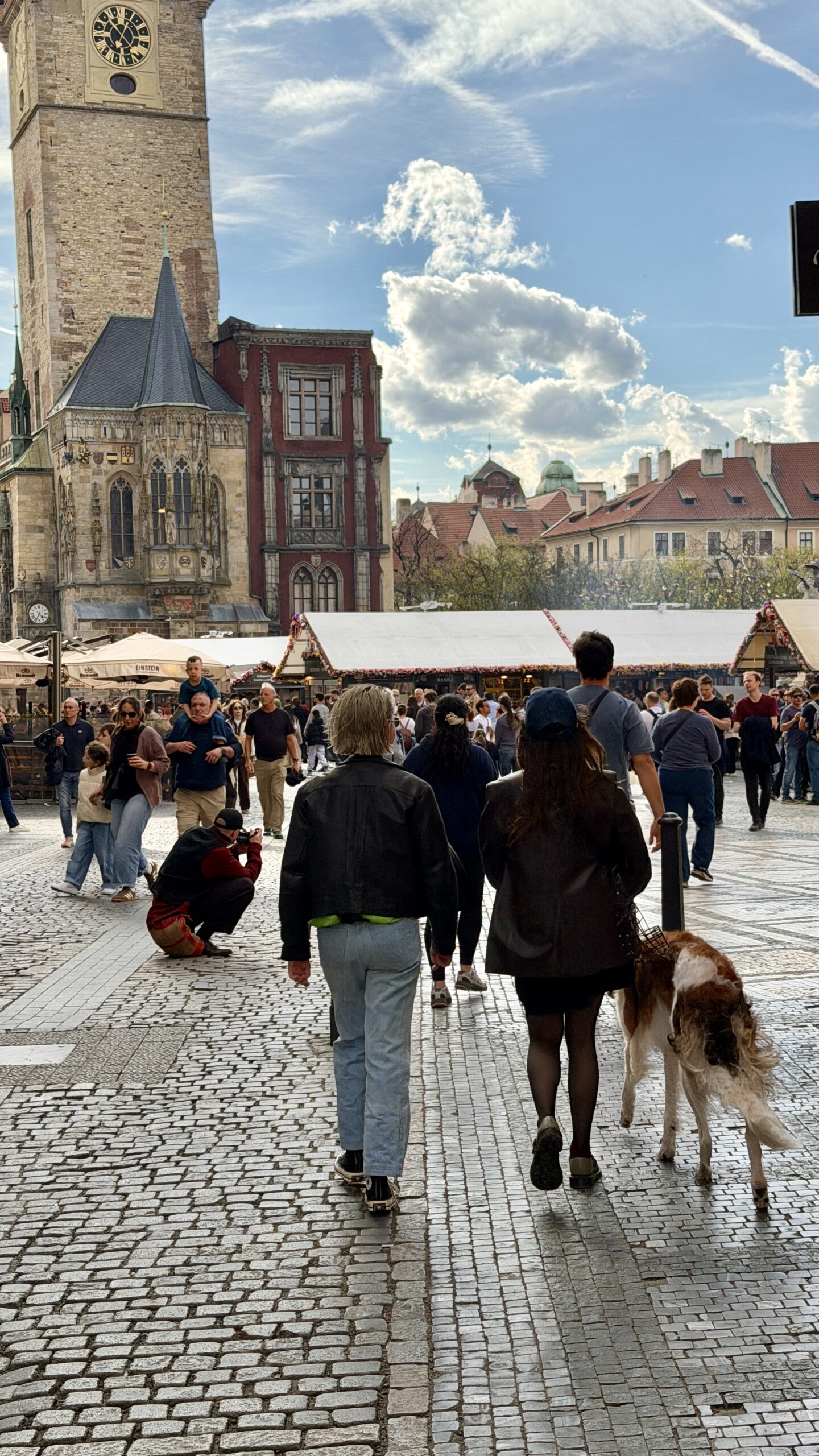
Walking through Prague shifts the way the city is perceived. Even its most recognisable places take on a different character when approached without urgency. Old Town Square, often defined by movement and noise, can feel unexpectedly open when experienced at a slower pace — its scale more noticeable, its details easier to absorb.
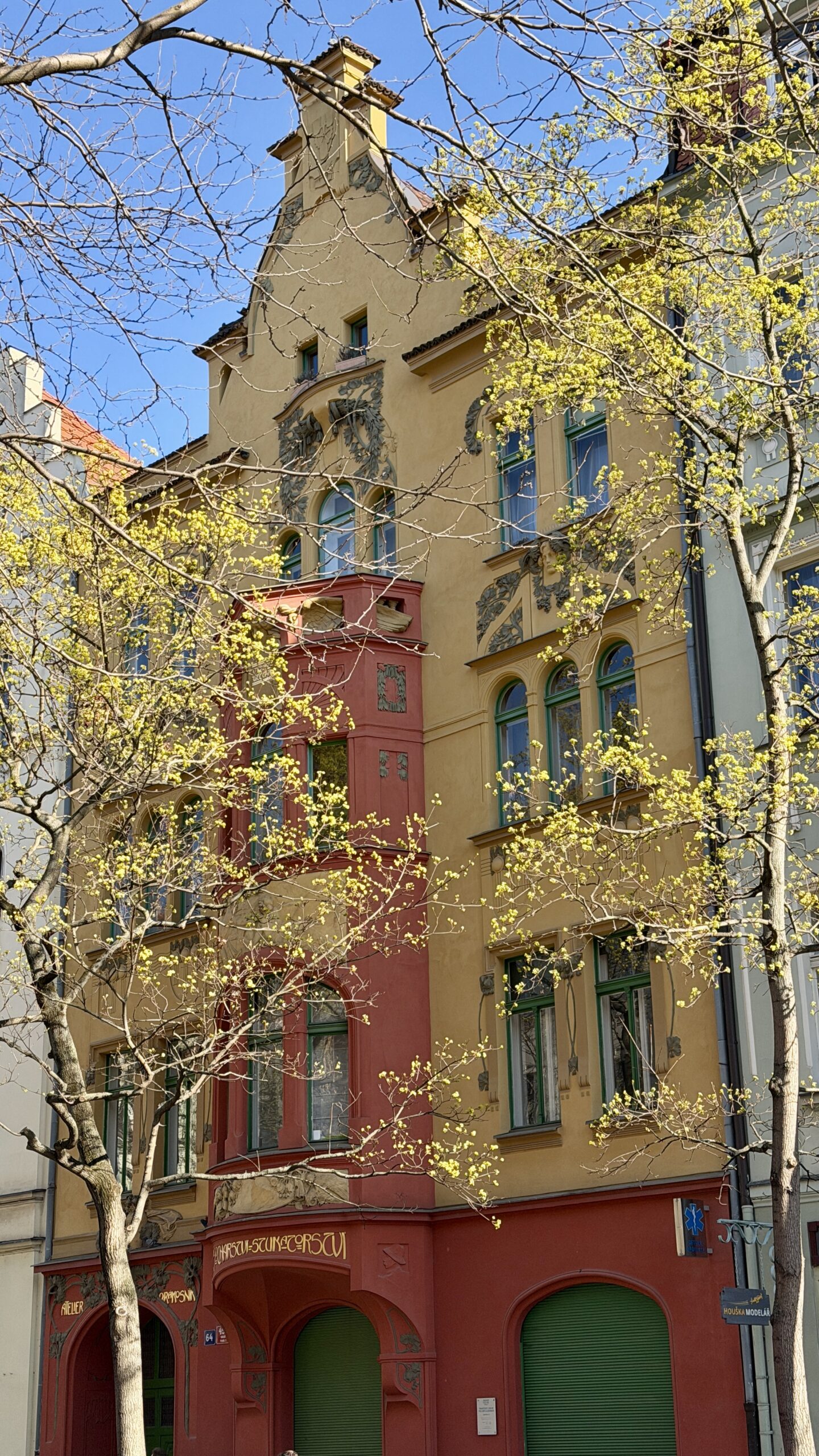
At this rhythm, walking becomes observation. Small elements begin to emerge — the texture of stone underfoot, the repetition of windows across historic buildings, the subtle play of light along façades. Movement slows naturally, not by intention, but by the character of the city itself.
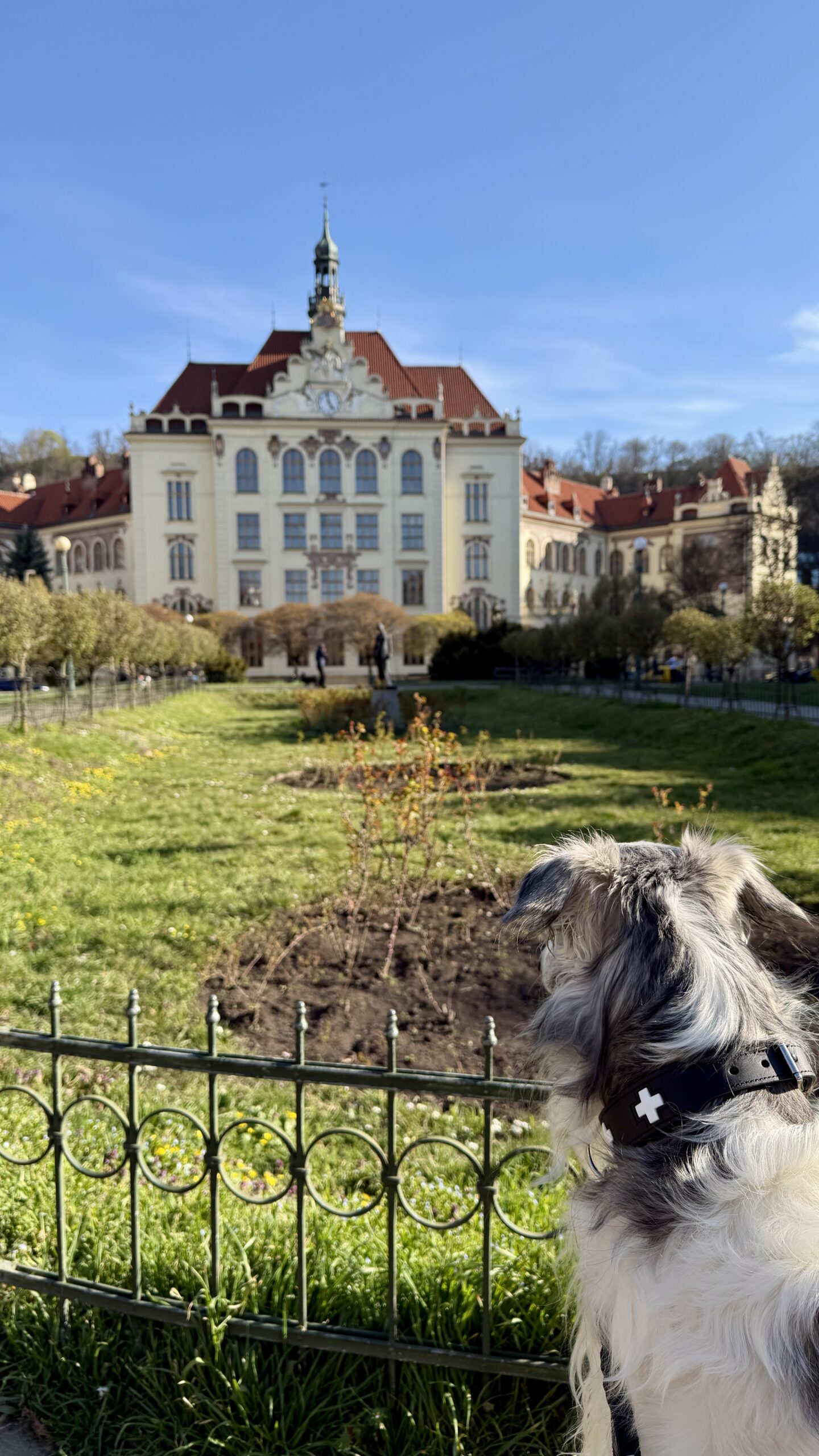
A dog simply makes that rhythm more visible. Pauses become longer. Directions less defined. Attention shifts away from destination and toward surroundings.
Movement through Prague is constant, but rarely overwhelming. Trams pass with quiet precision. Streets fill and empty again. The city remains active, yet composed — structured rather than chaotic.
Walking within this environment introduces a subtle contrast. Where people tend to follow direct paths, the presence of a dog changes the experience. The pace becomes less fixed, more responsive. Movement is no longer only about reaching a point, but about engaging with the space in between.
Even in busier parts of the city, this shift is noticeable. The surroundings begin to feel less like a backdrop and more like a layered environment — something to move through, rather than past.
Open Horizons at Letná
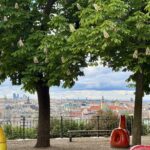
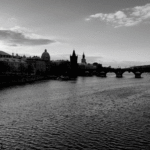
At certain points, Prague opens. The density of streets gives way to wider perspectives, and the city begins to reveal its full structure. On Letná, this transition is immediate. The skyline unfolds across the river, bridges connecting different parts of the city into a single, continuous view.
Here, the experience changes. Movement becomes less defined. The city is no longer something to navigate, but something to observe. The distance creates clarity. Details give way to composition.
Dogs move differently here as well. There is more space, more freedom, but also less urgency. Movement becomes optional. The city does not require direction.
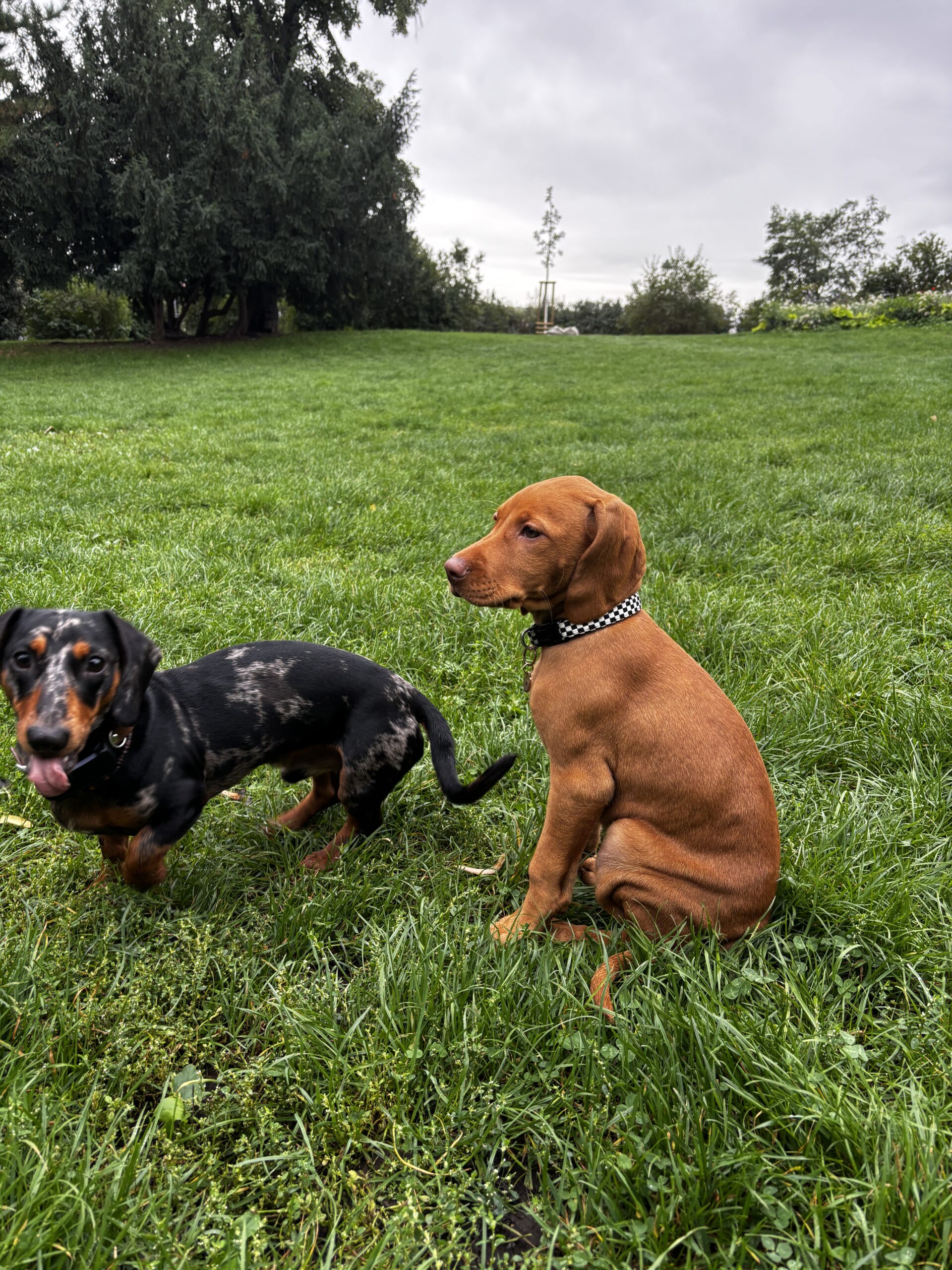
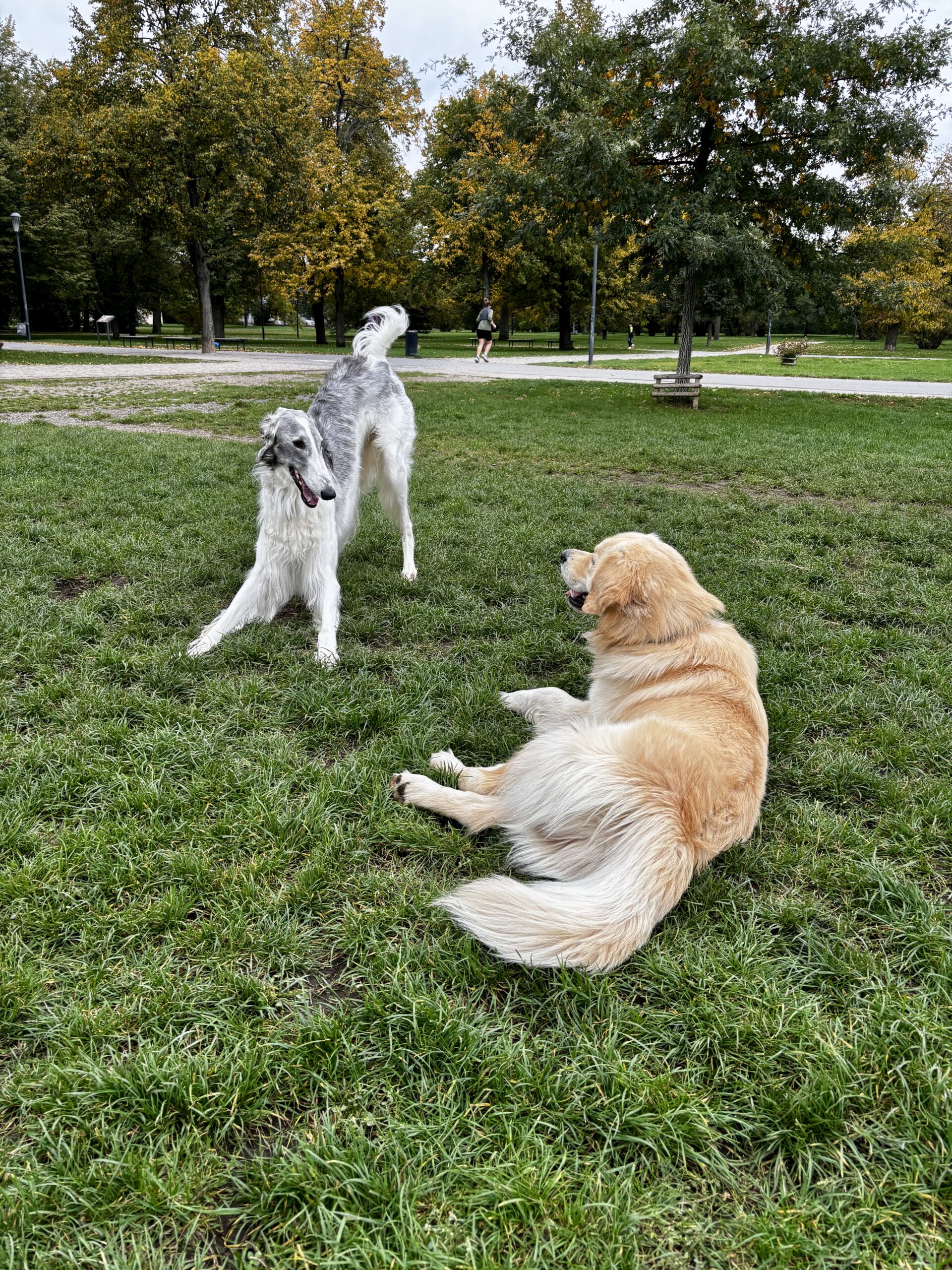
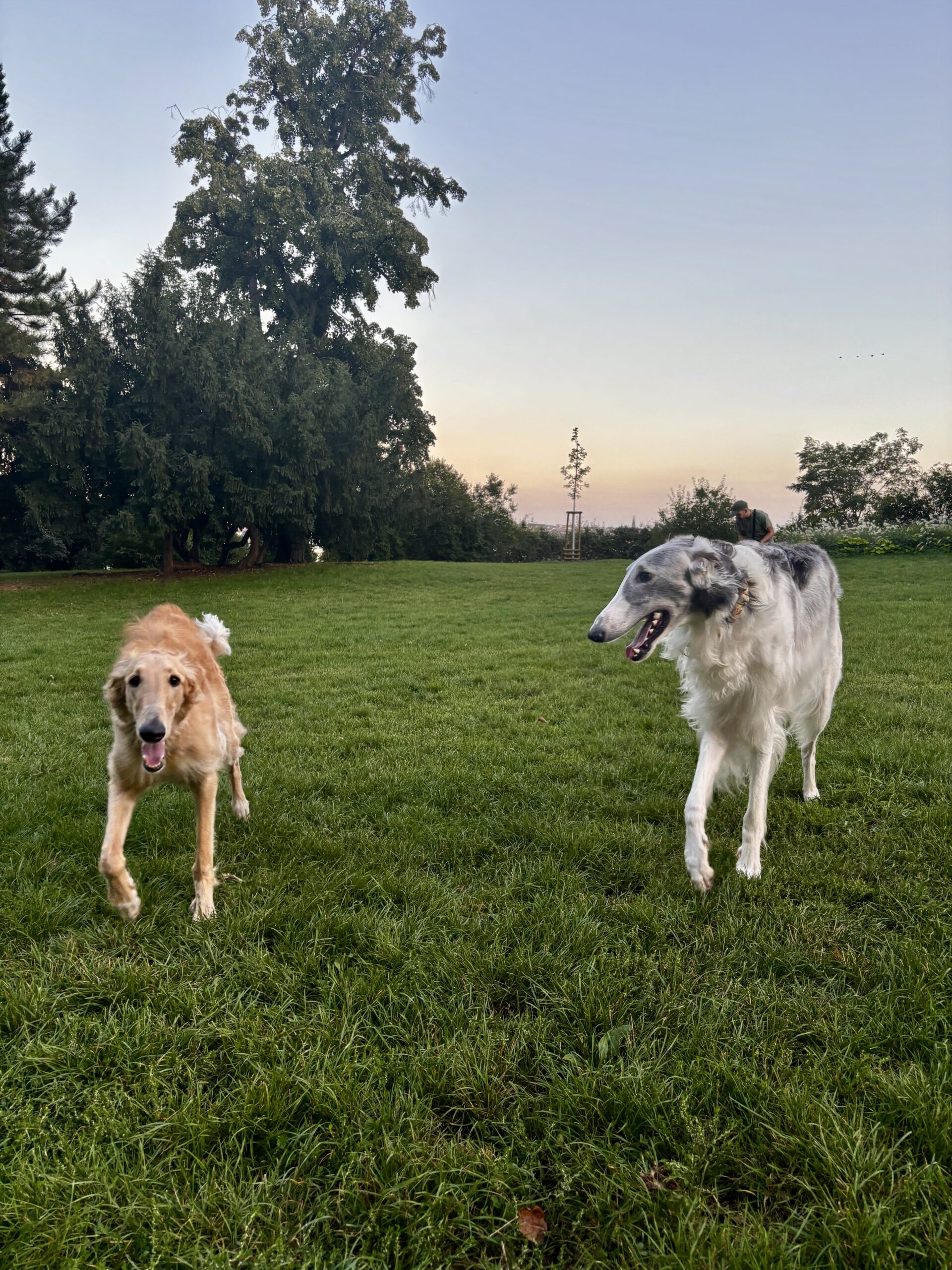
Střelecký Ostrov: A Sanctuary Within the City
Not all open spaces sit above the city. Some are held within it. On Střelecký ostrov, the rhythm shifts again. The presence of water, the filtered light, and the separation from surrounding streets create a quieter environment without leaving the centre. The city remains visible, but softened — less immediate, less dominant.
The transition is subtle, but distinct. Movement slows, not because it has to, but because the space allows it.
Local Character and Communal Spaces
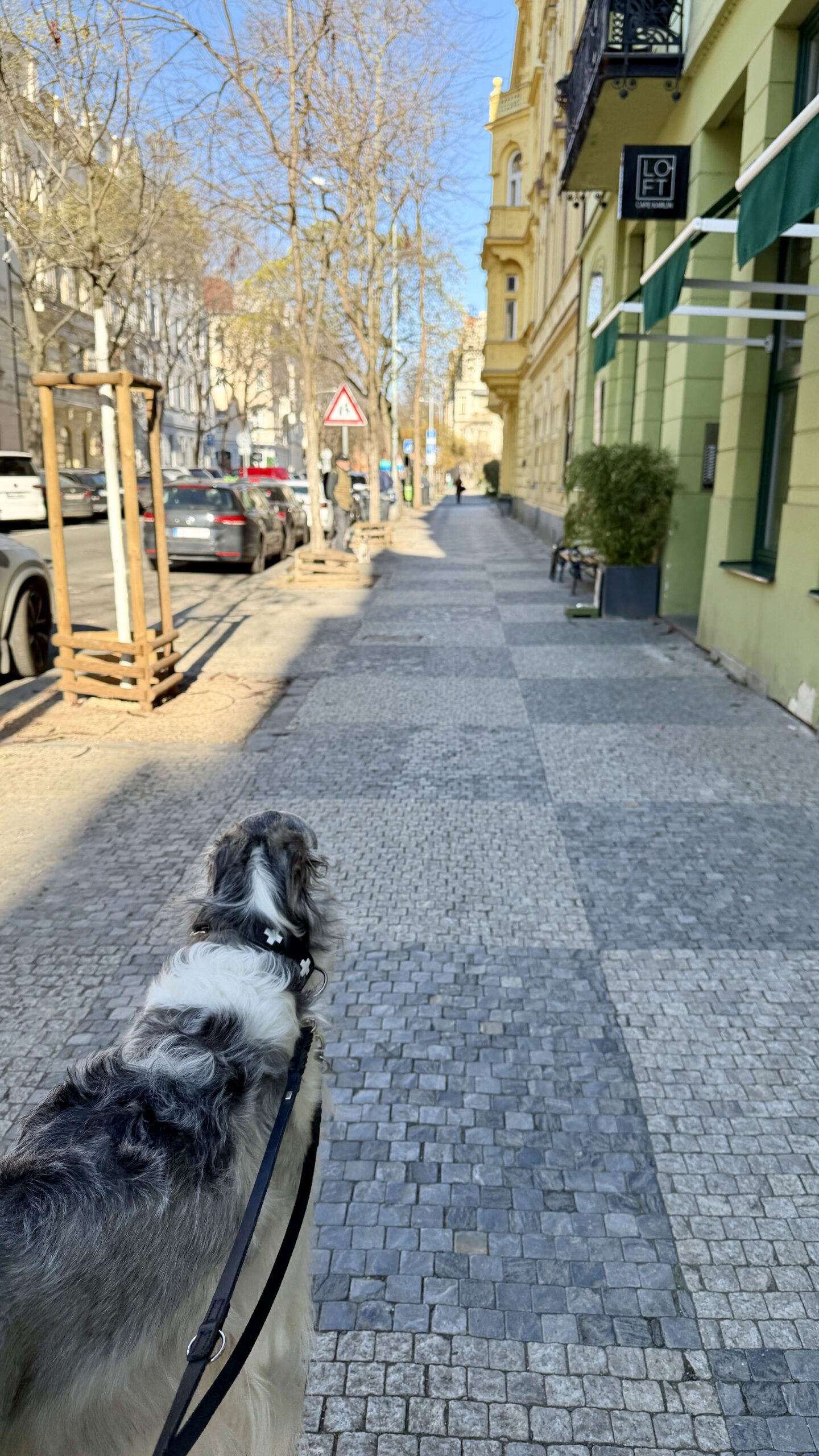
Elsewhere, Prague reveals its more local character. In neighbourhoods like Karlín, just beyond the historic centre, the city feels lived-in rather than observed. Streets open into tree-lined avenues, cafés extend naturally into the outdoors, and the rhythm becomes more consistent, more grounded.
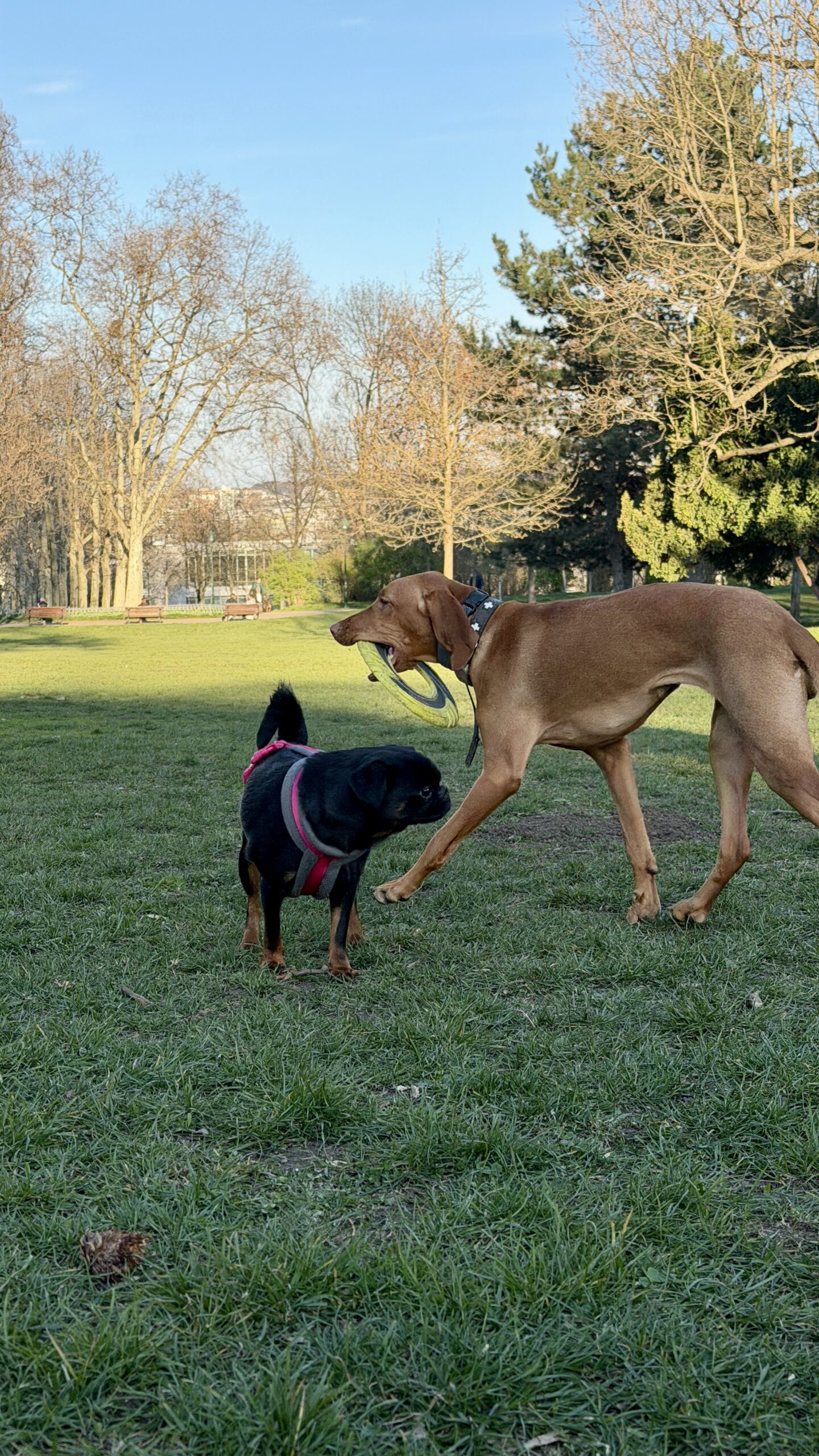
Dogs are fully part of this environment. They move alongside people without interruption, pause naturally, settle easily. Their presence is neither highlighted nor restricted. It is simply expected.
This integration is not staged. It is part of the city’s structure.
Open Hillsides of Riegrovy Sady
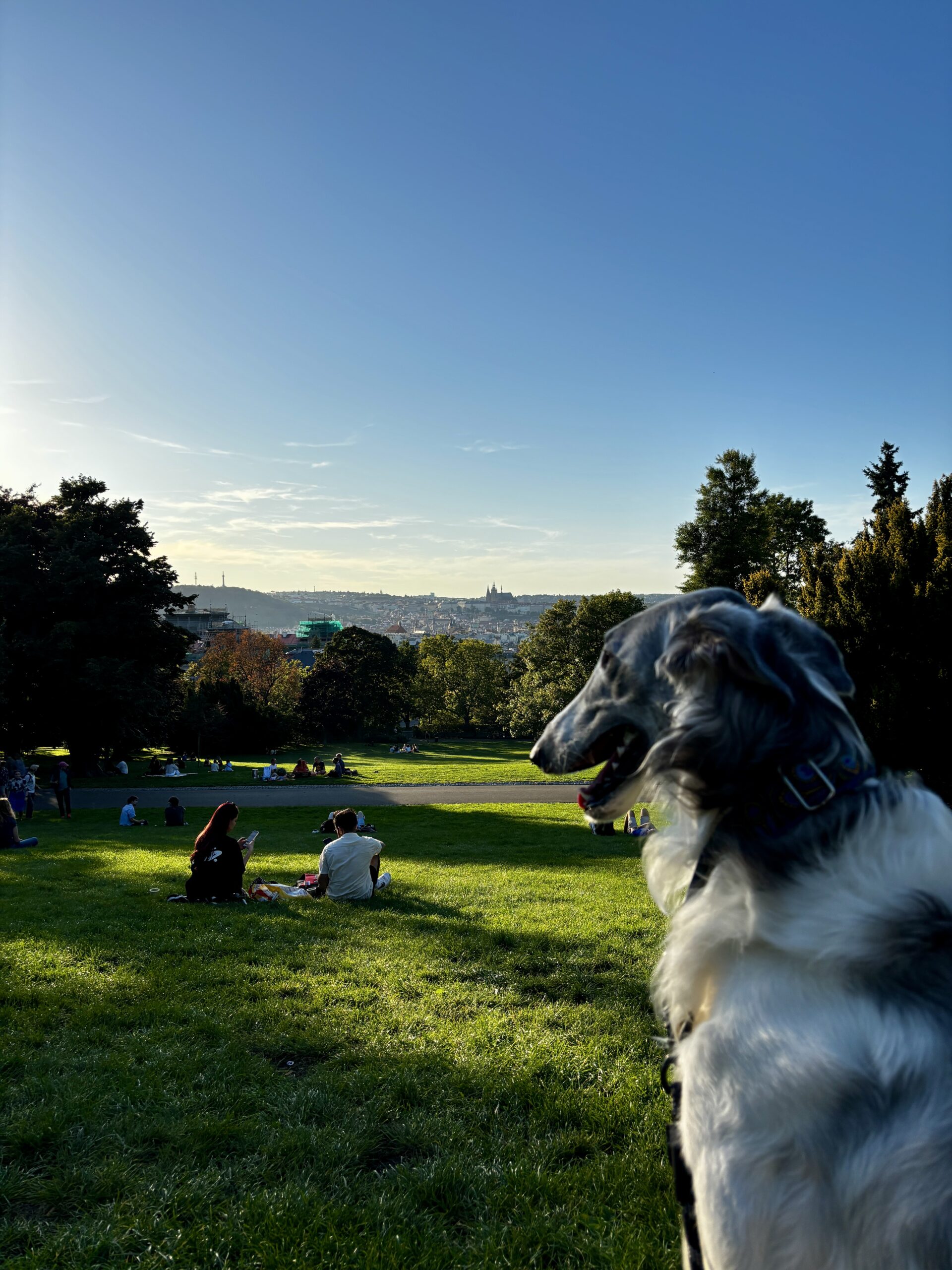
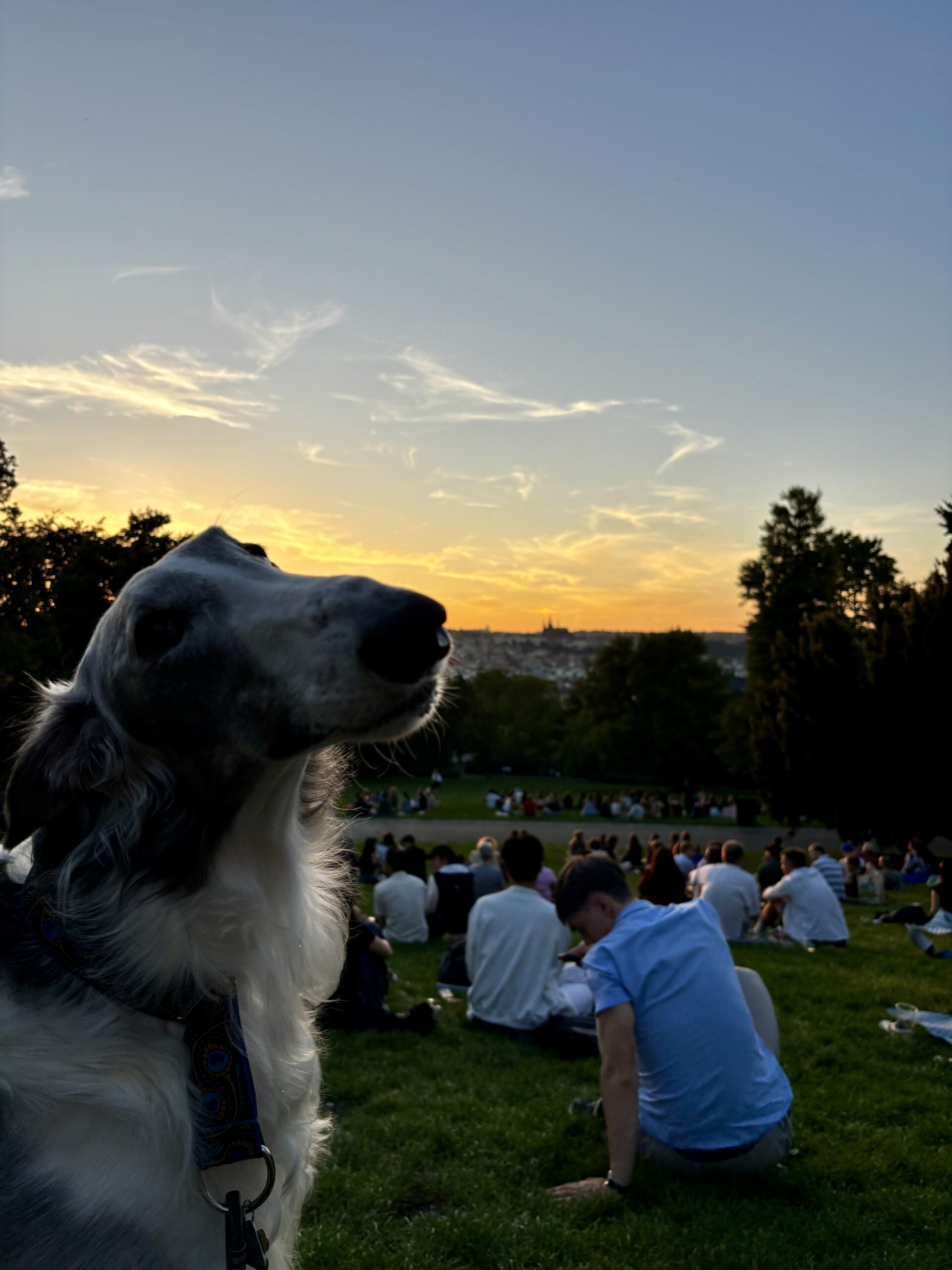
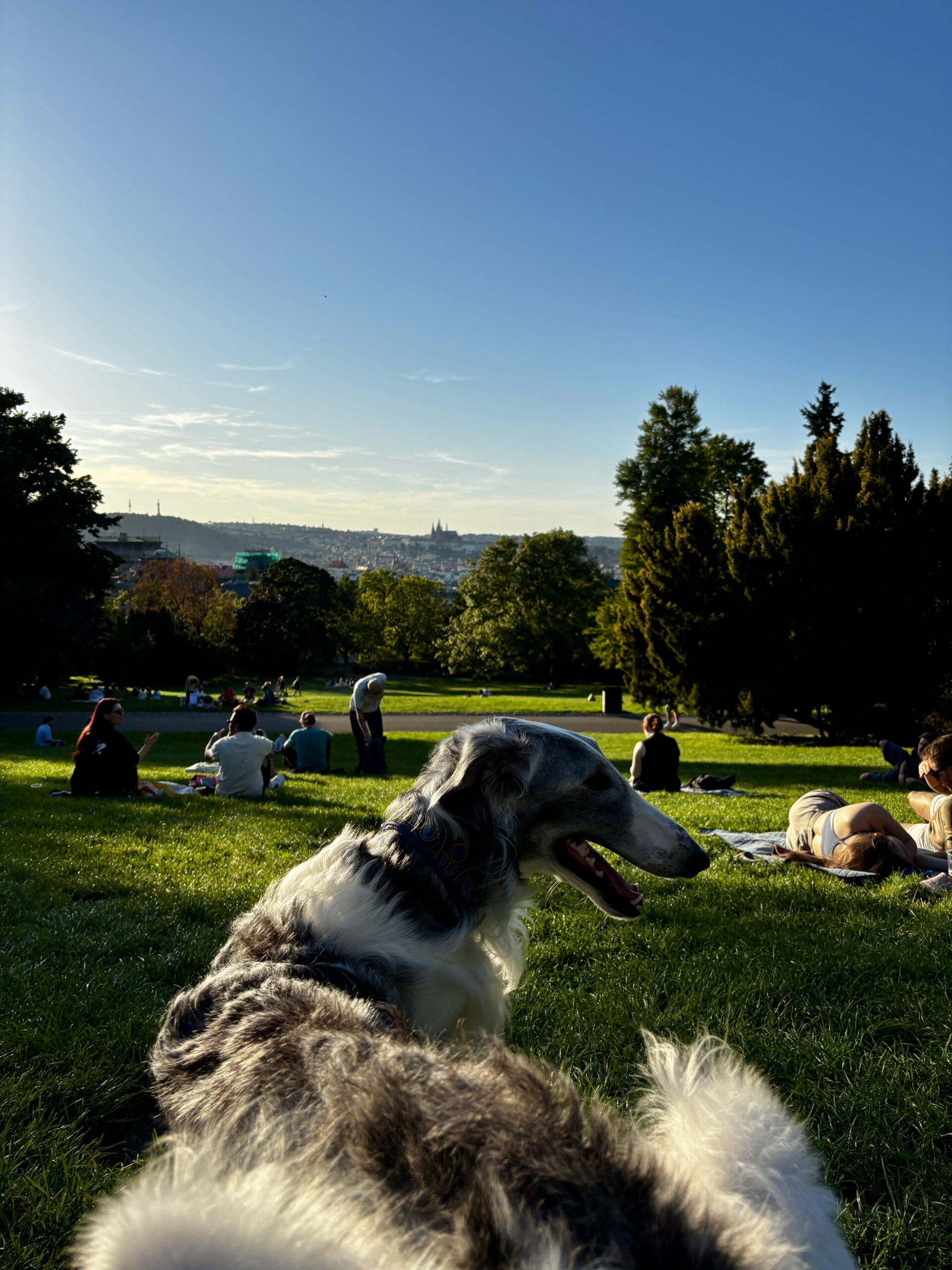
That same sense of rhythm appears in spaces like Riegrovy Sady. The city remains visible in the distance, but the atmosphere shifts toward something more communal. People gather, remain, and extend their time without urgency. The environment encourages pause rather than movement.
Here, Prague feels less like a destination and more like a place to stay.
Your Dog-Friendly Stay in the Heart of Prague
What becomes increasingly clear is that dogs are not an addition to Prague’s lifestyle — they are part of it. They move through the city without hesitation, welcomed into spaces without friction, acknowledged without formality. Their presence feels natural, integrated into the everyday rhythm.
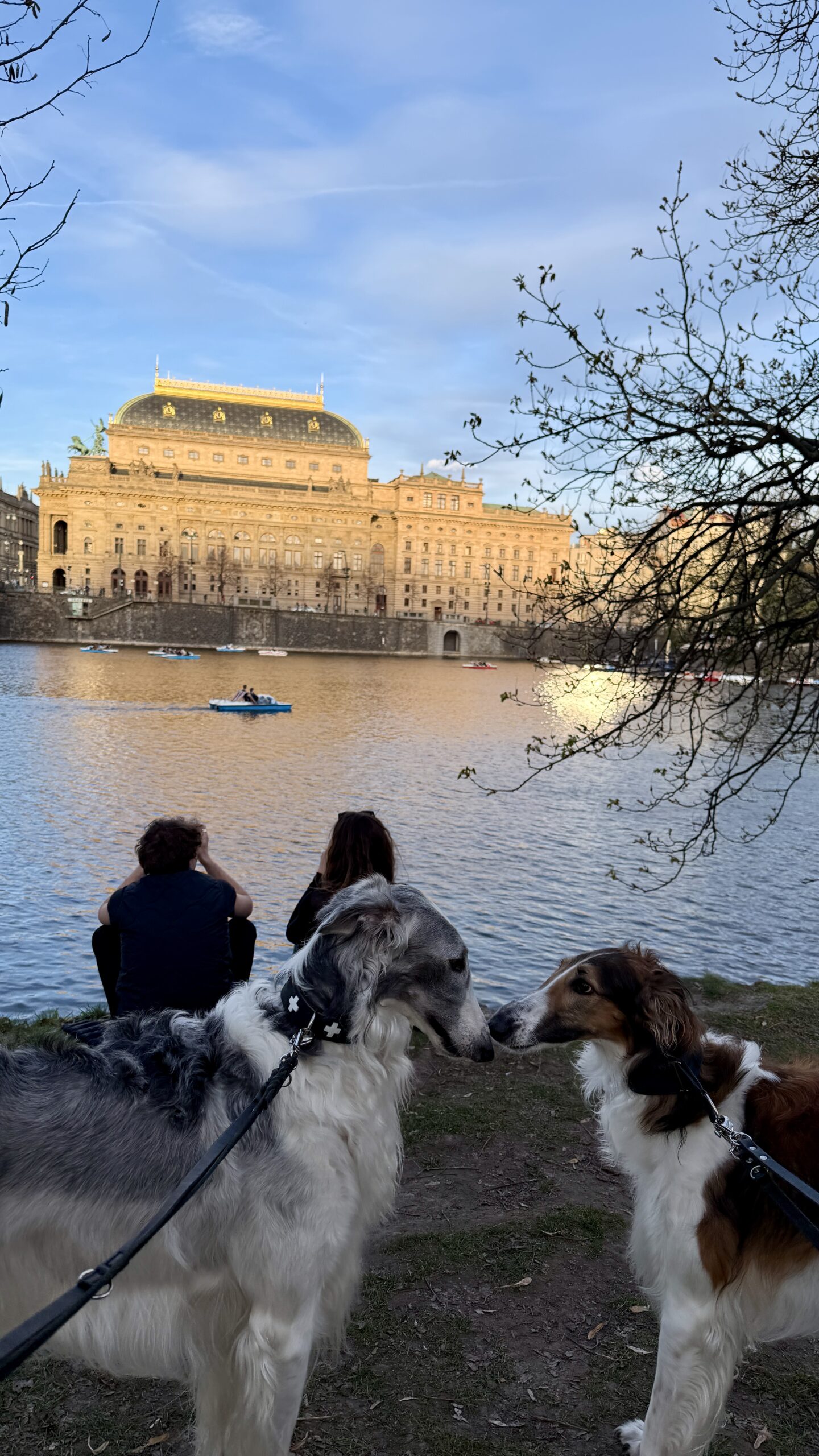
Interactions remain subtle. A brief pause between two dogs. A shared glance between their owners. Small, unspoken moments that form part of the city’s social fabric.
In Prague, these details are easy to miss — unless the pace allows them to be seen. Across different parts of the city, the experience remains consistent.
Movement and stillness exist side by side. Open spaces balance enclosed streets. The city shifts continuously, but never abruptly. It adapts without losing its identity. Walking becomes the only way to fully experience that continuity.
For those staying at K+K Hotels
Returning after a long walk carries a different kind of satisfaction. Not from having seen everything, but from having moved through the city in a way that allows it to be understood more naturally.
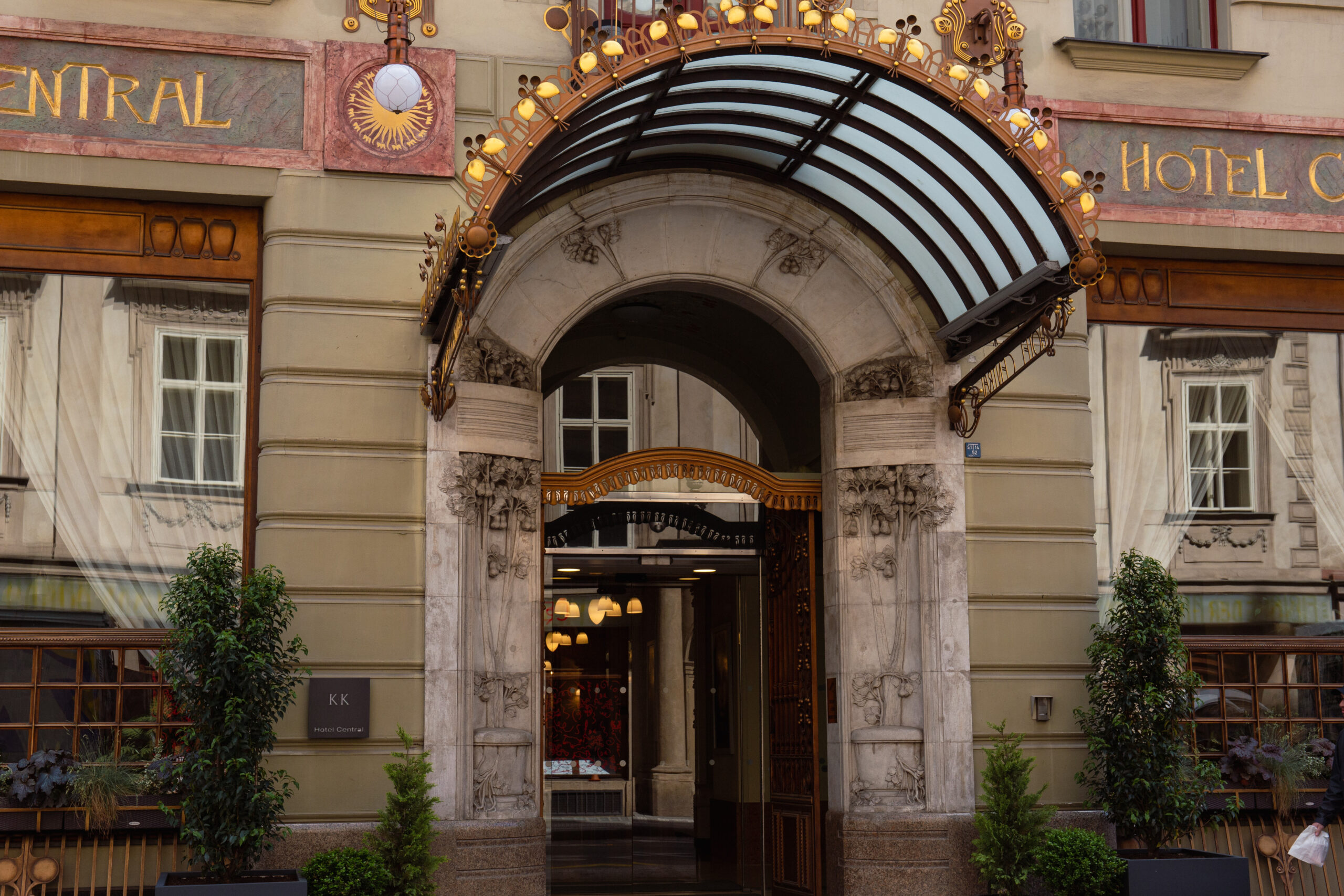
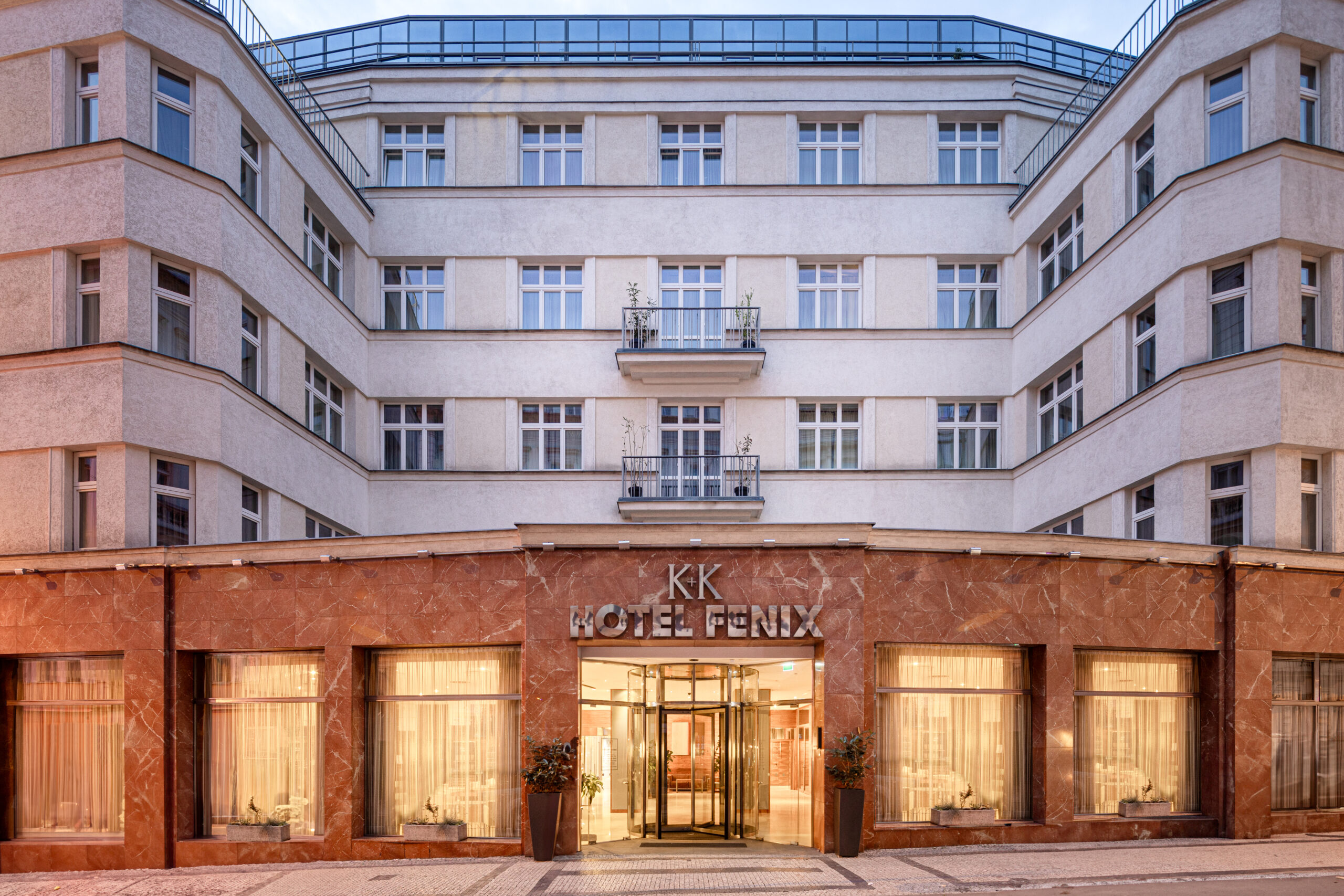
For those staying at K+K Hotel Central or K+K Hotel Fenix, this experience begins the moment you step outside — with the city unfolding naturally in every direction, without the need for planning.
And for guests travelling with a dog, it continues just as effortlessly. Prague is a city where that presence feels entirely at home — and staying somewhere that quietly shares that same approach makes the experience feel complete, rather than adapted.
Prague is not only a city you visit. It is a city you move through. A city that reveals itself gradually, between steps rather than at destinations.
Walk it slowly. Look up. Then look again.
The city is not changing. Only the way it is seen.